Reports from previous talks held this year
Talks held in previous years
| 2025 | 2024 | 2023 |
| 2022 | 2021 | 2019 / 2020 |
| 2018 | 2017 | 2016 |
| 2015 | 2014 | 2013 |
2026
-
History is the study of the past, but should it still be called history if people remember it within their own lifetime? The answer is yes. Events such as the miners’ strike or 9/11 are unquestionably history, so…
-
There was an encouragingly large turnout of members for the AGM of the Society in February. In giving a summary of the society’s year, Henry Stone mentioned that, whilst the membership of 37 remained unchanged from 2024, the…
-
Monday 16th March – In one of the most fast-paced and fascinating presentations in March, presenter Adrian Tayler kept his audience enthralled throughout the 75-minute talk. Although theatres existed in ancient Greece and Rome, theatre in the UK…
-
In April, Derek Cartwright described to the Brindle Historical Society how one company built – and effectively created – the town of Horwich. In 1884, Horwich was a small rural settlement of fewer than 4,000 people, yet it…
-
It seems the good people of Brindle are quite sceptical – or at least those who attended the excellent talk by Tony Cunliffe at the Historical Society in May appeared to be. The talk took the form of…
-
In the last meeting before the summer break, Historical Society members were treated to a fascinating and fast-moving explanation of why certain things are the way they are. From the size of the Space Shuttle’s rocket boosters to…
-
In the last meeting before the summer break, Historical Society members were treated to a fascinating and fast-moving explanation of why certain things are the way they are. From the size of…
-
It seems the good people of Brindle are quite sceptical – or at least those who attended the excellent talk by Tony Cunliffe at the Historical Society in May appeared to be.…
-
In April, Derek Cartwright described to the Brindle Historical Society how one company built – and effectively created – the town of Horwich. In 1884, Horwich was a small rural settlement of…
-
Monday 16th March – In one of the most fast-paced and fascinating presentations in March, presenter Adrian Tayler kept his audience enthralled throughout the 75-minute talk. Although theatres existed in ancient Greece…
-
There was an encouragingly large turnout of members for the AGM of the Society in February. In giving a summary of the society’s year, Henry Stone mentioned that, whilst the membership of…
-
History is the study of the past, but should it still be called history if people remember it within their own lifetime? The answer is yes. Events such as the miners’ strike…
-
Monday 21st April – Wigan, Radicalism & Gerrard Winstanley – John Winstanley It’s always great to have one of our own members speaking at the Brindle Historical Society, especially one who can…
-
Everyone who lives in Bolton believes that the Rivington Terraced Gardens are located in Bolton but those of us who live in Chorley know that they actually lie within Chorley’s boundary. The…
-
At the first meeting of the new year, the Brindle Historical Society welcomed Nigel Hardacre who is a volunteer at the Lancaster Canal Trust and a member of Friends of the Tram…
Monday 16th February – Annual General Meeting and display of artefacts
There was an encouragingly large turnout of members for the AGM of the Society in February. In giving a summary of the society’s year, Henry Stone mentioned that, whilst the membership of 37 remained unchanged from 2024, the numbers of people attending meetings was boosted by a total of 85 visitors during the year. New members are always welcome and at just £16 for nine talks it’s much cheaper than a streaming subscription and far more likely to involve tea and biscuits.
Whilst important, AGMs can sometimes be dry affairs, but in an heroic feat of efficiency this one was completed in just over half an hour and was followed by a fascinating evening where several members displayed some of the “old stuff” they’d found in their attics.
Members were encouraged to bring any historical artefact that had been passed down through the generations and provide a brief history of the story behind it. These ranged from an old milk kit from the 1930s bearing the family name engraved on the lid to a magnificent ‘Freedom Casket’ and accompanying scroll which was presented upon receiving the Freedom of the Borough of Chorley.
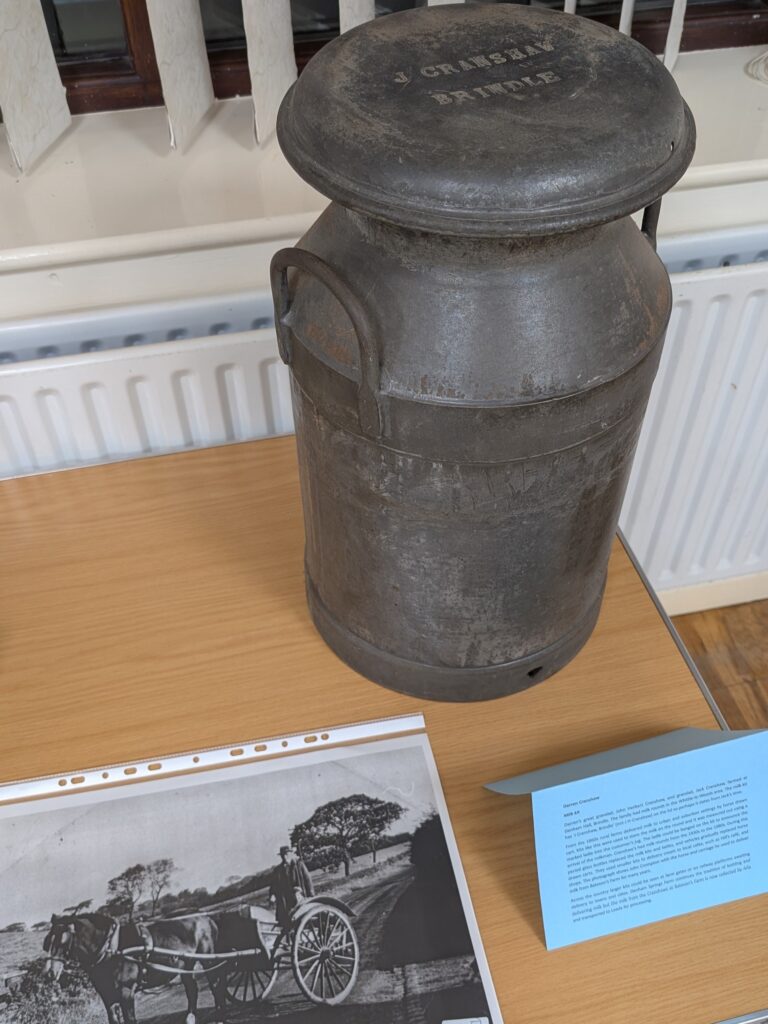
Other items included:
- An antique Waddington’s board game similar to Monopoly
- A beautiful memory quilt made from various materials collected over time
- Five very pretty antique wooden dolls, possibly originating from Asia
- Medals and memorabilia from a great uncle who died in the 1st World War
- A signed Temperance Booklet dating from the 1930s
- A well-loved and cared-for China doll won in a raffle to raise funds for injured soldiers in 1943
- Plates commemorating Queen Victoria’s Golden Jubilee in 1887
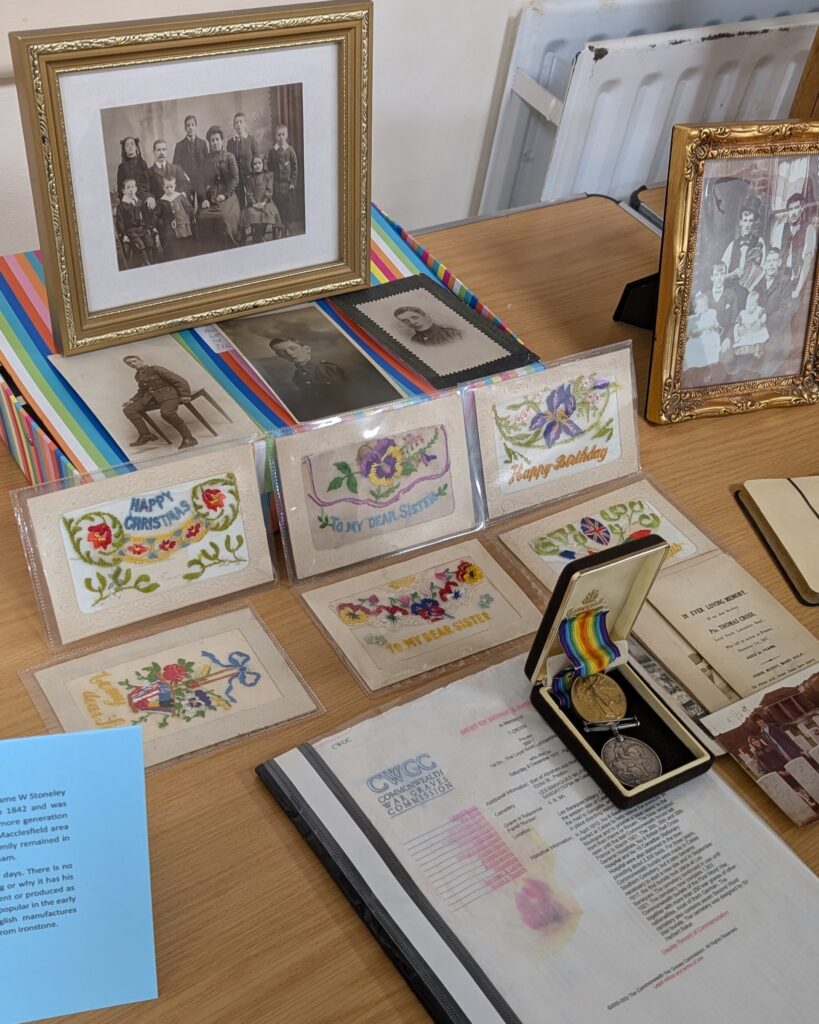
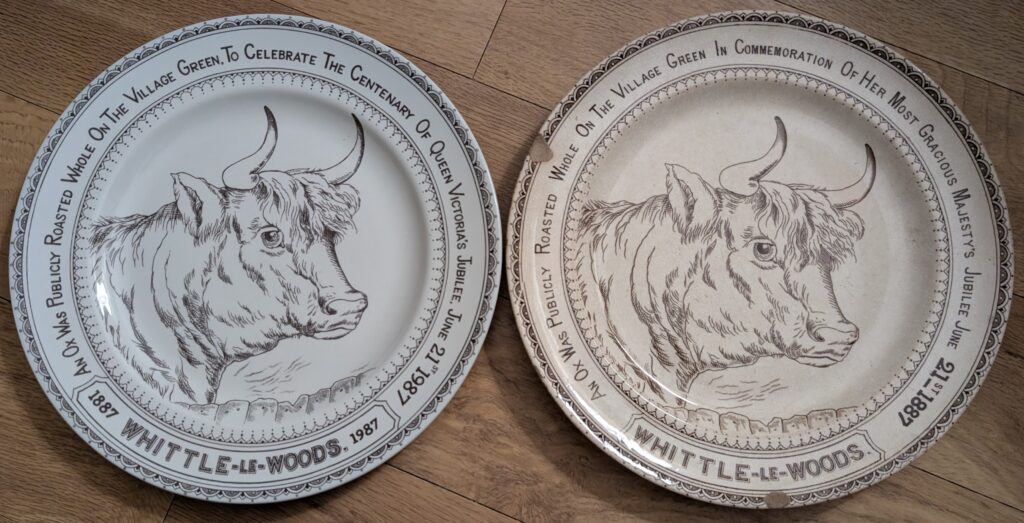
The oldest item displayed was a jug dating from the early 19th century, but it was the fascinating stories behind the artefacts that attracted most interest. One member explained the provenance of a leather bag given to him by his uncle who had acquired it in the Middle East during the 2nd World War and in displaying various items from 1955; another described how, before she was born, her family had emigrated to Australia under the ‘Ten Pound Poms’ scheme but returned at great expense after just seven months presumably when they realised that British rain is preferable to Australian spiders.
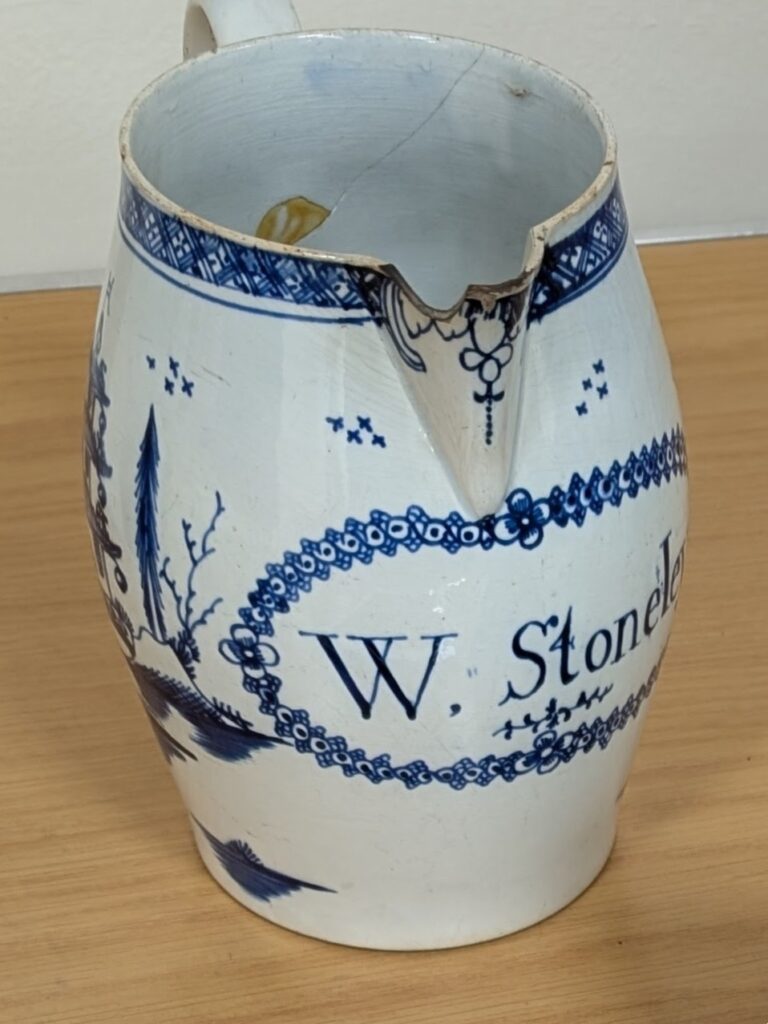
Many thanks must go to Kathy Whyte who organised the exhibition and produced an information card accompanying each item. If any newcomers to the village would like to know more about the fascinating history of this area, please get in touch with either Henry (01254 854290) or Bernard (07505 409289) who will use their knowledge and contacts to answer any queries.
Monday 16th March – Curtain up! Theatre History – Adrian Tayler
In one of the most fast-paced and fascinating presentations in March, presenter Adrian Tayler kept his audience enthralled throughout the 75-minute talk. Although theatres existed in ancient Greece and Rome, theatre in the UK only began to flourish from the late 1500s, led by figures such as William Shakespeare, Christopher Marlowe and Ben Jonson. Early theatres were based in London, while travelling groups, known as strolling players, performed at venues elsewhere around the country. These performers had a poor reputation and were often described as rogues and vagabonds.
Theatres were closed in 1642 by Oliver Cromwell’s puritan government and only reopened in 1660 under King Charles II. For the next 75 years theatres developed organically, but by 1737 some comedy plays were considered to be very rude and uncomplimentary of public figures. Sir Robert Walpole sought to end this by bringing in the Theatre Licencing Act whereby all plays needed to be vetted by the Lord Chamberlain, a system of censorship that lasted until the 1960s.
The second half of the talk focused on the Lancaster Grand Theatre, which opened in 1782. Despite changes in ownership and periods of difficulty the theatre remained open but passed through many different owners until Henry Wilkinson bought the building in 1884. He presented many excellent performances and was even one of the pioneers of film presentation (which were then called animated photographs). In 1908 a fire severely damaged the auditorium but the interior was completely refitted in just five months for £4,000 (perhaps £600k today) and the results can still be seen today.
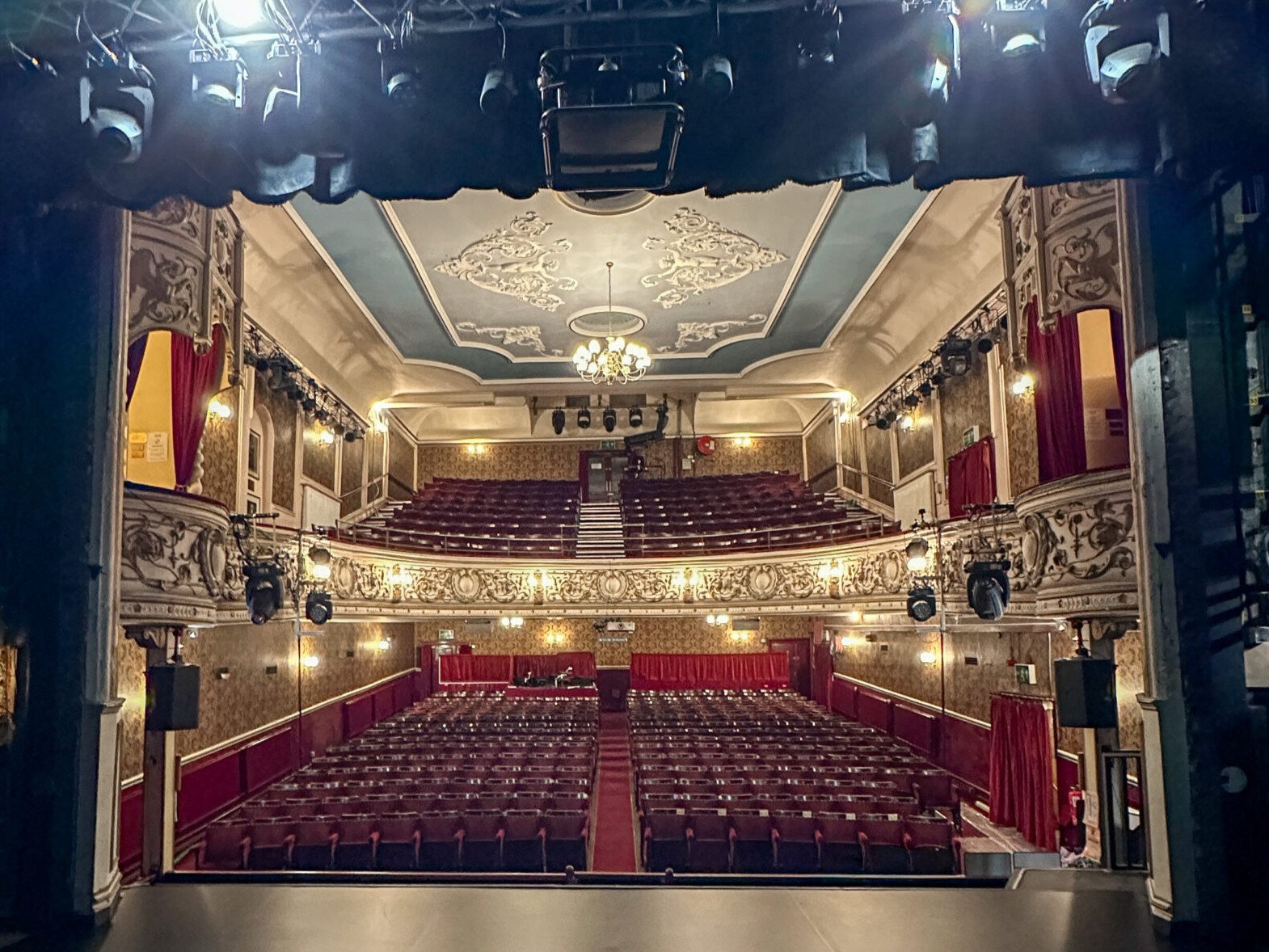
After 1930, the theatre became a cinema, although amateur productions were also performed there. In 1951 when closure was proposed, local drama groups raised funds to buy the building, and it remains owned by a charitable organisation, the Lancaster Footlights.
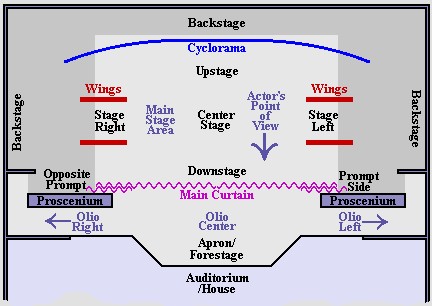
Towards the end of the talk, Adrian explained many theatrical terms which have now entered common parlance such as ‘upstage’, ‘on cue’, ‘in the limelight’ etc. and went on to describe key features of theatre design such as the proscenium arch, fly tower, and fourth wall leaving the audience very well informed and with few questions.
Wednesday 18th March – Visit to the Lancashire County Council Conservation Studios
Nine members of the society visited the Lancashire County Council Conservation Studios in Preston on 18th March. The studios are appropriately housed in a converted church in the city centre and whilst the exterior is unchanged, the interior has been specifically designed for conservation work. The team of conservators works on behalf of museums and galleries across the region, restoring and repairing all manner of historic items.
During this fascinating visit, we learned what the experts are currently working on, including the careful cleaning of a marble bust, extensive repairs to a huge painting from Manchester Town Hall, and the restoration of some botanical models by Robert Brendel. These latter pieces were exquisite, handcrafted papier-mâché structures formerly used to teach botany at universities – delicate, detailed, and beautiful. Click here to see examples.
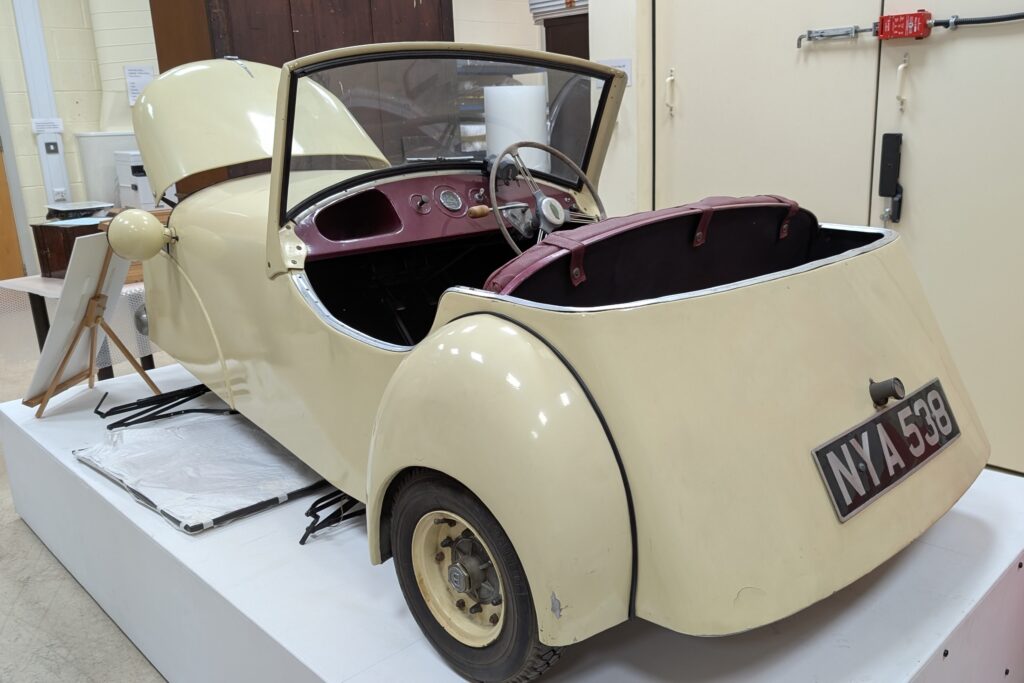
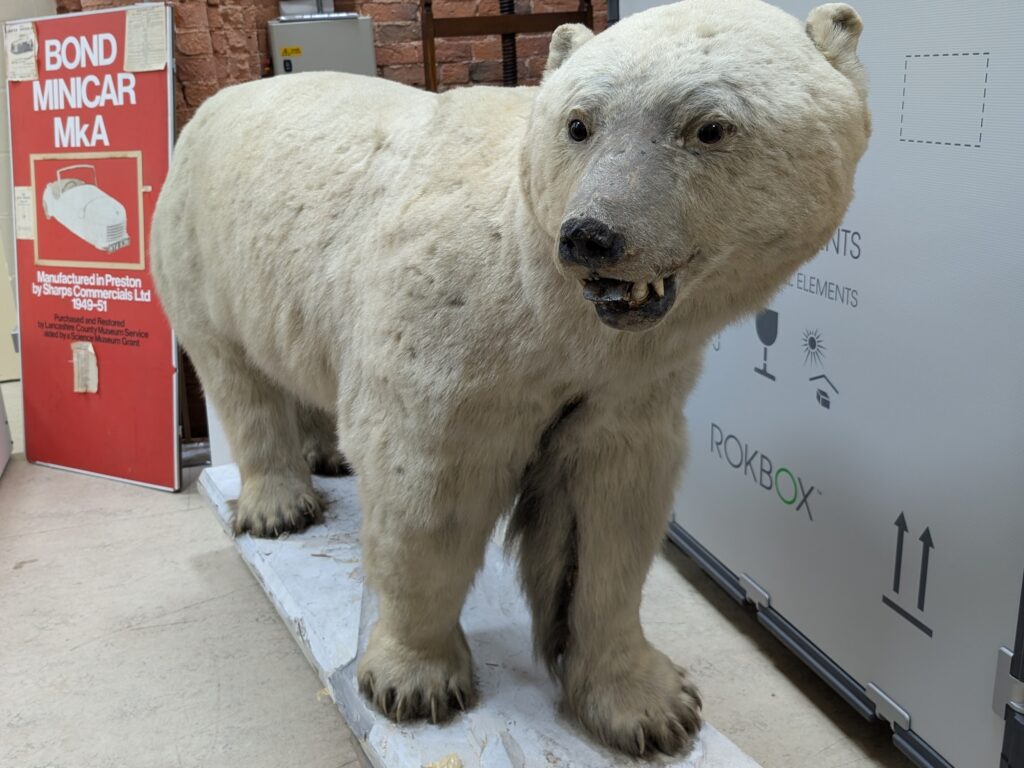
We were also shown several recent arrivals: a very fine Waring and Gillow linen press, a Bond mini car (made in Preston), and a stuffed polar bear, – yes, really. The car and bear are awaiting restoration – no doubt each providing very different challenges – while the furniture was about to move to a new location.
Although the studios primarily do work for corporate bodies, they will also quote for the restoration of items from private individuals.
Monday 20th April – The History of Horwich Works – Derek Cartwright
In April, Derek Cartwright described to the Brindle Historical Society how one company built – and effectively created – the town of Horwich. In 1884, Horwich was a small rural settlement of fewer than 4,000 people, yet it rapidly became one of the fastest-growing towns in the country. The catalyst was the Loco Works, established after 650 acres were purchased for just £36,000. Although not the first choice for the Lancashire and Yorkshire Railway – the area lacking both coal and skilled labour – the bargain price proved irresistible.
Under William Barton Wright, and later John Aspinall, hundreds of navvies arrived in 1884 and within two years had constructed the Erecting Shop, with locomotives already arriving for repair. Skilled workers were transferred from the Miles Platting works in Manchester, and by 1892 the works employed over 3,000 people. Before construction began, however, the site had to be levelled requiring the removal of half a million tons of earth, effectively moving a hill. The migrant workers also built housing for the expanding workforce which was soon supplemented by private builders providing shops, pubs, and other essentials as the town grew.
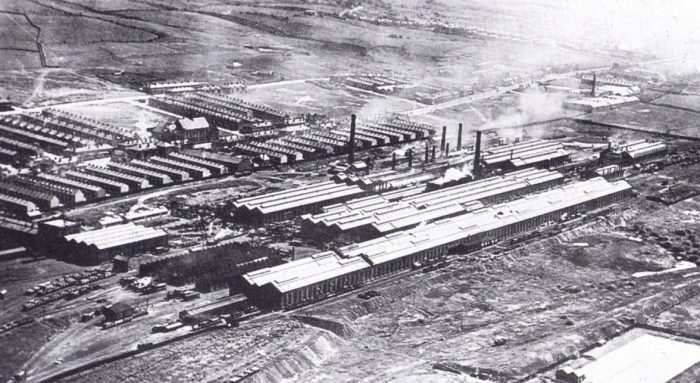
The factory itself was immense, with the Erecting Shop stretching over a quarter of a mile. It was a state-of-the-art facility, featuring natural and electric lighting, a telephone system, its own water supply, and even gas production. Twin overhead cranes were capable of lifting over 100 tons and regularly carried engines over the heads of the workers below. An 18-inch-gauge railway was also constructed, using small 0-4-0 tank engines to carry materials around the site.
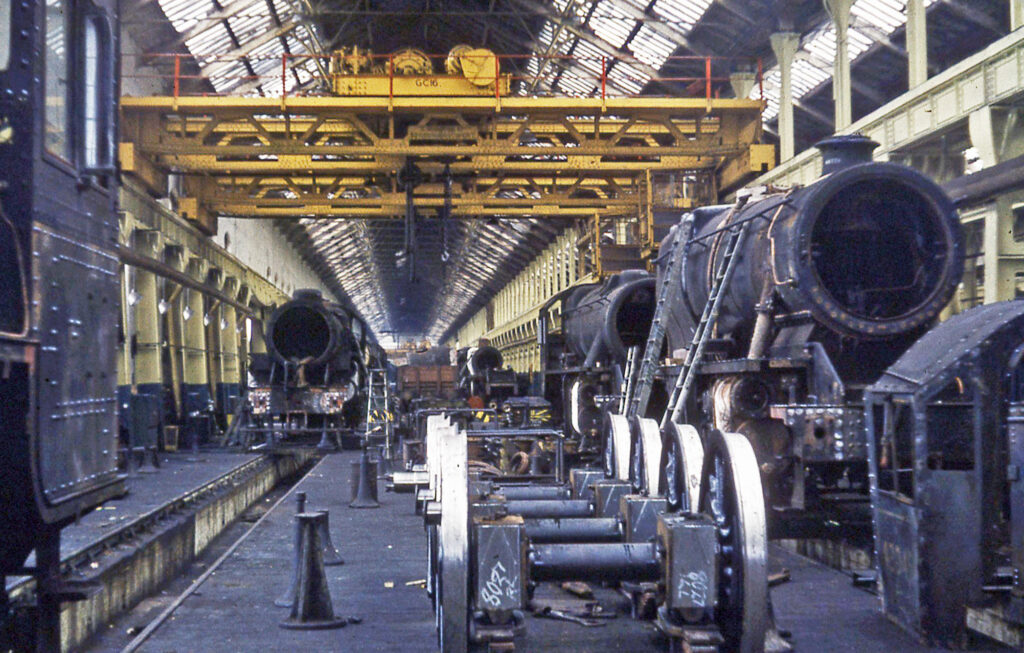
Management were notably forward-thinking: alongside employment, the company provided a cottage hospital, a bandstand, and recreation ground, and trained hundreds of workers in its own school, ensuring a steady supply of skilled labour. Some employees went on to have remarkable careers: apprentice A. V. Roe later founded AVRO (producer of the Lancaster Bomber amongst other aircraft), while Sir Nigel Gresley, who worked under Aspinall, designed famous locomotives such as the Flying Scotsman and Mallard.
During the First World War, the works produced shell cases as well as locomotives for France; in the Second, it diversified further, building over 400 Matilda tanks and Oerlikon shells.
The last steam locomotive was built in 1957, though repairs continued until 1964. Thereafter, work shifted to foundry work, specialised products such as leaf springs, along with refurbishing diesel multiple units, repairing wagons and converting coaches for maintenance use – much less glamorous but still keeping the wheels turning.
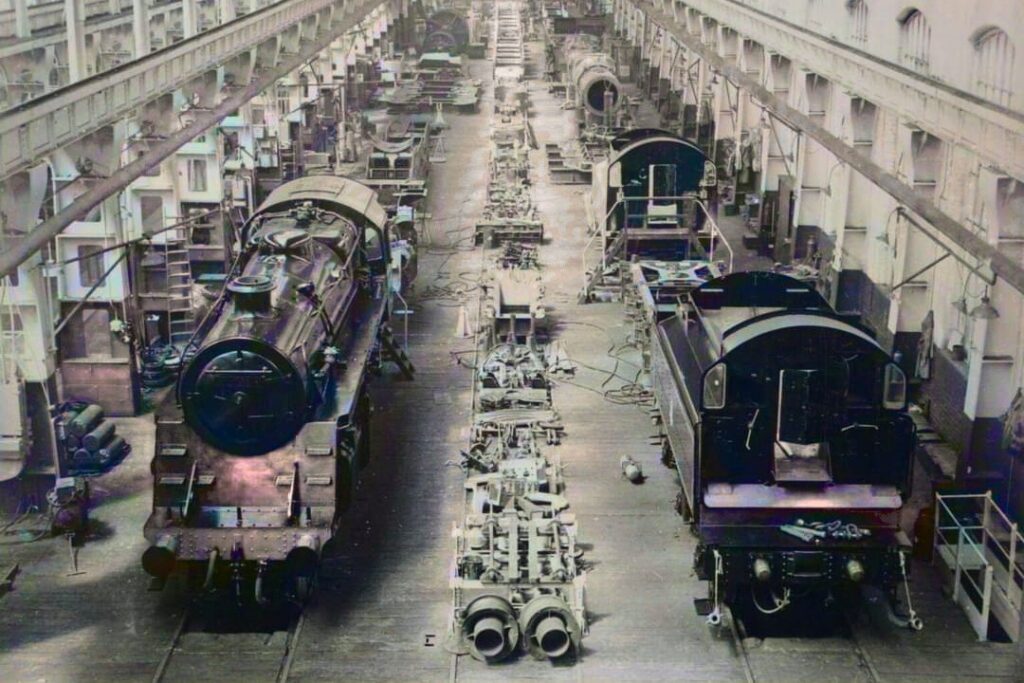
In the 1980s, BR Engineering Ltd. rationalised its workshops, and Horwich closed in December 1983, 97 years after opening, having built 1,800 locomotives and repaired more than 50,000. Not a bad innings for a town that, just a century earlier, barely warranted a mention on the map.
For more historical information about Horwich in general, visit Horwich Heritage. (https://www.horwichheritage.co.uk/looking-back.php#mast)
Monday 18th May – The Case of the Missing Body Live! – Tony Cunliffe
It seems the good people of Brindle are quite sceptical – or at least those who attended the excellent talk by Tony Cunliffe at the Historical Society in May appeared to be. The talk took the form of an investigation into the historical and scientific evidence surrounding the Turin Shroud, with the audience cast in the role of Watson, Sherlock Holmes’ fictional sidekick.
The presenter clearly laid out the history of the Shroud, beginning with a demonstration using a full-sized replica of the linen cloth – all 14 feet of it. This helped to illustrate how the 1988 carbon-dating exercise later came under criticism because some researchers believed proper scientific protocol had not been fully followed. It is known that the Shroud was exhibited many times during the Middle Ages, and it is thought likely that it was handled in the same manner as demonstrated by volunteers in Brindle, holding it by the top edge.
Analysis of linen from the top right hand corner of the cloth has led some researchers to suggest that repairs had been carried out many years earlier. It was from this area that the carbon-dating sample was taken, leading critics to argue that the results may not have been representative of the original cloth.
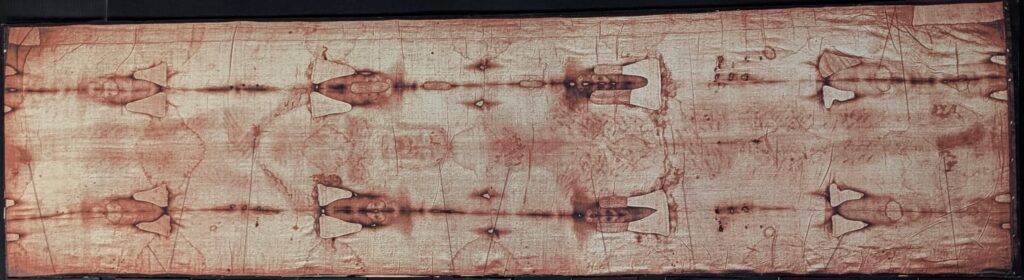
The audience on Monday were presented with numerous scientific observations about the artefact, together with relevant extracts from the Bible, and at the end of the evening were asked to cast a secret ballot indicating whether they believed the relic to be authentic, an elaborate hoax, or something else. Those selecting the final option were invited to consider possible alternative explanations for how the cloth came to bear the image of a man.
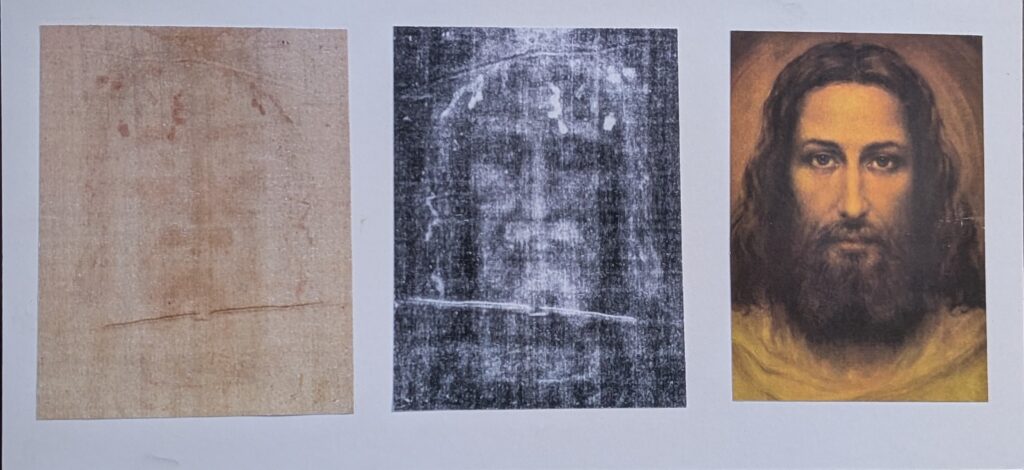
The speaker has given this talk many times and revealed afterwards that, from all the results he has collected, around 50% of people believed the artefact to be authentic, while only 12% considered it to be a hoax. When the results were announced in Brindle, however, there was an almost equal split between the three options, with only 30% of attendees believing the cloth to be authentic and 35% suggesting that it was a hoax. So, as reported at the start, we are clearly a sceptical bunch in Brindle. That said, everyone commented favourably on the excellent presentation, which kept the audience engaged throughout the evening – including the sceptics. For a very detailed analysis of the fascinating Turin Shroud, visit the British Society for the Turin Shroud website: https://shroudofturin.uk
Monday 15th June – History by Design – Chris Freeman
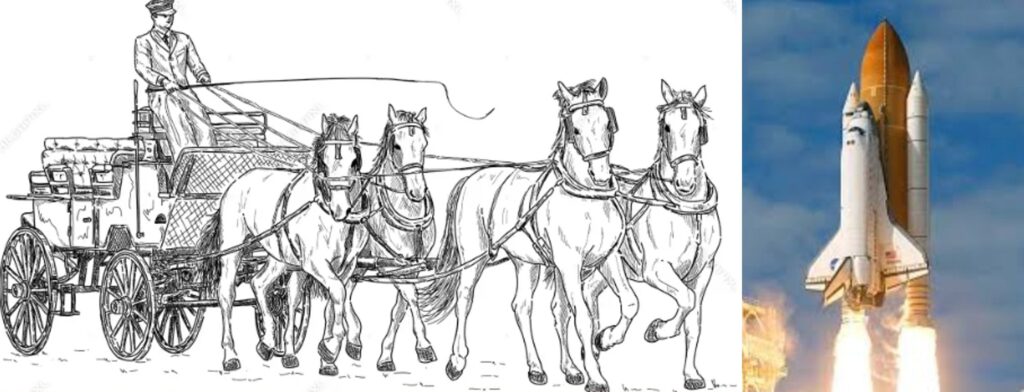
In the last meeting before the summer break, Historical Society members were treated to a fascinating and fast-moving explanation of why certain things are the way they are. From the size of the Space Shuttle’s rocket boosters to the diameter of compact discs, Chris Freeman’s 60-minute presentation had the audience enthralled with weird-but-true explanations of how familiar objects came to be the size and shape they are. Bizarre as it may seem, the design of the Space Shuttle was, to some extent, influenced by the Romans, while Beethoven had an unexpected hand in determining the size of the CD.
The boffins at NASA wanted the Shuttle’s rocket boosters to have a larger diameter than they eventually did. However, because they were manufactured a long way from where the Shuttle was assembled, they had to be transported by rail, and that limited their width. We then learned that railway tracks are the gauge they are because the people who built the first railway wagons had previously made horse-drawn carriages and saw little reason to alter their existing designs. So why were horse-drawn carriages (and, before them, Roman chariots) built to that specific width? Quite simply, because that was the width of two horses standing side by side.
In the case of CDs, they were originally intended to have a diameter of 10cm until the president of Sony, who was a keen pianist, discovered that a 10cm disc could not accommodate the entirety of Beethoven’s Ninth Symphony, which was typically around 70 minutes long. He therefore insisted that the diameter be increased to 12cm, giving enough room for Beethoven’s grand finale.

Chris also explained, amongst other things, why shipping channel leading markers are always triangular, why pyramids are the shape they are, and why modern aircraft have vertical extensions at the tips of their wings. It is clear that whilst design engineers have always had to obey the laws of physics, more recently they have increasingly begun to borrow ideas from nature – a field known as biomimicry – having realised that millions of years of evolution make for a remarkably effective research and development department.