2023

Talks held in 2023

  • Coalmining In Lancashire, the photographic record – Alan Davies

    On Monday 20th November, members of the Brindle Historical Society were treated to a fascinating account of life as a miner in the coalfields of Lancashire.  Alan Davies has written many books on the subject based on his first hand knowledge of working in the mines and later as an archivist and keen photographer.  The talk was centred on photographs of the mines and miners, some dating from as early as 1880 and collectively, they provided a social history of the occupation. 

    We saw one of the earliest photographs ever taken of a miner at work on the coalface in the 1890s.  This would have been taken using a magnesium flash which would burn brightly for two or three seconds whilst the film was exposed.  In addition, a very early film was shown of the aftermath of the 1910 Hulton Pit disaster where 344 men and boys were killed following an explosion in the mine.  The shock from the blast travelled 1,000 yards underground and a further 300 yards up the pit shaft, causing extensive damage to the buildings at the pit head.

    During the 2nd world war, concerns about mines sustaining damage to the pit head gear from enemy bombs caused mine owners to link underground workings with rival companies to allow mine workers to escape using other pit shafts should damage occur to their own lifting engines.  
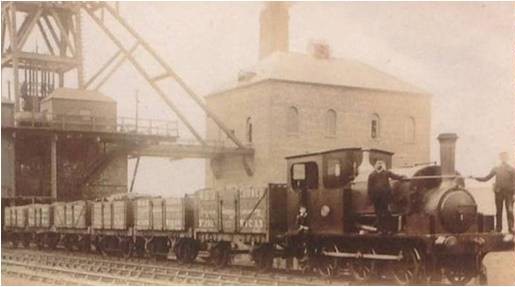
    In 1947, such co-operation was guaranteed as the coal industry became nationalised as the National Coal Board.  In addition, a rapid rise in mechanisation in the mines took place at this time, taking ideas from the Germans whose technology was more advanced than that of the UK.  The downside of mechanical coal cutters meant that more dust was formed which caused a rapid increase in lung damage amongst miners.
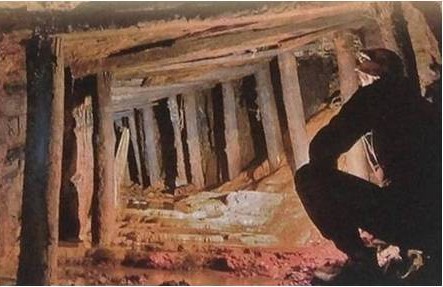
    The last deep mine closed in 1993 ending several centuries of coal extraction in Lancashire.
  • The history of the Commonwealth War Graves Commission – James Hutton

    On Monday 16th October, the Brindle Historical Society welcomed James Hutton from the Commonwealth War Graves Commission who explained about the work of the Commission.  It was founded by Sir Fabian Ware who commanded an ambulance company in the First World War and was very upset by the number of unmarked graves he came across.  He felt that all people who died in wars should be formally recognised and he set about lobbying the authorities to turn his unit into a dedicated team for the dead.  What ultimately became the Commonwealth War Graves Commission had three founding principles:

    1. All the war dead should be commemorated by a name on a headstone which
    2. should be a permanent structure and
    3. should be uniform with no distinction between rank or status

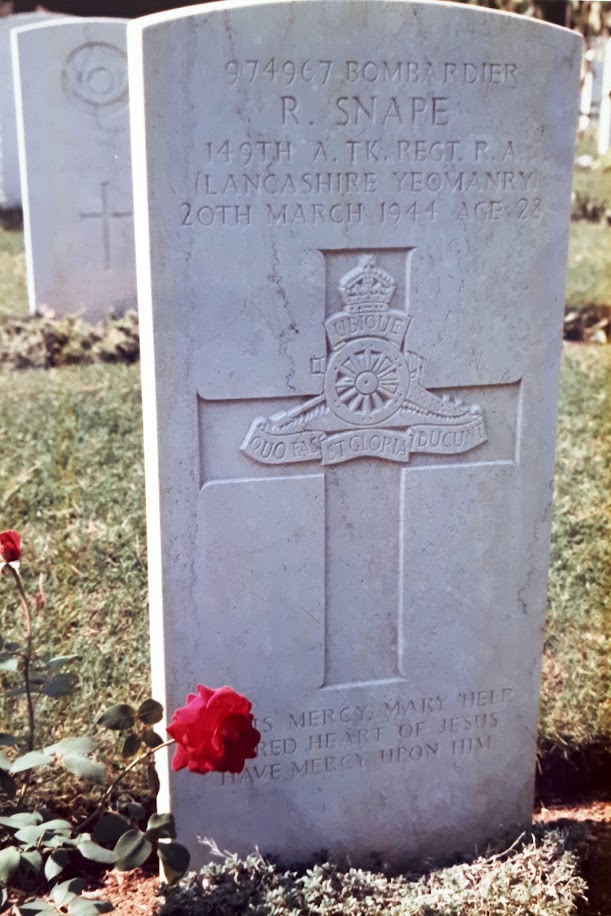
    Consequently, headstones now have a standard layout and all contain: regimental unit or service badge; service particulars (name, rank, number, and service); date of death; age; religious emblem (optional).  Some early headstones could have a personal inscription (paid for by relatives at a cost of 3½d per letter) but these were soon discontinued.   Although very similar, there are slight variations in style of these headstones across the world to ensure that they blend in with the local environment.

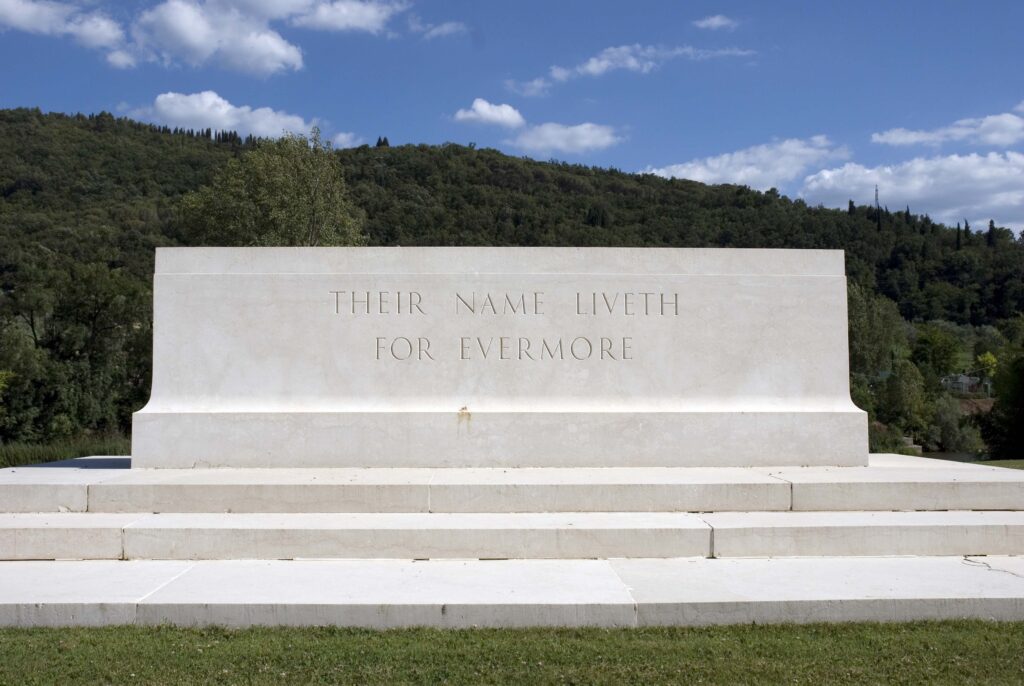
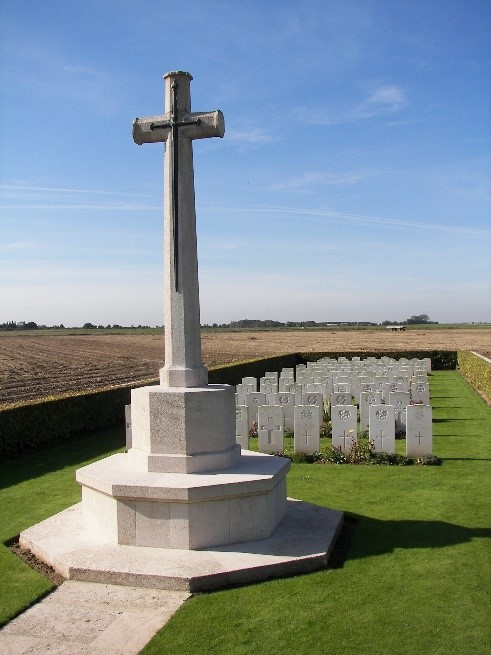
    In addition to the individual headstones, many cemeteries had a commemorative focal point to tie the multitude of graves together as one shared sacrifice.  This was the Stone of Remembrance.  Amid concerns that this was too secular, the Commission also devised the Cross of Sacrifice for majority-Christian cemeteries.

    Cross of Sacrifice

    The numbers of commemorations are staggering with 1.2 million in Europe, 270,000 in Asia and 162,000 in Africa and over 46,000 across the rest of the world.

    The work of the commission is ongoing in maintaining the cemetery grounds and repairing/restoring the masonry.  The funding is shared proportionally depending on the number of memorials, although the UK pays the largest share of 78%.

    We were left with one fascinating statistic.  In all the years from 1688, there was only one year when no serviceman was killed on active service.  That year was 1968.

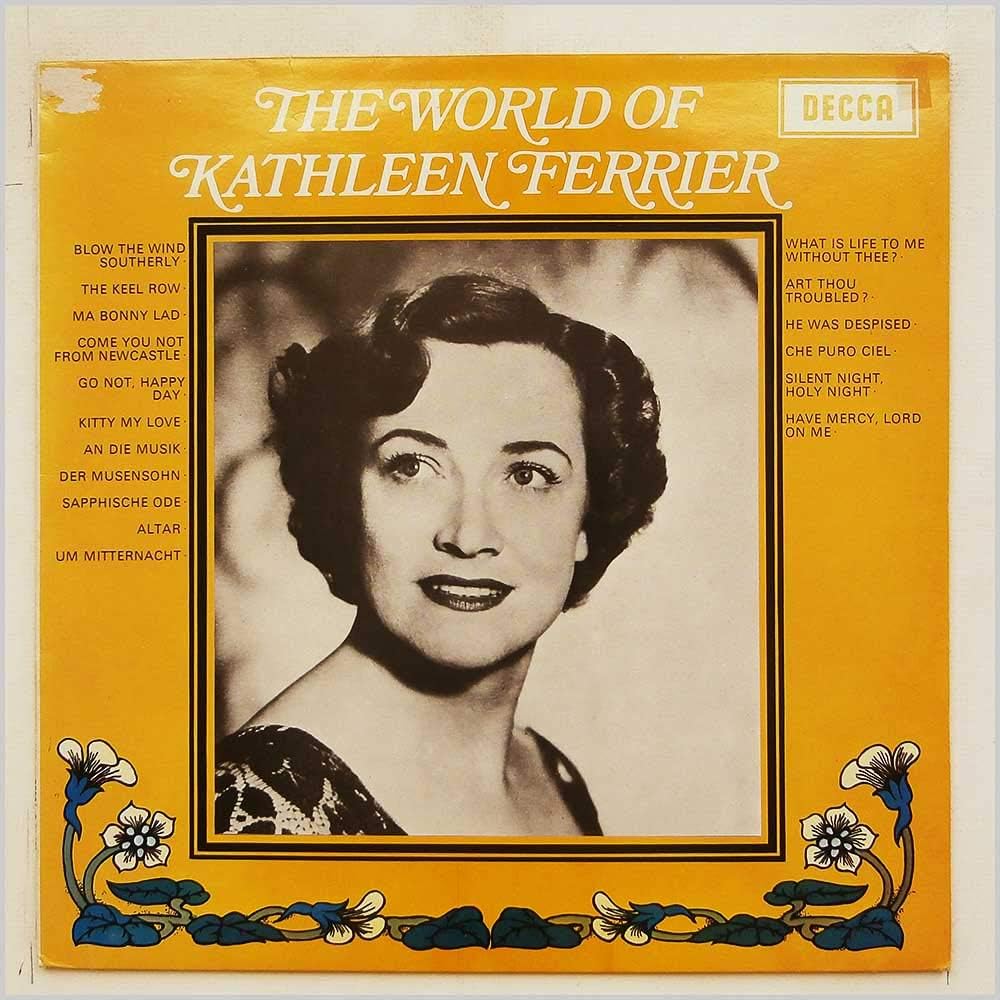
  • The life of Kathleen Ferrier – Robert Longstaff

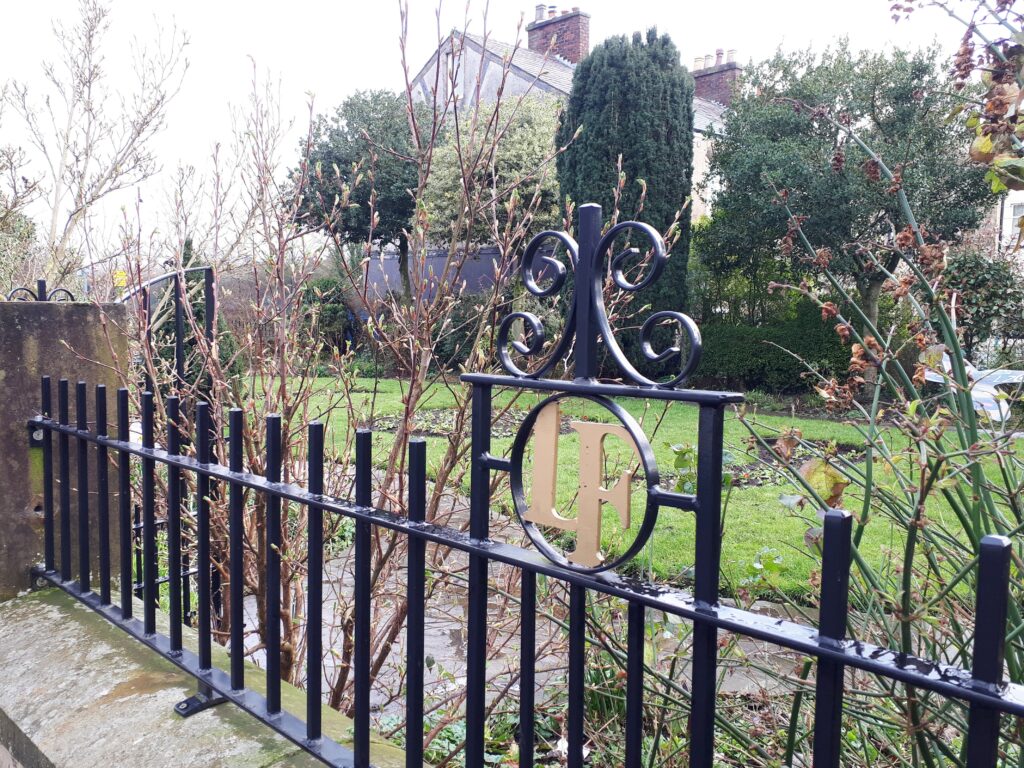
    The first meeting of the Brindle Historical Society since the summer break was on Monday 18th September when we welcomed Robert Langstaff, the chairman of the Kathleen Ferrier Society.  Born in Higher Walton in 1912, Kathleen was one of the world’s great singers from the last century.  Robert talked about Kathleen’s life and also played several musical extracts by her.  She attended Blackburn High School for girls where she was invited to join the choir and since she had a very loud and deep voice, she was asked to stand at the back!  She initially trained as a pianist, passing all the grades by the age of 14, which was unprecedented.

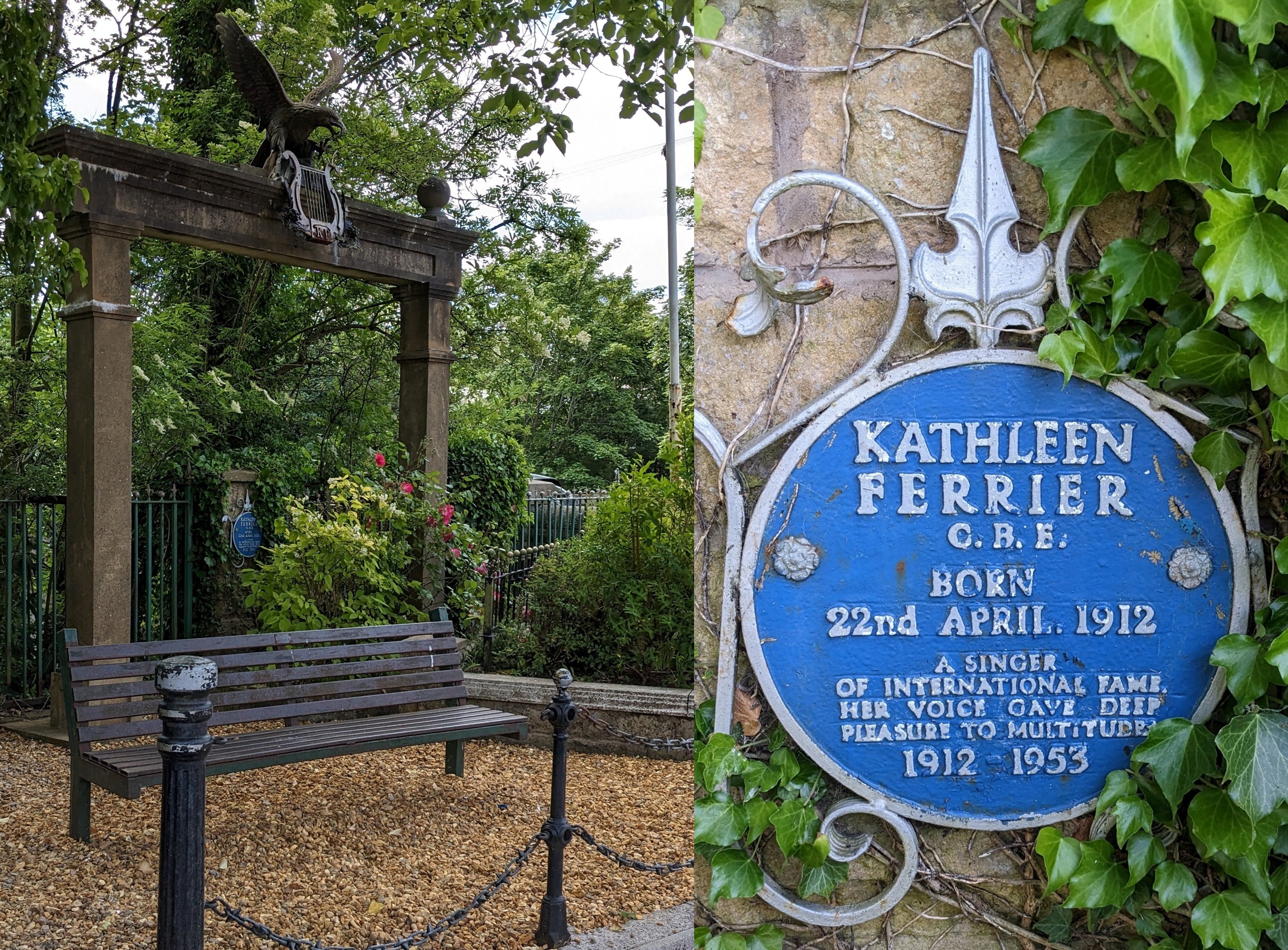
    The Kathleen Ferrier memorial garden and plaque in Higher Walton

    In 1935 she married a bank manager and moved with him to Silloth on the Cumbrian coast where she taught piano to local people.  She entered the piano section in the Carlisle music festival, but her husband bet her one shilling that she wouldn’t enter the singing section.  Never one to pass up a bet or a dare, she entered, and not only won the contralto section, but also the ‘Best Singer of the Day’ award.  This launched the next phase of her musical life where she sang at many festivals and began to achieve national fame.

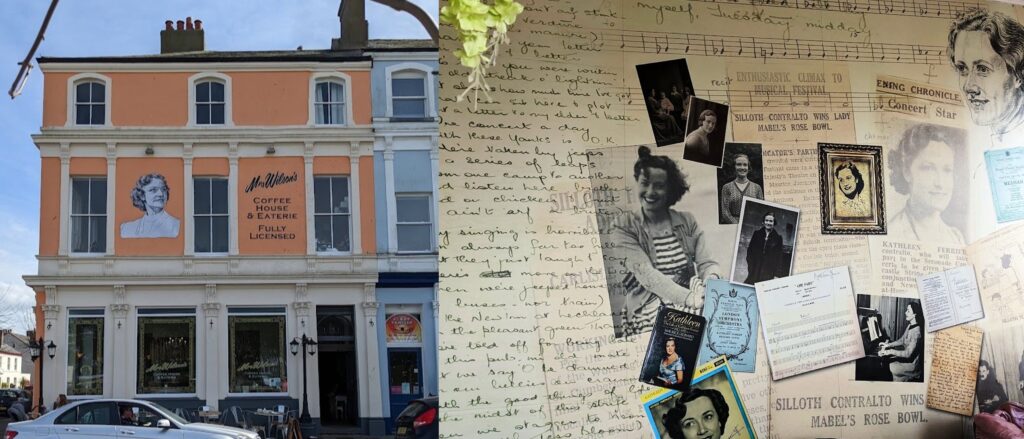
    A café dedicated to Kathleen Ferrier (or Mrs Wilson as she became) in Silloth

    During the war years, she toured the country singing in theatres, schools, church halls and factories and once even on a punt on the River Trent!  Her regular accompanist, Gerald Moore, reported that Kathleen had tremendous stage presence and authority and although she became nervous before a performance, she was never frightened since she had a wonderful technique.  She turned professional in 1949 and began touring throughout the world at a time when travel was difficult and in those days, even famous opera singers had to make their own arrangements. 

    In 1951 she was diagnosed with a malignant breast tumour but following treatment, she continued touring.  She collaborated with Bruno Walter and between them, they helped to popularise the works of Mahler.  It is said that the combination of Ferrier, Walter, Mahler and the Vienna Philharmonic Orchestra provides one of the best and most powerful experiences in classical music.

    Throughout 1952, she continued to work interspersed with periods in hospital, but she never lost her enthusiasm.  She was still in great demand towards the end of her short life, but she became unable to deliver due to her illness.  However, hers wasn’t a tragic life: in ten years of fame she achieved much more than most people and Bruno Walter said after her death; “She should be remembered not with sadness, but in a major key”.

    The large audience at the Historical Society meeting had plenty of questions for the speaker after the talk since several members had fond memories of this great local singer.

  • The History of Astley Hall – John Ball

    The Brindle Historical Society were delighted to welcome a history enthusiast, John Ball to give us a very informative talk on the history of Astley Hall on Monday 15th May.  We were given the story of the hall and its various owners through the years.  The present hall dates from the 1570s, but the site was inhabited from the 13th century.  In fact, during excavations in 1963, some urns were discovered dating from the bronze age and it is thought that these were from a burial mound close by.

    Robert Charnock, the hall’s owner from the late 16th century, was a generous benefactor to the town, and gifted £6 plus all the bricks used to build the original grammar school in 1611.  (He also owned a brick factory, so this may have also been beneficial to him!).  The grand brick frontage of the hall was erected in 1665, when Margaret Charnock married Richard Brooke.

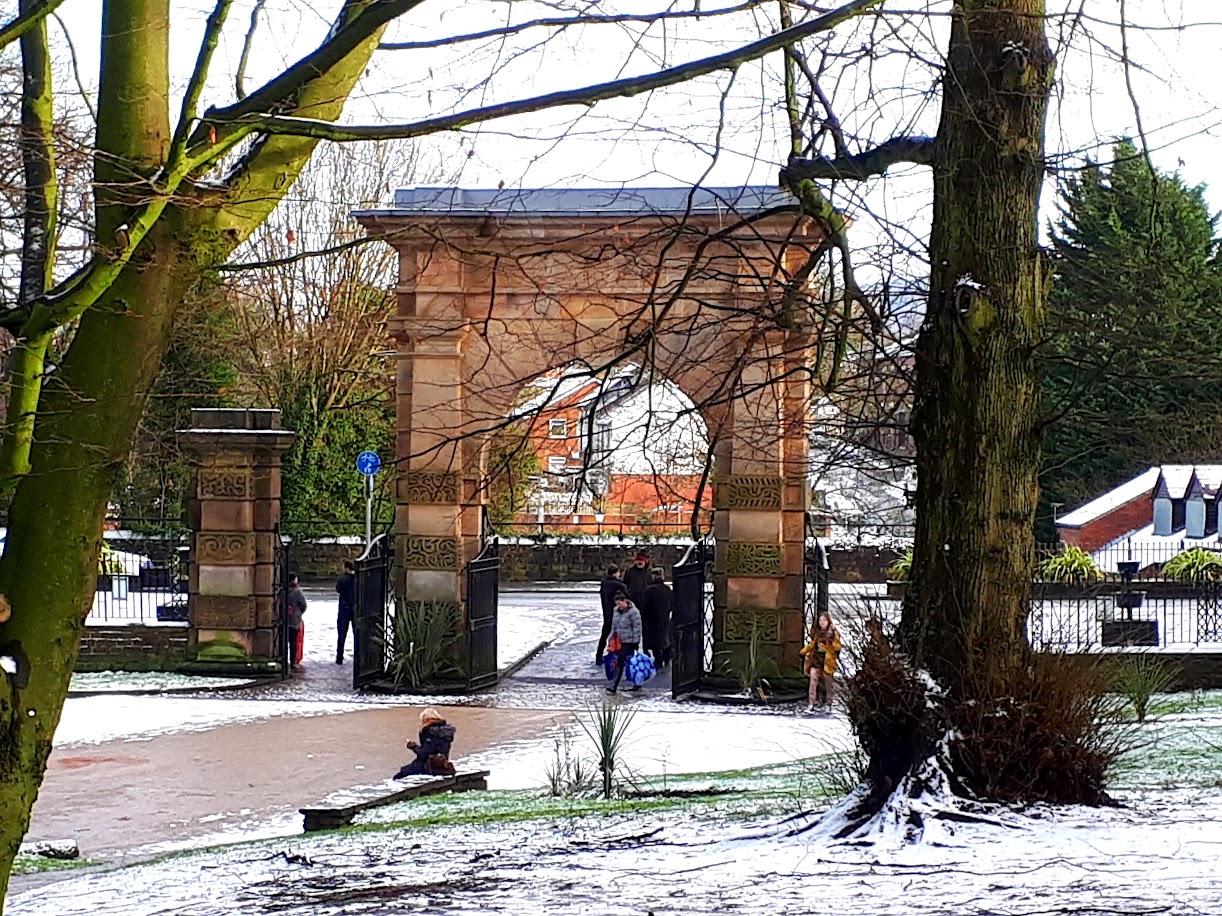
    After the Great War, Sir Reginald Tatton gifted the hall (but not the grounds) to the town as a memorial to the war dead.  The grounds were later purchased with money from a public subscription (which today would be called ‘crowdfunding’).  A film produced in 1922 shows the commemorations at the time the park Memorial Entrance gates were officially opened along with the cenotaph near Park Road.

    The Park Gates opened in 1922 (photographed in December 2020)

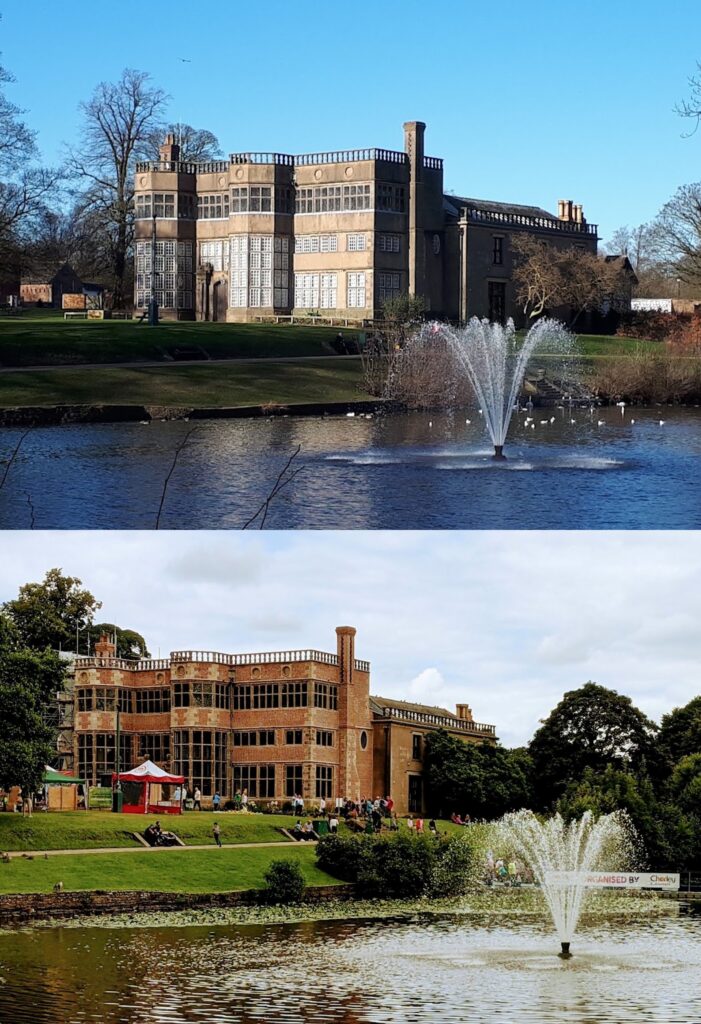
    A question that was put to the speaker was about the rendering which, until recently, covered the front elevation.  No-one was really sure why this was applied to the beautiful bricks beneath, especially since all but a very few were revealed to be in excellent condition once the rendering was removed.  The hall now looks as splendid as it did following its initial construction.

    Astley Hall after the rendering was removed

  • Uncle Joe’s Mintballs – John Winnard

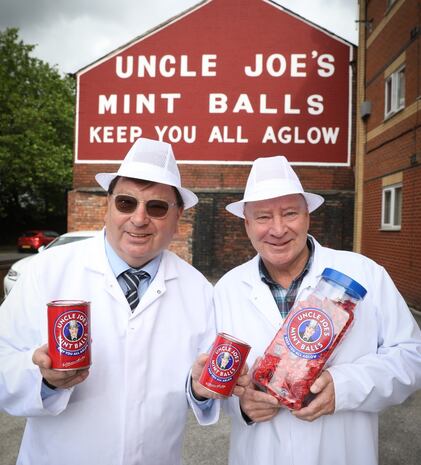
    On Monday 17th April, John Winnard, the great-great nephew of William Santus, the founder of Uncle Joe’s Mintballs, gave a wonderful talk to the Brindle Historical Society on the history of this famous sweet.  Uncle Joe’s Mintballs, now owned by John and his brother Antony, have been made in Wigan (and only Wigan) for 125 years and with a tiny workforce, manage to produce about 250 tonnes of sweets per year. 

    John & Antony Winnard

    In the early days, the sweets were enjoyed by miners, since cigarettes couldn’t be taken underground, and sucking on a peppermint sweet helped the men breathe in the dusty conditions.  In the early 20th century the marketing was quite simple: just get people to sample the sweets!  The product was so good, that once people tasted them, sales would surely follow.  In those days, several methods of handing out free sweets to try would be frowned upon today.  They were given away to men at football matches and to women queuing outside cinemas and even to children outside school gates!  Once these methods stopped, the focus turned to attending trade fairs and today this remains the company’s primary marketing method. 

    The traditional sweets contain only three natural ingredients of pure cane sugar, cream of tartar and the finest oil of peppermint.  They are hand cooked on open fires to caramelise and offer a unique minty taste.

    John explained that when his father died suddenly in 1990, he and his brother found themselves having to run the factory, but having worked in the various departments all their lives, they already knew the practical side.  They simply had to learn how to run a business – quickly!  They continued to employ the same firms of solicitors and accountants who guided them in the early days, and after four years, they managed to post record profits. 

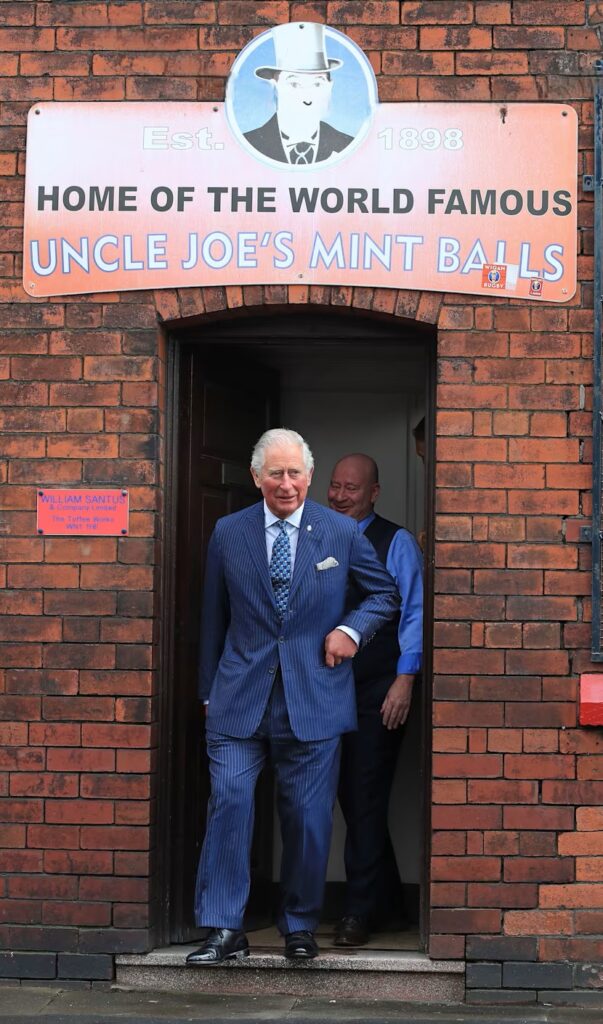
    John was awarded an MBE in 2011, and when he received his award from (then) Prince Charles, he offered to show the Prince round the factory if he was ever in Wigan.  In 2019, at the hundredth anniversary of the opening of the current factory, Prince Charles duly visited and met all the staff.  No doubt he would also have been offered sweets to try.

    After the disruption caused by the pandemic, the business has managed to get back to its previous production levels, but the company is constantly innovating and amongst other things is now looking at practical solutions to produce more environmentally friendly packaging.  They now produces a sugar-free version, and their flexible working practices means that they can increase production during the winter months when demand is about three times higher and allow the staff to have long weekends during the summer. 

    The then Prince Charles at the sweet factory in 2019 Credit: PA images
  • The Gallipoli Oak – Dr Martin Purdy

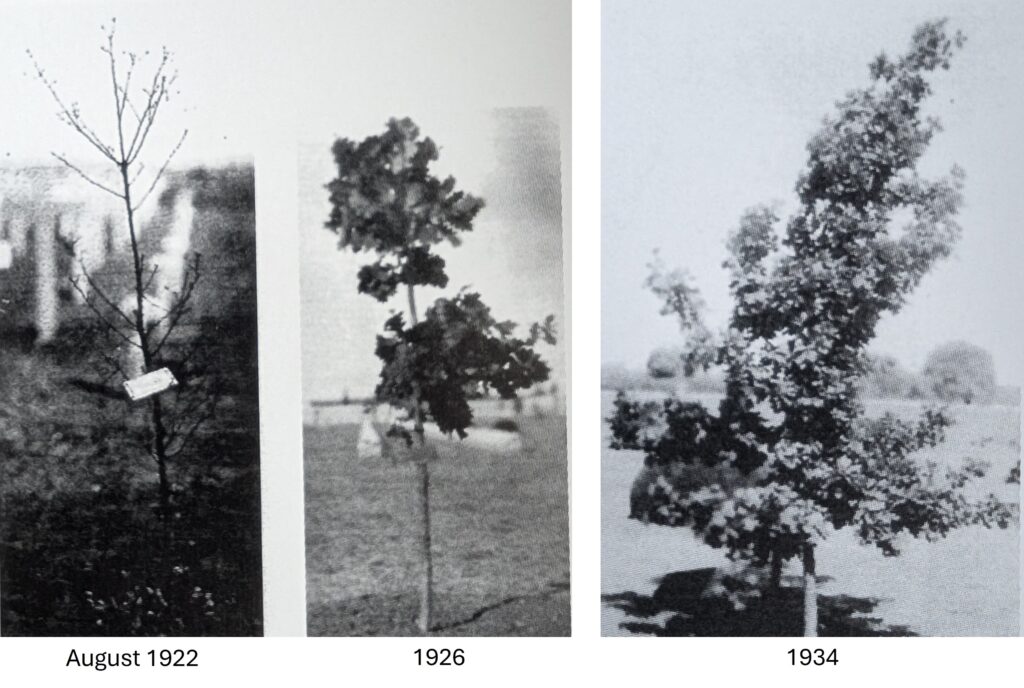
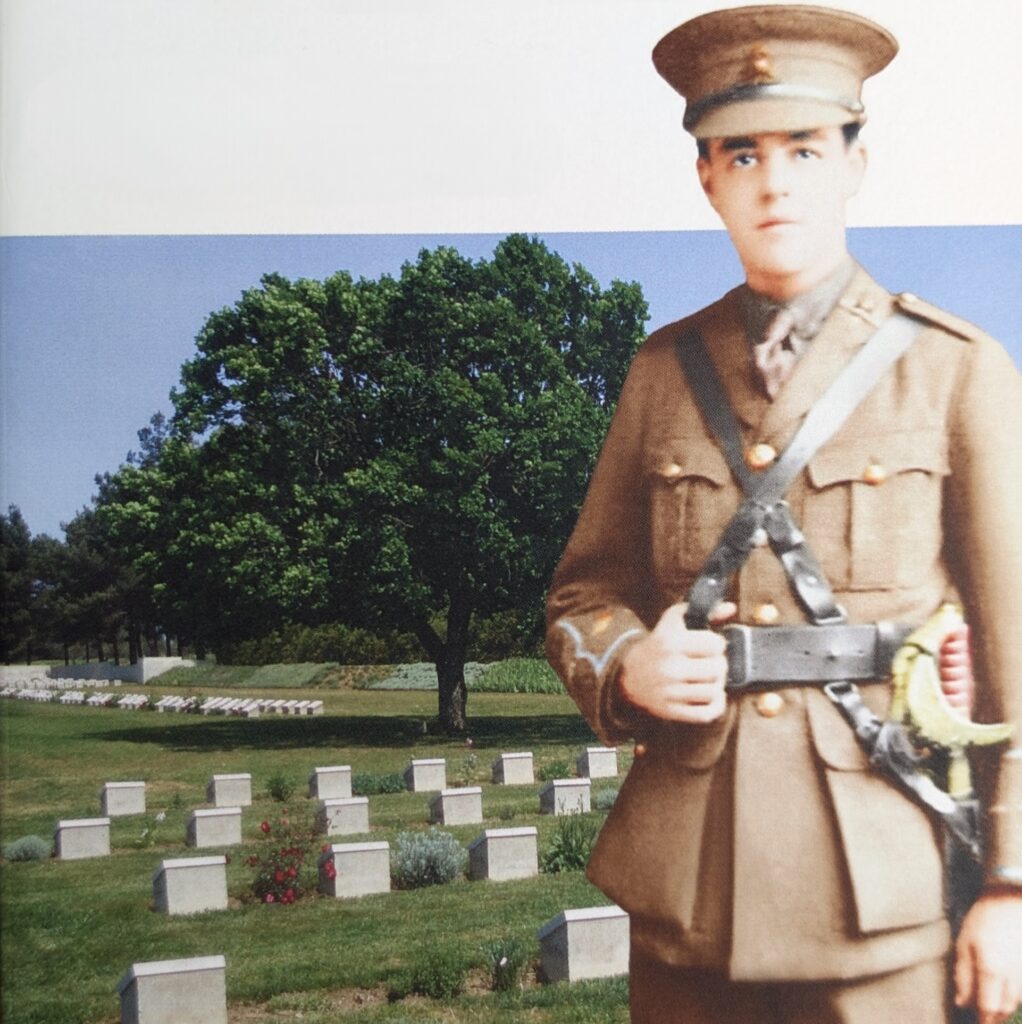
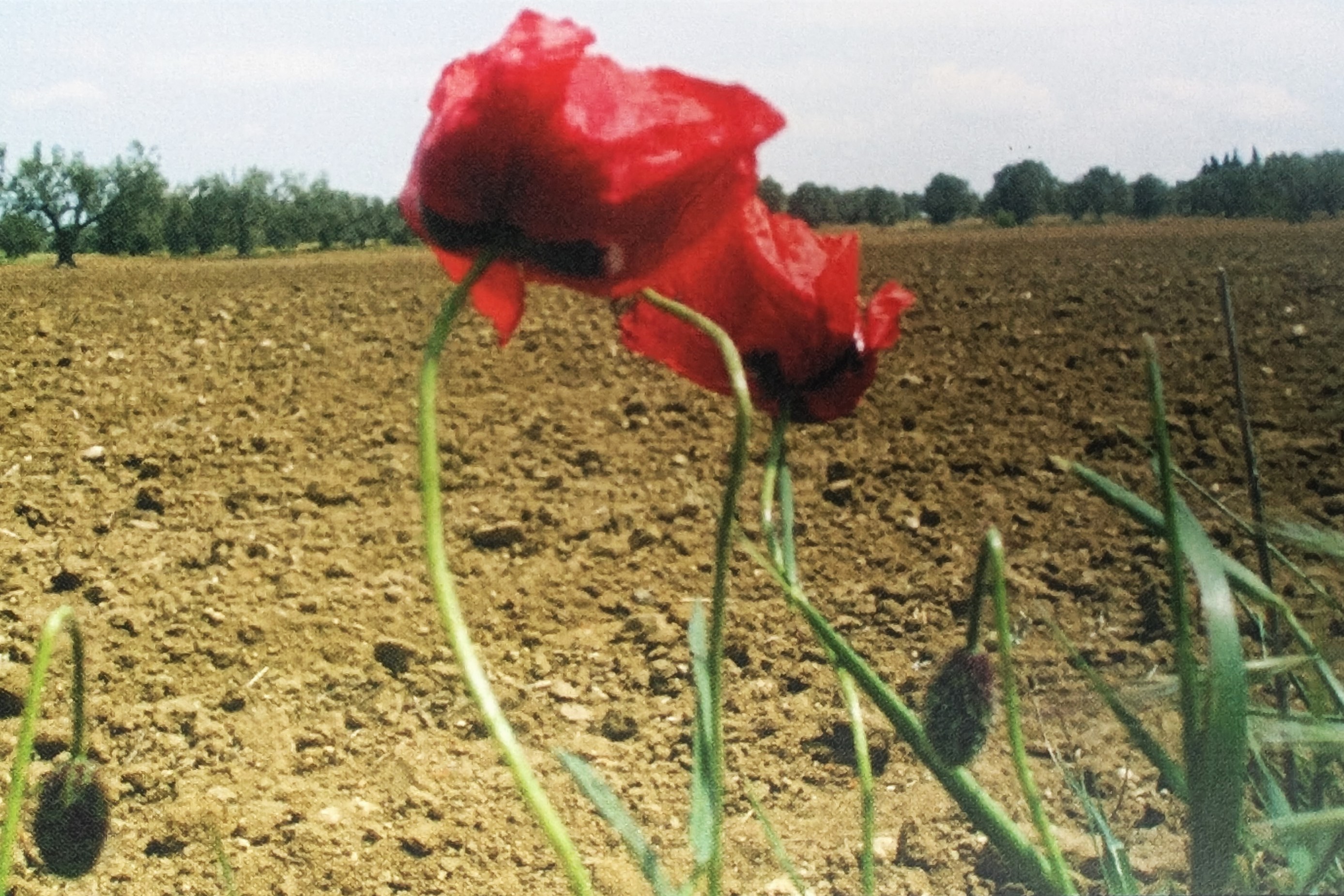
    In 1922, the father of Eric Duckworth, a soldier killed in the battle of Gallipoli, carried an oak sapling from Rochdale to Turkey where it was planted as a memorial to his 19-year-old son.  A century later, this lone oak continues to grow amid the dry earth that once played host to one of the most controversial military campaigns of the Great War. 

    Rather than simply relating the details of this fascinating story to members of the Brindle Historical Society, on Monday 20th March, Martin Purdy talked about the Gallipoli legacy, highlighting aspects of the battle which still resonate today.

    Martin then went on to highlight how contemporary reports from the same battle came to be written in widely different ways depending upon their intended audience.  A soldier’s postcard to his mates back at home may be full of bravado and derring-do whilst an officer’s report to his regiment may be factual, but devoid of any emotion.  Finally, a young soldier writing in his personal diary may admit to his terror and his longing to be home safely with his family.  Historians must be aware of these varying audiences and take care not to bias any historical account by favouring one type of account over another – they are all true.

    He explained how historians need to be aware that in any account, there will be several versions of the ‘truth’.  Each of us experiences the same thing from a different perspective, and from that arises a different appreciation of the context of any event.  So for the Australians and New Zealanders (fighting together for the first time under the term ANZAC – Australia and New Zealand Army Corps), they see the battle of Gallipoli as a high point in their history, even though the battle was lost.  Their narrative explains that it was the British who lost the battle, despite the best efforts of the ANZAC forces.  This has shaped the way their citizens have viewed both their past and their understanding of the present.  Today, ANZAC day (25th April) is seen more as a celebration than a memorial.

    When discussing evolving legacies, Martin explained that certain things catch the public’s imagination and then become widely publicised and this may influence any future reporting of the event.  Far more Australians and New Zealanders visit Gallipoli than British, even though more British soldiers perished there.  The Gallipoli Oak, having reached maturity, is now a symbol which is beginning to focus the eyes of visitors onto the sacrifices made by British troops at that time and may begin to reverse the legacy that the battle was just an ANZAC event.

  • From Fairclough to AMEC – Keith Hick

    No report written, but this was the fascinating story of a Lancashire-based construction dynasty between 1883-2007. 

    The illustrated talk gave the fascinating story of Leonard Fairclough, Adlington stonemason whose company went on to build many of the bridges on local motorways.  The talk provided a history of the company up to the early 1980s when the Fairclough name disappeared as it became part of the AMEC group.

    Former Leonard Fairclough headquarters in Adlington