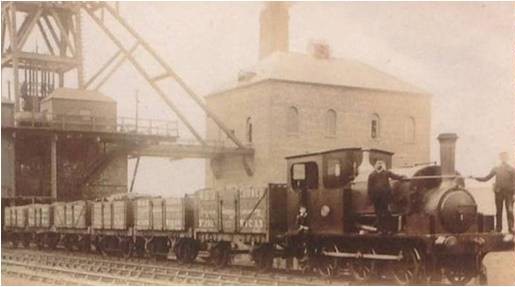
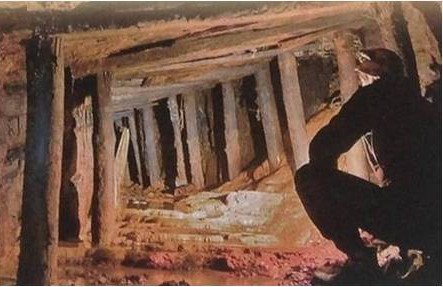
On Monday 20th November, members of the Brindle Historical Society were treated to a fascinating account of life as a miner in the coalfields of Lancashire. Alan Davies has written many books on the subject based on his first hand knowledge of working in the mines and later as an archivist and keen photographer. The talk was centred on photographs of the mines and miners, some dating from as early as 1880 and collectively, they provided a social history of the occupation.
We saw one of the earliest photographs ever taken of a miner at work on the coalface in the 1890s. This would have been taken using a magnesium flash which would burn brightly for two or three seconds whilst the film was exposed. In addition, a very early film was shown of the aftermath of the 1910 Hulton Pit disaster where 344 men and boys were killed following an explosion in the mine. The shock from the blast travelled 1,000 yards underground and a further 300 yards up the pit shaft, causing extensive damage to the buildings at the pit head.
During the 2nd world war, concerns about mines sustaining damage to the pit head gear from enemy bombs caused mine owners to link underground workings with rival companies to allow mine workers to escape using other pit shafts should damage occur to their own lifting engines.
In 1947, such co-operation was guaranteed as the coal industry became nationalised as the National Coal Board. In addition, a rapid rise in mechanisation in the mines took place at this time, taking ideas from the Germans whose technology was more advanced than that of the UK. The downside of mechanical coal cutters meant that more dust was formed which caused a rapid increase in lung damage amongst miners.
The last deep mine closed in 1993 ending several centuries of coal extraction in Lancashire.
Leave a Reply