In April, Derek Cartwright described to the Brindle Historical Society how one company built – and effectively created – the town of Horwich. In 1884, Horwich was a small rural settlement of fewer than 4,000 people, yet it rapidly became one of the fastest-growing towns in the country. The catalyst was the Loco Works, established after 650 acres were purchased for just £36,000. Although not the first choice for the Lancashire and Yorkshire Railway – the area lacking both coal and skilled labour – the bargain price proved irresistible.
Under William Barton Wright, and later John Aspinall, hundreds of navvies arrived in 1884 and within two years had constructed the Erecting Shop, with locomotives already arriving for repair. Skilled workers were transferred from the Miles Platting works in Manchester, and by 1892 the works employed over 3,000 people. Before construction began, however, the site had to be levelled requiring the removal of half a million tons of earth, effectively moving a hill. The migrant workers also built housing for the expanding workforce which was soon supplemented by private builders providing shops, pubs, and other essentials as the town grew.
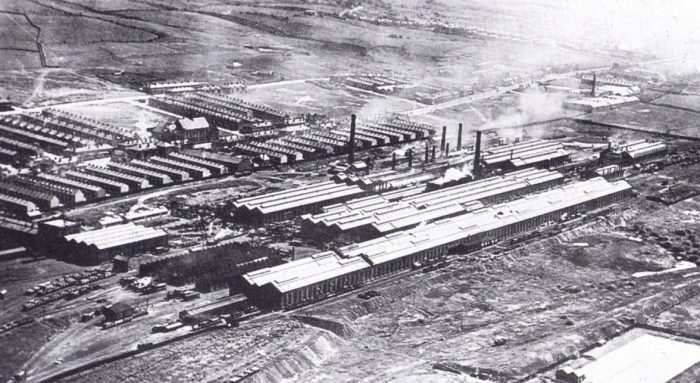
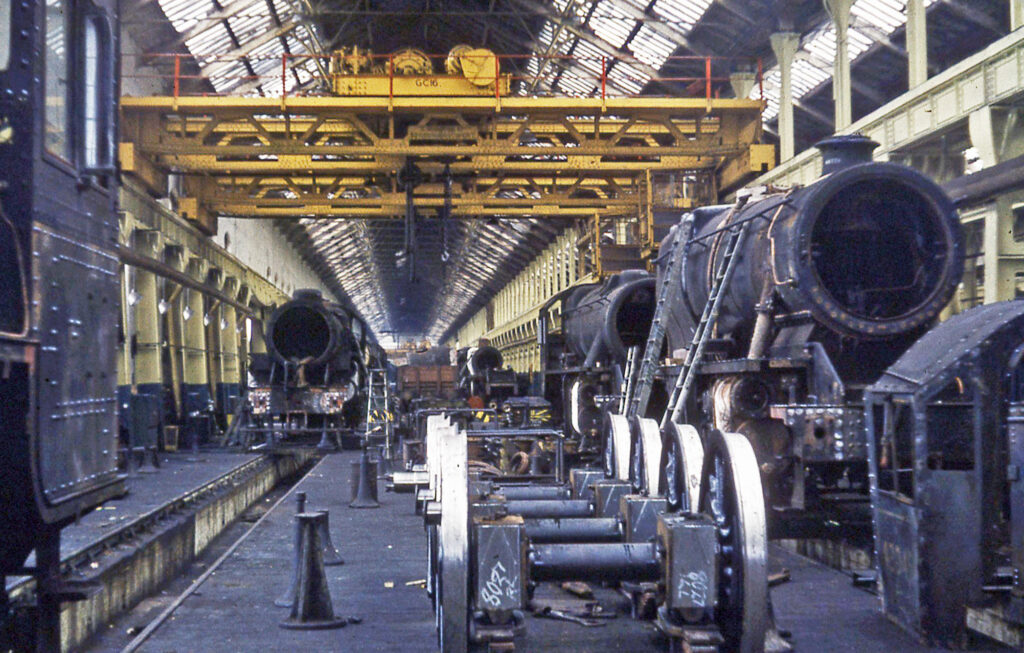
The factory itself was immense, with the Erecting Shop stretching over a quarter of a mile. It was a state-of-the-art facility, featuring natural and electric lighting, a telephone system, its own water supply, and even gas production. Twin overhead cranes were capable of lifting over 100 tons and regularly carried engines over the heads of the workers below. An 18-inch-gauge railway was also constructed, using small 0-4-0 tank engines to carry materials around the site.
Management were notably forward-thinking: alongside employment, the company provided a cottage hospital, a bandstand, and recreation ground, and trained hundreds of workers in its own school, ensuring a steady supply of skilled labour. Some employees went on to have remarkable careers: apprentice A. V. Roe later founded AVRO (producer of the Lancaster Bomber amongst other aircraft), while Sir Nigel Gresley, who worked under Aspinall, designed famous locomotives such as the Flying Scotsman and Mallard.
During the First World War, the works produced shell cases as well as locomotives for France; in the Second, it diversified further, building over 400 Matilda tanks and Oerlikon shells.
The last steam locomotive was built in 1957, though repairs continued until 1964. Thereafter, work shifted to foundry work, specialised products such as leaf springs, along with refurbishing diesel multiple units, repairing wagons and converting coaches for maintenance use – much less glamorous but still keeping the wheels turning.
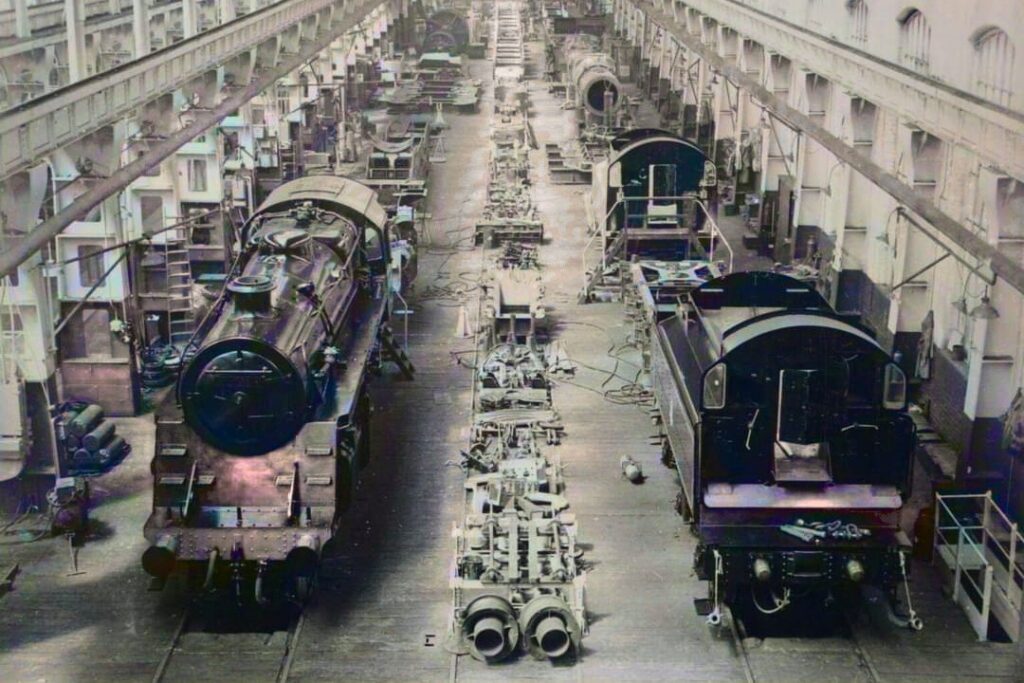
In the 1980s, BR Engineering Ltd. rationalised its workshops, and Horwich closed in December 1983, 97 years after opening, having built 1,800 locomotives and repaired more than 50,000. Not a bad innings for a town that, just a century earlier, barely warranted a mention on the map.
For more historical information about Horwich in general, visit Horwich Heritage. (https://www.horwichheritage.co.uk/looking-back.php#mast)
Leave a Reply