2024

Talks held in 2024

  • The Legacy of Frank Hornby – Les French

    It is unusual these days to attend a presentation without the use of PowerPoint, and it is even more rare for the speaker to bring along toys for the audience to play with, but this is just what happened in November at the Brindle Historical Society.  Les French talked enthusiastically to the audience about Meccano and Hornby trainsets and also brought with him dozens of artifacts from the Frank Hornby Heritage Centre in Maghull. 

    We learned that Frank Hornby was the son of a grocer from Liverpool who became a bookkeeper before having an idea to entertain his children that would make his fortune.  Although he wasn’t an engineer, in 1901 he created a simple but ingenious idea to sell various sized strips of metal with holes punched at regular intervals together with a set of small nuts and bolts.  Everything was interchangeable and so any item could be fitted to another thus opening endless possibilities for making items such as cranes, cars or even trains.  He borrowed £5 as start-up capital and called the business Mechanics Made Easy.  By 1908 he changed the name to Meccano and continued to expand the business, moving to larger premises.
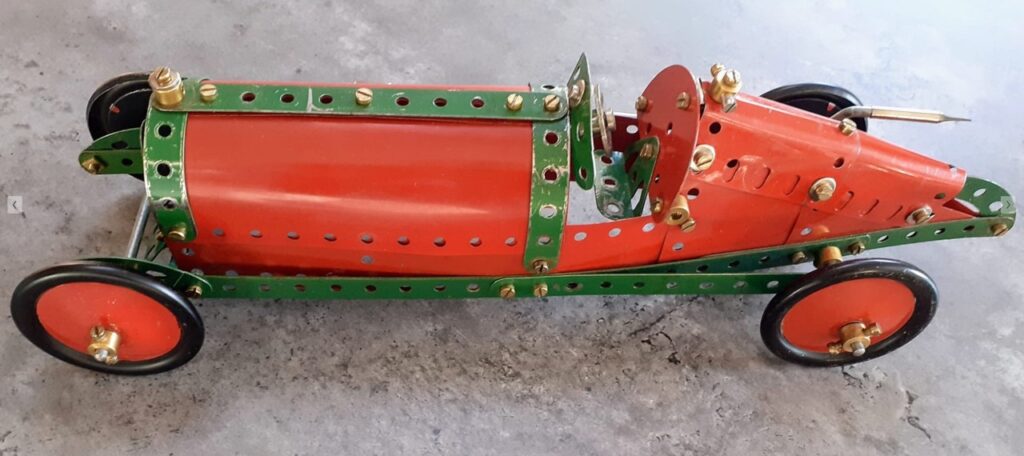
    Bugatti made from Meccano

    His main skill was in marketing, and he had the inspired idea of asking existing Meccano users to submit designs of items they had created, and he offered a substantial cash prize to the best ones.  These designs and instructions how to construct them were featured in a brochure, and he also sold kits containing all the necessary parts to build each design. 
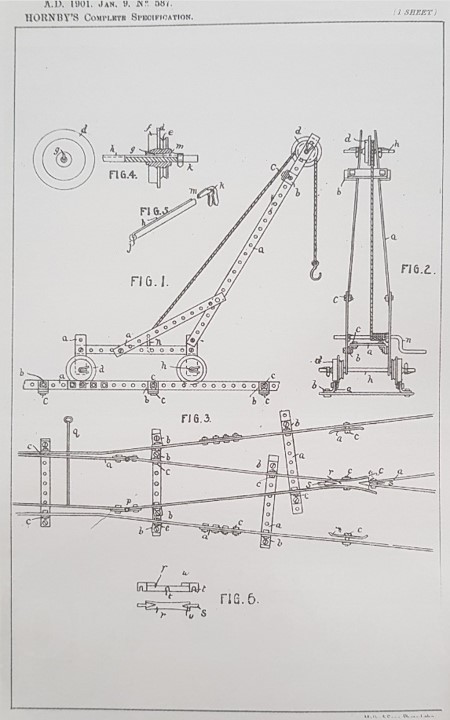
    Specification for a Meccano crane

    By 1920 Frank had begun manufacturing clockwork trains, under the Hornby name.  The scale was O gauge, and he realised that he was selling these products to wealthy people who would set up tracks in their (usually) large houses.  To meet a perceived demand, he also began producing trackside items such as signal boxes, houses, and even model cars, all made to the same scale.  One of the first prototype cars that was produced was shown to his daughter-in-law who exclaimed “Oh, that’s dinky!” and the name stuck, and Dinky cars became another very popular line of its own.
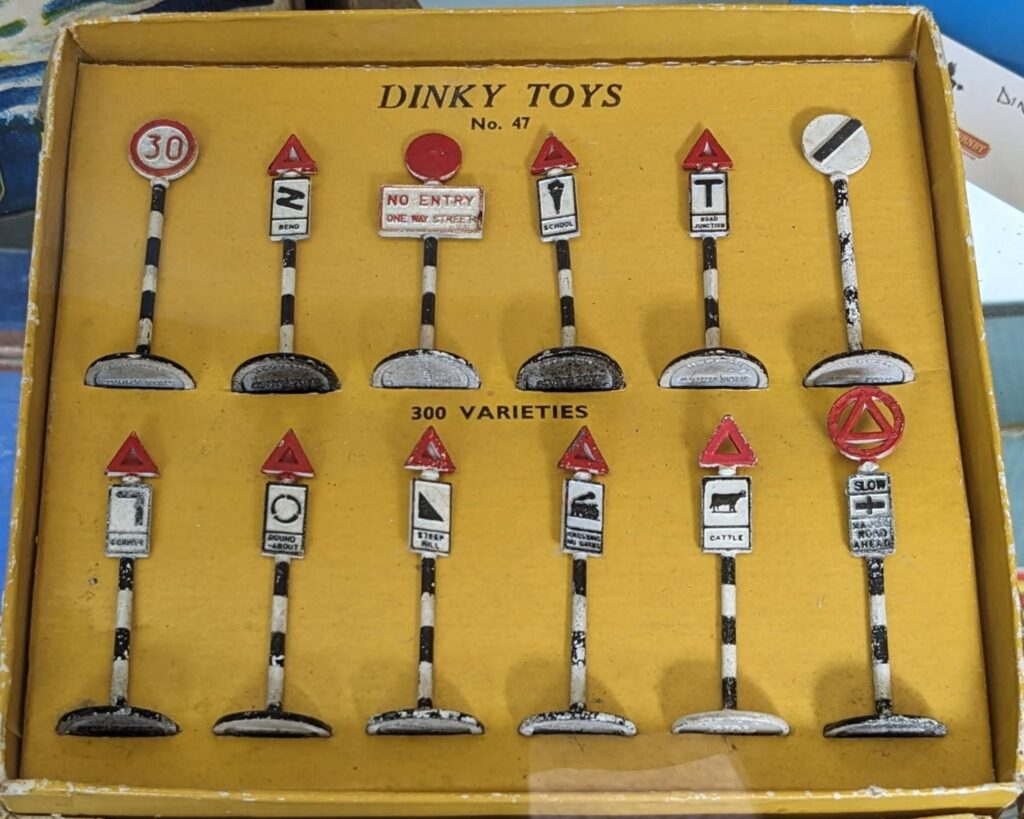
    Dinky cars also had tiny road signs

    Soon he needed to move to a much larger 5-acre site and employed over 2,000 people, many of them women whose dexterity was suited to the tiny parts being produced.  Sadly, Frank died in 1936, but the company continued to thrive under the control of his two sons.  Soon after the war, material was still scarce, and the company realised that if they reduced the scale of the trainsets by half (to OO gauge), they would need much less material.  There was also a bonus in that the smaller products were cheaper to make and could be sold at less cost to a much wider market and so business continued to flourish.

    Many famous people love Meccano and Hornby.  Sir Alec Issigonis, the inventor of the Mini, even received as his retirement gift the largest available Meccano kit.  He built a grandfather clock with it.
  • Medieval Manuscripts – Brian and Janet Farrimond

    At a presentation on medieval manuscripts on Monday 21st October, members and guests of the Brindle Historical Society were treated to truly a remarkable evening.  It took the audience all of their powers of concentration to take in the volume of information that was being delivered.  At the same time that slides were being projected onto the screen, the speaker, Brian Farrimond, was explaining the background to the subject whilst his wife, Janet, handed round leaves from genuine manuscripts.  And in some cases, if the manuscripts were of sheet music, we even were treated to the sound of an organ, or monks singing the music score.  This was a multimedia presentation at its most intense and was thoroughly absorbing.

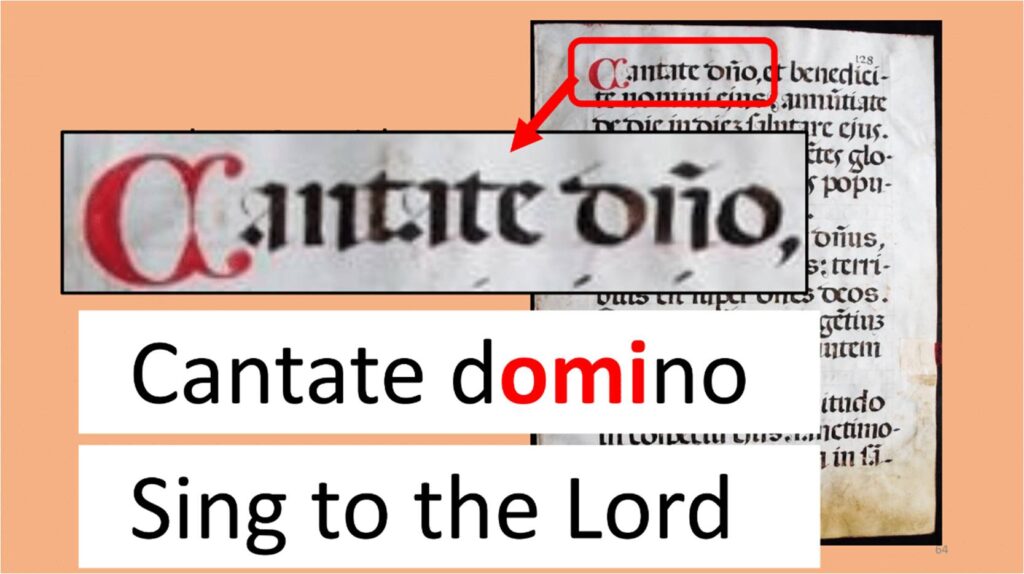
    Many hundreds of thousands of manuscripts were produced pre-reformation and most of them were for religious purposes, the religion being Roman Catholic.  Brian explained that all the documents at that time were hand-written in Latin, the universal language of the church, and so could be understood throughout Europe.  The manuscript leaves which were handed out were written on parchment which was created from animal skins.  It was remarkable that the colours were still so vibrant after six or seven hundred years.  Some were very large (perhaps 550mm x 400mm) and these would have been read by a priest or monk whilst addressing a congregation.  Others were tiny (75mm x 50mm) and would have been used as individual prayer books. One Italian manuscript was handed round which dated from 1350, but we were assured that all traces of the bubonic plague bacteria had been cleaned from the document.

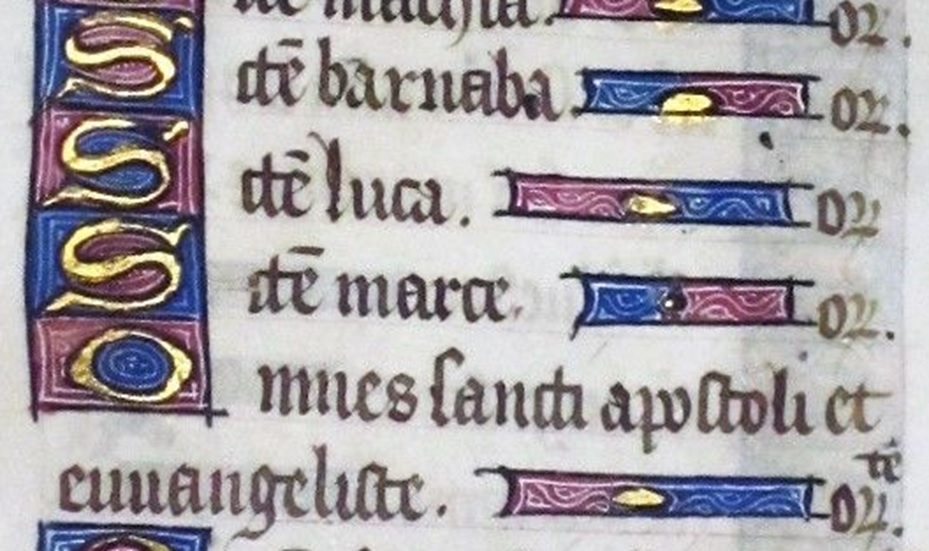
    Brian took time to explain how the manuscripts were read.  I hadn’t realised that the writers used a form of shorthand where many letters were omitted from words.  The priests or monks knew the shorthand code and were able to read the words as intended, which were obviously in Latin.  I came away with a new respect for anyone who could read and understand such documents.  Some manuscripts were beautifully decorated with gold leaf and because the gold shone under certain lights, these were known as illuminated manuscripts. 

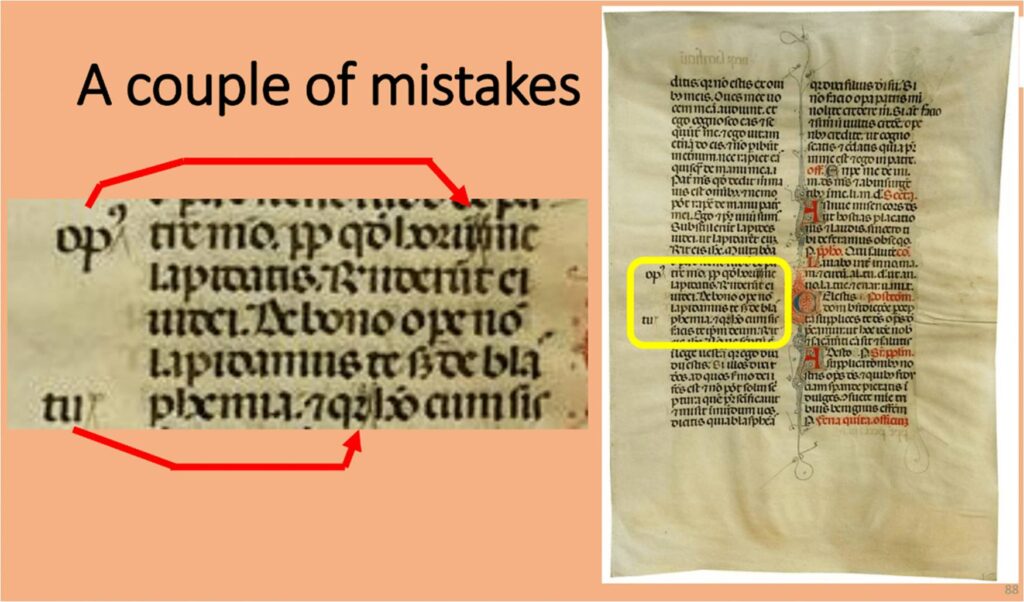
    Interestingly, since all the manuscripts were hand-written, several of them contained mistakes and corrections.  The corrections were found in the margins and may have been added by the writer at the time of production or perhaps later if the error was only discovered once the document was in use.

    Brian had the audience captivated throughout the presentation and he explained that he would be most happy to repeat it to any group or society who may wish to hear it.  It is certainly recommended.

  • Why do we love a Town Crier? – Rawden Kerr

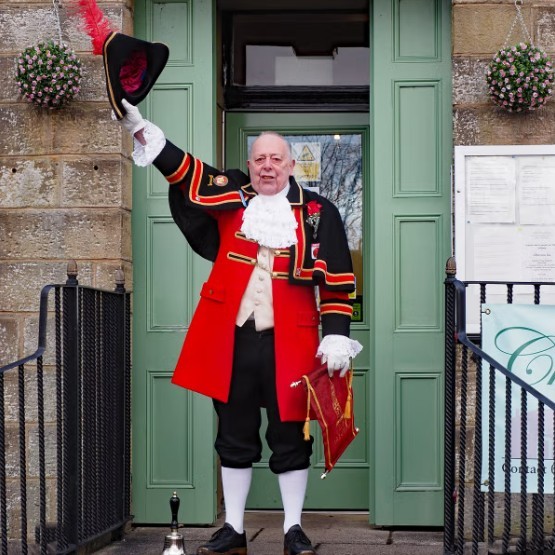
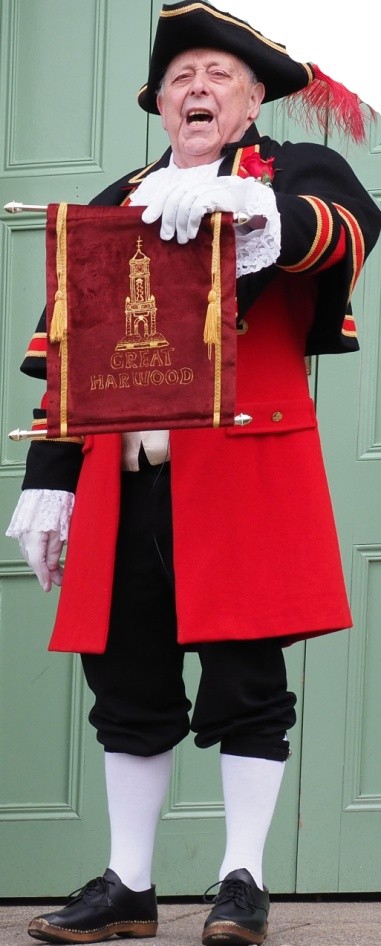
    The audience at the Brindle Historical Society meeting on Monday 16th September were aroused after their summer break by a startlingly loud hand-bell rung by the Town Crier of Great Harwood, Rawden Kerr who visited us to explain the long history of town criers.  Once his bell was replaced into its purpose-made holster slung round his waist, which ensures that his hands are free to hold the scroll, Rawden told us about his uniform which was predominantly red and black.  There is no set style of dress for a town crier with each community choosing whatever they like.

    The concept of a town crier goes back millennia to Greek times.  A man called Stentor, whose cry was said to be as loud at 50 men, was a herald, and today the word stentorian is still used to depict anyone with a particularly loud voice.  For most people, perhaps the most famous heralds were the angels in the bible bringing news of Jesus’ birth to the shepherds and although they weren’t given that title, these angels could be considered among the first town criers.  Roman messengers were also cited as early-day examples, but sadly if their messages were of bad news, the chances of being executed were high – hence the plea of “don’t shoot the messenger”.

    Three things are required of a town crier: to be honest and true, to be loyal to the monarch and to keep your head.  In fact, they were deemed to be so very important and trustworthy that a law was passed to make it a treasonable offence to molest a town crier – Rawden was keen to inform us that this law has never been repealed!

    Rawden, just after being voted one of the best Town Criers in the UK

    In all these examples, the messengers were used because most people were unable to read or write, and the main skill required of a crier, apart from a loud, clear voice, was a good memory.  The criers would move about the town to announce important news to everyone but after the invention of the printing press, they were less reliant on memory since the proclamation would be nailed to posts at strategic positions around the town for everyone who could read to do so.  These posts became the origin of the modern Post Office where news was disseminated and also why so many newspapers had the word ‘post’ in their title.

    Not all towns have a town crier; there are none in Chorley, Blackburn or Burnley for instance.  That Great Harwood still does have one is due to a Royal Charter given in 1388 allowing the town to hold a week-long fair from 21st August each year.  This can only be upheld, however, if the town crier gives a cry on that date.  Rawden (or his apprentice) are assiduous in maintaining this tradition, even if the fair doesn’t always happen.

    In an answer to a question after the talk on inclusivity, Rawden will be looking at ways of translating his cry into other languages including possibly sign language for those hard of hearing.  As you can tell, the position of Town Crier is still very much alive today.

  • The Battle of Bamber Bridge – Professor Alan Rice

    The large audience attending the Brindle Historical Society meeting on Monday 17th June were treated to a remarkable talk and video presentation about the Battle of Bamber Bridge.   This unusual battle between American soldiers stationed here took place in June 1943.  Professor Alan Rice (Professor in English and American Studies at UCLAN and co-director of the Institute for Black Atlantic Research) was very well qualified to explain about how this battle occurred between troops both apparently fighting on the same side. 

    During World War II, of the 1.2 million US troops who were stationed in the UK, approximately 10% of them (120 thousand) were African Americans who were segregated from the white troops and were not allowed to fight in combat divisions.  Instead, they were stationed in separate barracks and only employed as support staff (cleaning, cooking, driving etc.) which instinctively felt wrong to British people.  For their part, the black troops were amazed that no-one expected them to step into the gutter if they met a white person on the pavement and so were very polite and humble and delighted to have been welcomed by the people of Bamber Bridge.  The UK government actually enabled this racism by passing a law (The Visiting Forces Act) which, amongst other things, stated that if US troops broke any laws, they would be tried by the US Military Court, not by English law.  The remarkable thing to note is that the Allies (including British and American) were fighting fascism which at its heart is about racial supremacy and yet racism was being clearly displayed. 

    The black troops were warmly welcomed into the community as friends and began attending local church services and going for drinks in local pubs.  The US Military Police (MP), who were all white, became upset by this and felt that the blacks were ‘getting above their station’ by integrating, and in some cases fraternising, with the locals.  The MPs believed that blacks had to follow the standards that had been set by the US army, which, of course, were different to those followed in the UK, where there was no segregation.

    The black troops had complained for months about this racism to no avail and so at 10pm on Thursday 24th June 1943, the tension in the town reached a critical point when two MPs entered the Hob Inn and found a black man committing some minor infringement and tried to arrest him.  Others stood up for their colleague and the MPs, being outnumbered, left and sought reinforcements.  When they returned with two others, the black soldiers were walking back to their barracks and on the way were chatting to three ATS women. 

    Upset by this fraternising, the armed MPs once more tried to arrest the unarmed black men but were once more forced back.  At this point the black troops had decided to stand up for their rights and had raided the armoury and took over their camp.  When more MPs returned later, one of their jeeps had a machine gun mounted on it which set off a long battle between the troops.  In the five hour on the streets of Bamber Bridge over 400 shots were fired and one black soldier was killed.  This death was never investigated afterwards, but 37 of the black participants were court-martialled and many were charged. 

    To date, none of those charged has been pardoned, yet this incident (along with similar ones around the country) contributed to the rise of the civil rights movement led by Martin Luther King. 

    And so a local story has national and global implications.  A book telling this story is to be published soon and will be available in the Hob Inn pub in July and will include a DVD of interviews with witnesses of the battle.

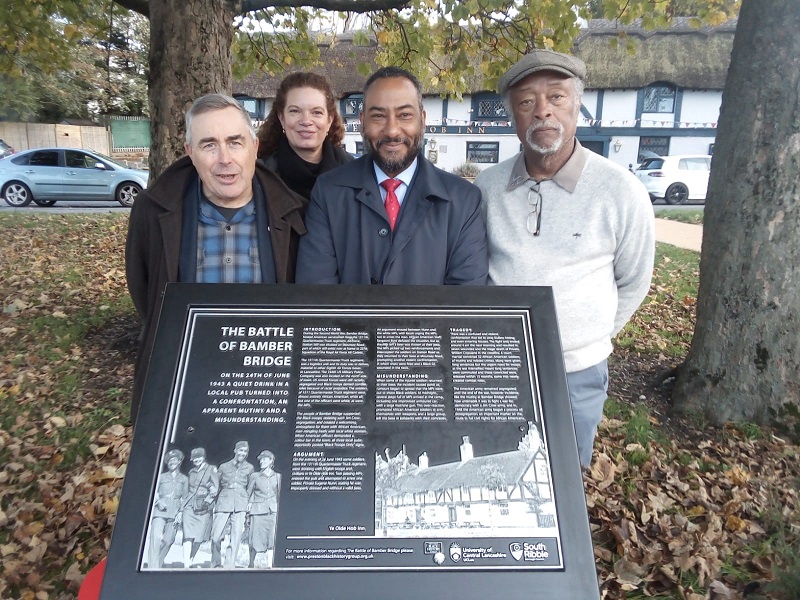
    Professor Alan Rice meets with key stakeholders for the 80th Anniversary event.
    (L-R) Professor Alan Rice, Jemma Rodgers, Producer of The Return of the Railway Children, Aaron Snipe, Senior Foreign Service Officer, Embassy Spokesperson US Embassy, and Clinton Smith, Chair, Preston Black History Group. Photo credit Tony Maiden from the Black History Group.
  • Cotton Town Chronicles – Peter & Barbara Snape

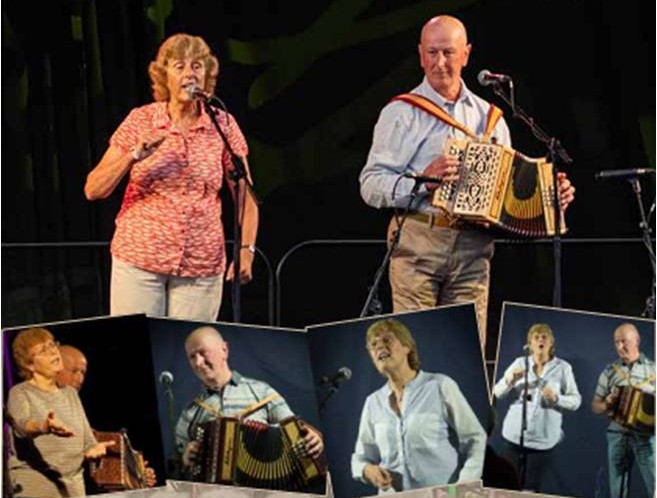
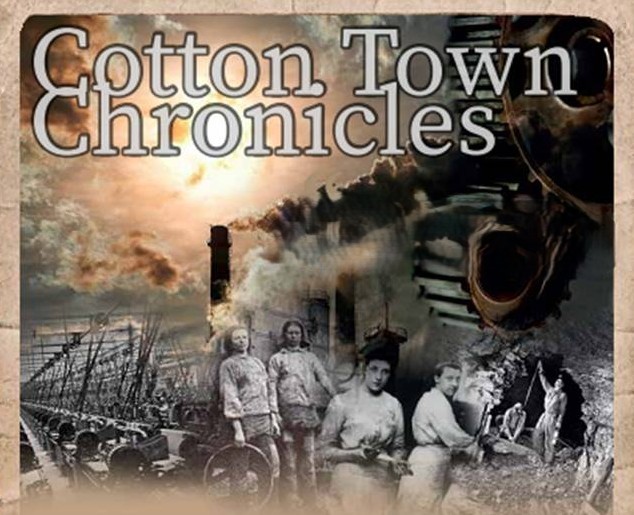
    In May the society hosted Peter and Barbara Snape who entertained us with songs and stories which brought to life the circumstances endured by working class people in Lancashire not so long ago.  Peter and Barbara have a keen interest in traditional English music and tonight Barbara sang several folk songs accompanied by Peter on a melodeon which told stories of the lives of local people from the 1800s.   By 1816, Manchester had 82 steam-powered factories mainly processing cotton and the Industrial Revolution was at its height.  This transformation had divided Lancashire between the mainly rural North and the heavily industrialised South and the music of the labouring classes also changed from singing pastoral songs associated with countryside activities to the more gritty lyrics about factory life.

    From 1840, as the markets matured, the region underwent an economic recession, and many of the songs began to reflect this in their words.  The Spinners Lamentation was a typical ballad of the period along with many other songs which described life in the mills and factories.  In the 1850s, the songs began to describe the difficult conditions endured by Preston workers after they went on strike to protest an imposed 10% pay cut.  Soon after this, the American civil war detrimentally affected cotton production, and as the ‘cotton famine’ took effect in Lancashire, many workers were laid off at the mills.  To try to counter this, many labourers were offered work creating new public parks which were being set up as labour projects.  Avenham Park in Preston is one such area which many will be familiar with.

    The work in the factories was noisy, hot and hard and involved long working hours.  However, in the mid 19th century, wakes weeks were established where factories would close for a period in the summer months and many workers would head off to the seaside.  Barbara sang many songs which reflected these changes over the years and the lyrics were often very poignant.  Many hundreds of ballads were printed as street literature and sold on the streets as ‘broadsides’ printed on a single sheet of paper.  The music was not usually written down, however, and the performers would sing the words to popular melodies already known. Overall, the many members and guests had a thoroughly entertaining and educational evening, learning through the songs a great deal more about the conditions endured by people from this region not too many years ago.

  • Viking Voices – Paul Atherton

    Paul Atherton, a former HR Director from British Steel, had always wanted to write a book.  Once he left work, he saw his opportunity, but needed a subject, and serendipitously, Brindle Historical Society provided one for him.  After attending a talk on the Cuerdale Hoard at the society, Paul’s interest was sparked and he began researching the events which led up to this huge Viking treasure being left on the banks of the River Ribble.

    Site of the memorial stone by the River Ribble. Photo credit AshwarP

    Paul described to us many fascinating tales about the Vikings, using a selection of old maps to describe how the Norwegians and Danes came to be in this part of the world.  The Viking era started in 793 AD with a raid on the monastery at Lindisfarne and only ended 1066 when the battle at Stamford Bridge finally ended the domination of Scandinavian kings.  We were told how the Norwegians typically sailed directly across the North Sea to land on the North East coast, but the Danes more usually followed the European coast, crossing the channel to raid Essex and Kent.  In 866 AD, in attempt to save their own territories the East Anglians actually paid some Danish invaders and gave them horses to persuade them to move North where they subsequently settled in Eoferwic, later Jorvik, but known to us now as York.

    Norwegian raiders also travelled down the West Coast of Scotland, settling in what we now know as Ireland, making landfall at Rathlin Island.  These raiders undoubtedly fell into relationships and subsequent marriages with the local residents and the Hiberno-Norse were the product of these relationships.  Over time, the Hiberno-Norse crossed the Irish Sea and settled on Wirral and along the Ribble Valley. 

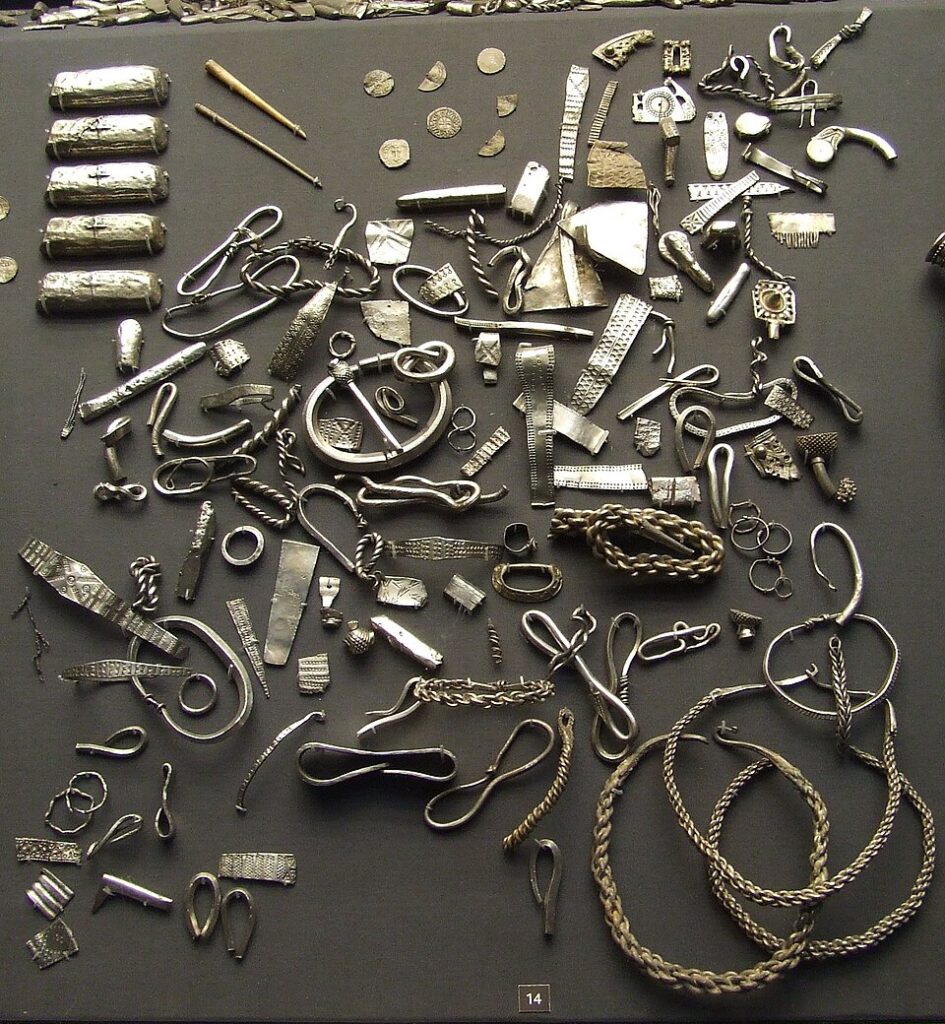
    The Cuerdale hoard is thought to be a war chest hidden around 903-905 AD at the top of the tidal reach of the Ribble not far from where the Tickle Trout hotel is now located.  It consisted of coin, jewellery, hack silver and ingots, all held in leather bags within a lead-lined wooden chest.  It was discovered when workmen were repairing the banks of the Ribble on 15th May 1840.  It weighed around 40kg and is the largest find (by weight) ever found in the UK.  Many of the coins were Anglo Saxon, but some were Arab dirhams thought to have originated in Baghdad, which indicates the length of the trading routes established at that time.

    The Cuerdale Hoard (British Museum) Photo credit JMiall (Own work), CC BY-SA 3.0

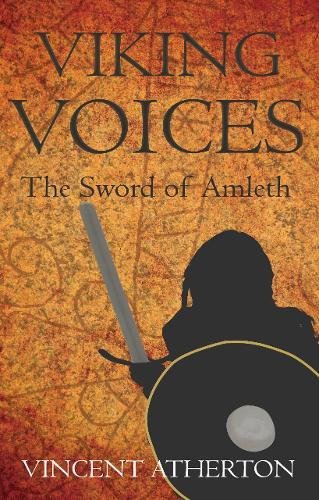
    The war chest was thought to have been laid down in preparation for an anticipated war with the Mercians (from land South of the Mersey) who were making moves to take land between the Mersey and the Ribble.  This battle actually took place in 910 AD, which made Paul wonder why the war chest was never utilised.  If you want to know why this might be, Paul encouraged the many attendees at the talk to buy his historical novel written under his pseudonym, Vincent), Viking Voices which tells, in fictional form, what might have happened at that time, using actual events and people.

  • The Man who shod War Horses – Martin Jones

    A series of remarkable coincidences led Martin Jones, our speaker in March, to research and create this presentation.  The story centred on John Westhead, a Victorian farrier, who lived in and around Ormskirk in West Lancashire.  Before Martin told us the tragic story, he first explained how it came to be written in the first place.

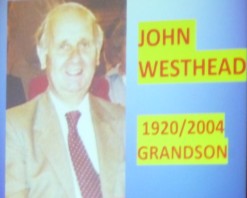
    Through his contacts when working at the TSB in Ormskirk, Martin got to know a quiet, reserved bachelor, John Westhead who lived locally.  One day, Martin received a telephone call from John who asked to see him about a personal matter.  It transpired that John had to undergo a serious heart operation and he was concerned about his financial affairs.  John lived with his brother who was incapable of managing his own affairs and he wanted to ensure his brother was cared for and the bills were paid should the worst happen.  Martin was therefore asked to act as his attorney and also as executor to his will.

    Fast forward to 2004, and John died aged 84 and Martin had the task of putting John’s affairs in order, since by then he had no surviving relatives.  Amongst the many meticulously kept items in the house, Martin discovered a large folder containing numerous letters and documents relating to John’s grandfather, a man also called John Westhead who was born in 1872.  These documents were kept by his wife and passed down the family line apparently untouched for almost a century.

    Unsure what to do with these historic documents, Martin kept them until a chance meeting in 2014 with a WW1 historian who mentioned he was looking for information on a John Westhead who was a blacksmith from Newburgh who was killed in the great war. This led to Martin researching the fascinating story of John Westhead.

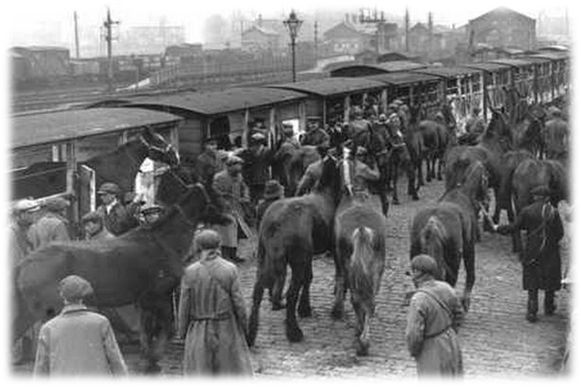
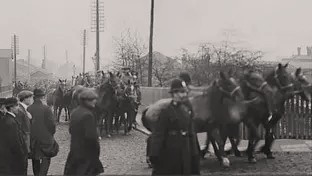
    In 1913, the British Army owned about 29,000 horses, but realised that should war with Germany happen, they would need many more than this and so an appeal went out around the world for horses to be obtained.  More than 330,000 horses were acquired, and many came through the port at Liverpool to Lathom Park, near Ormskirk where they were trained and shod. 

    Late 1914, the first horse arrive by train from Liverpool
    Horses arriving at Ormskirk

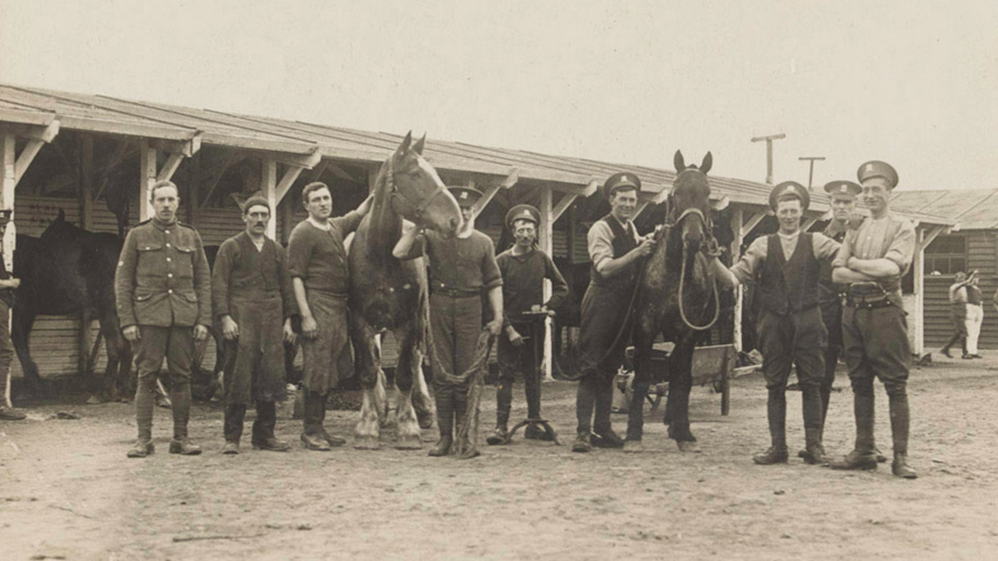
    John Westhead was appointed as a civilian blacksmith/farrier to help with this task but by August 1915 he was working in Woolwich and had enrolled in the army as a farrier at the age of 42.  The detailed information about the next 14 months was recorded in a series of letters sent to and from John who was soon near the front line in the Somme.  The letters were shown to an expert on the BBC Antiques Roadshow who declared that they were ‘like gold-dust.

    The letters were beautifully written and several were brought to life by volunteers in the Historical Society who were asked to read them out loud to the audience.  John was killed by flying shrapnel in October 1916 and several letters written to his widow soon afterwards were very moving.  John was obviously extremely well liked by everyone.

    Thousands of horses were trained at Lathom Park for front line action during WW1

    The fascinating story told by Martin Jones really brought to life a particular man and his life at that tragic time and told of events in the war which were often not discussed.  In total, over one million horses were trained and sent to the front line and 484,000 were killed.  

  • The Appley Bridge Meteorite – Russell Parry

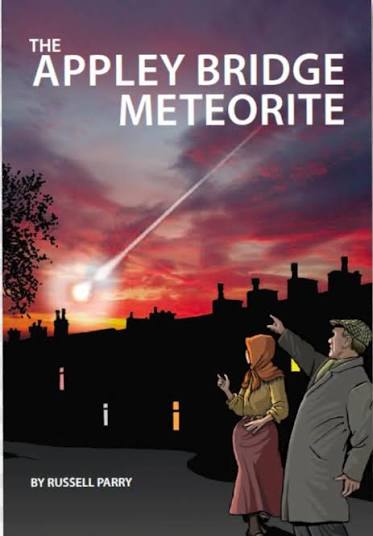
    On Monday 15th January 2024 the Brindle Historical Society held its first meeting of the year when we invited speaker Russell Parry to tell us about the Appley Bridge Meteorite.  Before this evening, none of the audience knew anything about this event which happened on Tuesday October 13th 1914 soon after the start of the First World War.  When Russell, who had an interest in local history and astronomy, moved to the district in the 1990s, he saw a small article in a local publication about a meteorite landing.   This sparked an interest in this fascinating and rare phenomenon and so he began researching it.  In 2013 he had sufficient information to write a book about his findings, and he now travels extensively giving talks on this subject to interested parties, including cruise ships and astronomical societies.

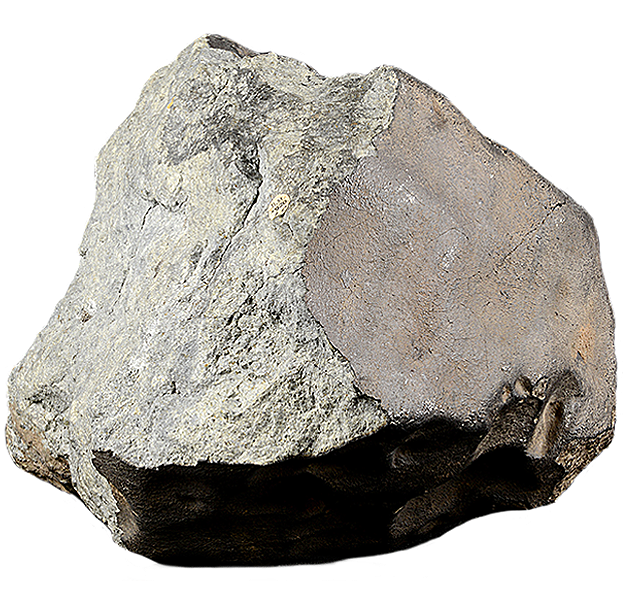
    In 1914, the residents of Appley Bridge near Wigan experienced an extremely bright fireball with a long trail travelling quickly across the night sky, accompanied by loud crashes and bangs like thunder.  Many locals feared a German Zeppelin dropping bombs on the area, but it was only after two local men found a large object weighing some 33lbs (15kg) embedded in the ground about 2 feet (60cm) deep near a farm did the truth emerge.  The police were informed and soon the object was confiscated and taken to County Police headquarters at Preston for examination.

    The object was identified as a meteorite and a part of it which had broken off on impact was later sent to a grocer’s shop in Appley Bridge where it was displayed for the residents to see.  The bulk of the meteorite eventually found its way to what is now the Natural History Museum in London where it still resides.  It has been described as ‘a most excellent example’ and was then (and still remains) the largest meteorite to fall in Great Britain in 230 years.

    So what is a meteorite?  Well, let’s start by describing meteoroids which are solid objects moving through interplanetary space.  When a meteoroid is drawn by Earth’s gravity into our atmosphere, the heat generated causes it to burn up and emit a bright light.  This is a now called a meteor, or more commonly, a shooting star.  Meteorites are simply meteors which survive their passage through the atmosphere and actually fall to earth as a solid object.  What makes the Appley Bridge example so interesting is that it was actually observed falling and then discovered on the ground soon afterwards.

    The entire talk was enthralling and the speaker later advised that he had turned the story into a radio drama which should be available on BBC Sounds in the near future.