It is unusual these days to attend a presentation without the use of PowerPoint, and it is even more rare for the speaker to bring along toys for the audience to play with, but this is just what happened in November at the Brindle Historical Society. Les French talked enthusiastically to the audience about Meccano and Hornby trainsets and also brought with him dozens of artifacts from the Frank Hornby Heritage Centre in Maghull.
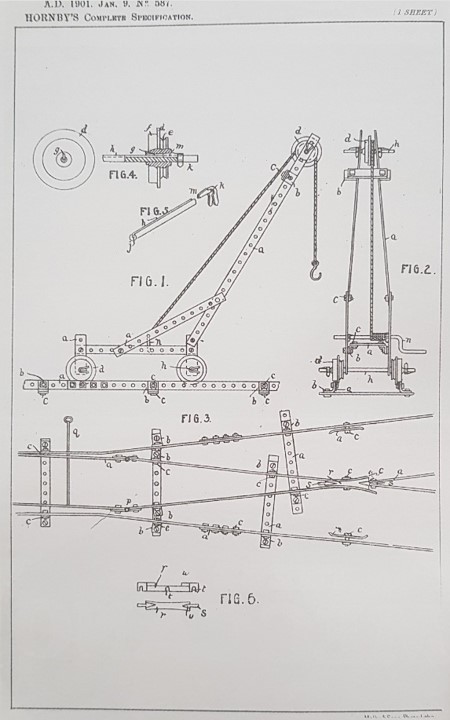
We learned that Frank Hornby was the son of a grocer from Liverpool who became a bookkeeper before having an idea to entertain his children that would make his fortune. Although he wasn’t an engineer, in 1901 he created a simple but ingenious idea to sell various sized strips of metal with holes punched at regular intervals together with a set of small nuts and bolts. Everything was interchangeable and so any item could be fitted to another thus opening endless possibilities for making items such as cranes, cars or even trains. He borrowed £5 as start-up capital and called the business Mechanics Made Easy. By 1908 he changed the name to Meccano and continued to expand the business, moving to larger premises.
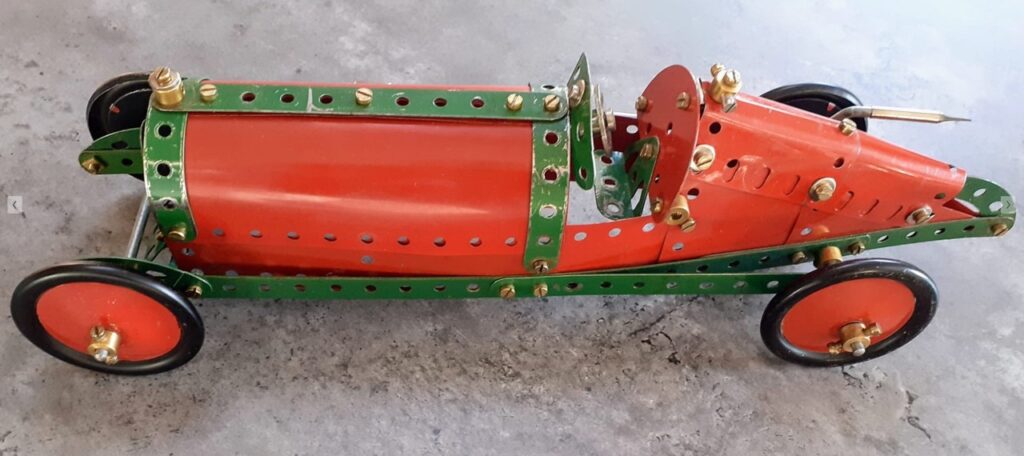
His main skill was in marketing, and he had the inspired idea of asking existing Meccano users to submit designs of items they had created, and he offered a substantial cash prize to the best ones. These designs and instructions how to construct them were featured in a brochure, and he also sold kits containing all the necessary parts to build each design.
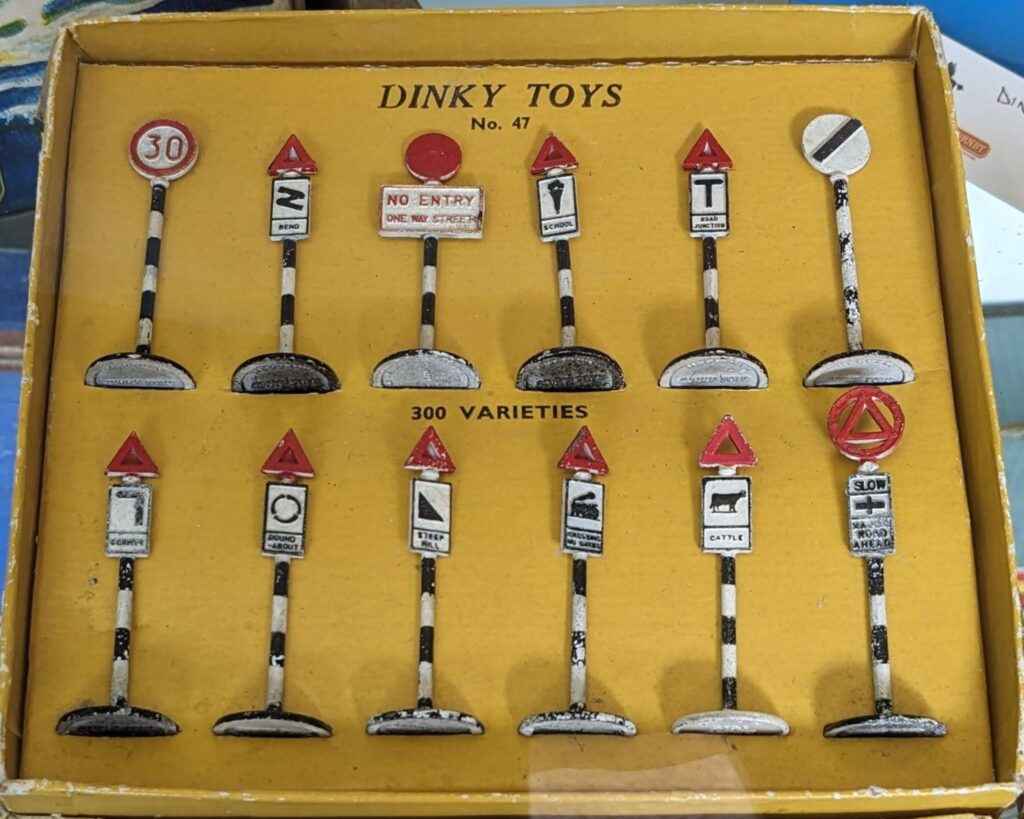
By 1920 Frank had begun manufacturing clockwork trains, under the Hornby name. The scale was O gauge, and he realised that he was selling these products to wealthy people who would set up tracks in their (usually) large houses. To meet a perceived demand, he also began producing trackside items such as signal boxes, houses, and even model cars, all made to the same scale. One of the first prototype cars that was produced was shown to his daughter-in-law who exclaimed “Oh, that’s dinky!” and the name stuck, and Dinky cars became another very popular line of its own.
Soon he needed to move to a much larger 5-acre site and employed over 2,000 people, many of them women whose dexterity was suited to the tiny parts being produced. Sadly, Frank died in 1936, but the company continued to thrive under the control of his two sons. Soon after the war, material was still scarce, and the company realised that if they reduced the scale of the trainsets by half (to OO gauge), they would need much less material. There was also a bonus in that the smaller products were cheaper to make and could be sold at less cost to a much wider market and so business continued to flourish.
Many famous people love Meccano and Hornby. Sir Alec Issigonis, the inventor of the Mini, even received as his retirement gift the largest available Meccano kit. He built a grandfather clock with it.
Leave a Reply