At a presentation on medieval manuscripts on Monday 21st October, members and guests of the Brindle Historical Society were treated to truly a remarkable evening. It took the audience all of their powers of concentration to take in the volume of information that was being delivered. At the same time that slides were being projected onto the screen, the speaker, Brian Farrimond, was explaining the background to the subject whilst his wife, Janet, handed round leaves from genuine manuscripts. And in some cases, if the manuscripts were of sheet music, we even were treated to the sound of an organ, or monks singing the music score. This was a multimedia presentation at its most intense and was thoroughly absorbing.
Many hundreds of thousands of manuscripts were produced pre-reformation and most of them were for religious purposes, the religion being Roman Catholic. Brian explained that all the documents at that time were hand-written in Latin, the universal language of the church, and so could be understood throughout Europe. The manuscript leaves which were handed out were written on parchment which was created from animal skins. It was remarkable that the colours were still so vibrant after six or seven hundred years. Some were very large (perhaps 550mm x 400mm) and these would have been read by a priest or monk whilst addressing a congregation. Others were tiny (75mm x 50mm) and would have been used as individual prayer books. One Italian manuscript was handed round which dated from 1350, but we were assured that all traces of the bubonic plague bacteria had been cleaned from the document.
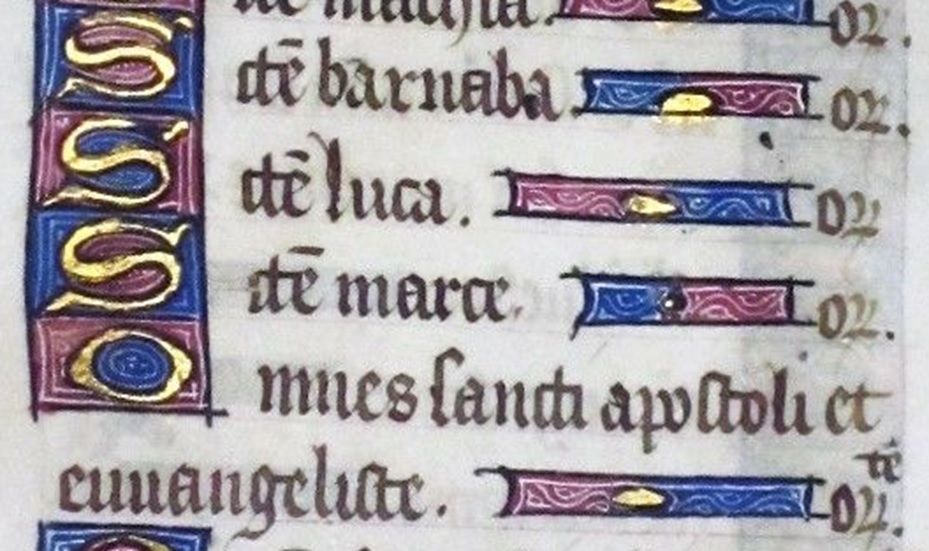
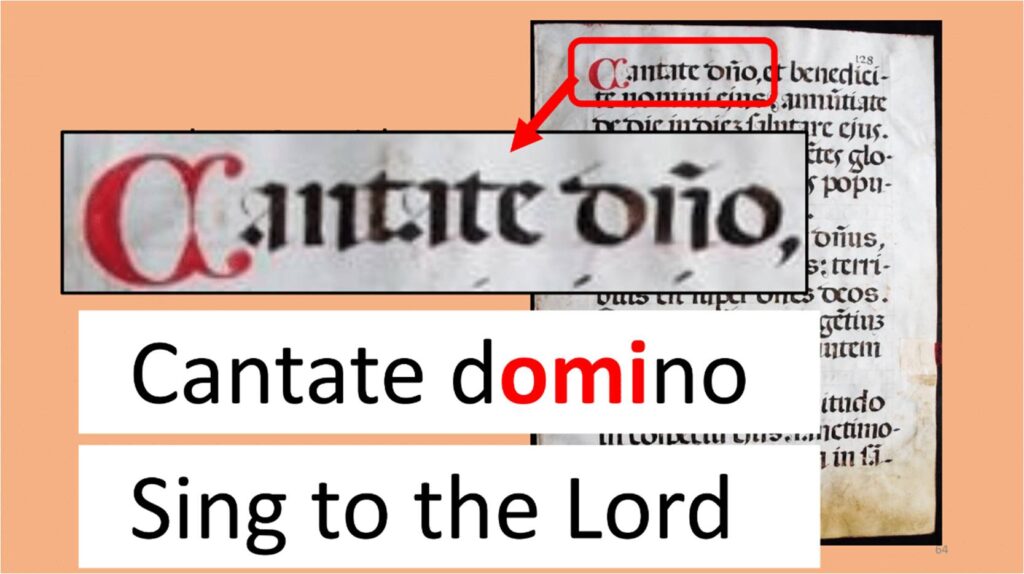
Brian took time to explain how the manuscripts were read. I hadn’t realised that the writers used a form of shorthand where many letters were omitted from words. The priests or monks knew the shorthand code and were able to read the words as intended, which were obviously in Latin. I came away with a new respect for anyone who could read and understand such documents. Some manuscripts were beautifully decorated with gold leaf and because the gold shone under certain lights, these were known as illuminated manuscripts.
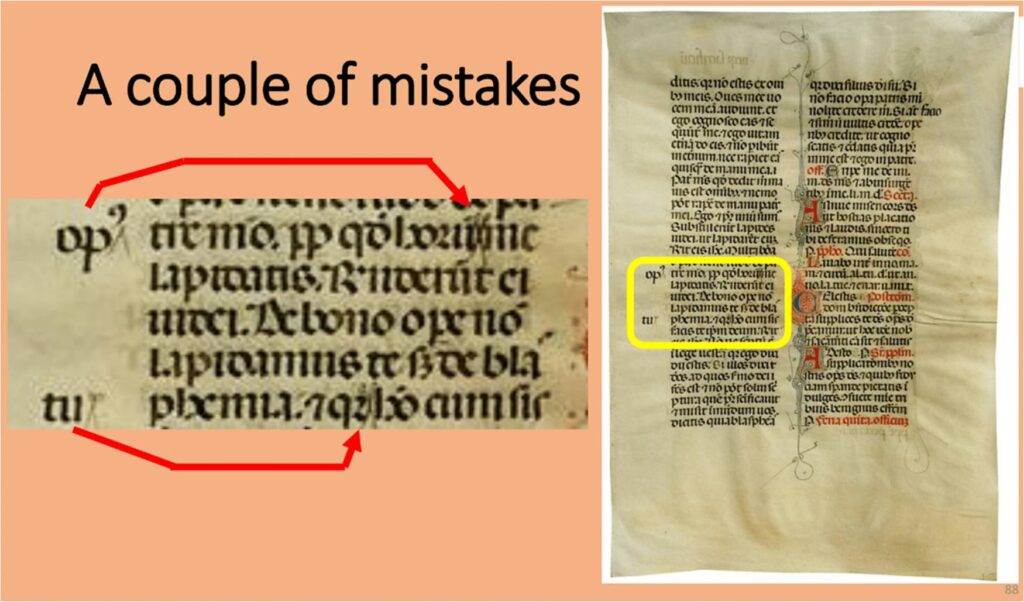
Interestingly, since all the manuscripts were hand-written, several of them contained mistakes and corrections. The corrections were found in the margins and may have been added by the writer at the time of production or perhaps later if the error was only discovered once the document was in use.
Brian had the audience captivated throughout the presentation and he explained that he would be most happy to repeat it to any group or society who may wish to hear it. It is certainly recommended.
Leave a Reply