2022

Talks held in 2022

  • Historic Graffiti The Writing’s On The Wall – Colin Penny

    Graffiti is everywhere; on city walls, underpasses, motorway bridges, even churches.  Yes, at the talk on Historic Graffiti held at the Brindle Historical Society on Monday 21st November, we heard how graffiti is ubiquitous and can be found in the most unusual of locations.

    The speaker, Colin Penny, asked the audience for their definition of graffiti and the results were predictable: defacing of property, unwanted scribbling and colourful spray-painted logos.  Colin agreed with these definitions, but then asked us to consider advertising billboards, Banksy ‘works of art’ or an old school desk bearing the marks made by a now-famous person?  The view in the room changed as these concepts were considered, and a new understanding of how graffiti should be defined began to emerge.

    Graffiti was not considered a crime until 1850, and indeed was often found around the altar in old churches.  Some churches show messages inscribed by priests, often praying for a loved one’s safe return, or relief from plague.  Early forms of graffiti can be found in ancient burial grounds in Orkney, in the cells Lancaster Castle or the walls of St Giles’ Cathedral in Edinburgh.  Such ancient scribblings are now considered historical artefacts and are protected, but when did these changes in opinion occur?  Does this suggest that ‘modern’ graffiti painted on railway trucks or on city centre underpasses will soon become museum pieces?  You might consider that this change has already begun with the fame of perhaps the most famous graffiti artist, Banksy, being hailed by some as being a great modern artist.

    So should we be looking at graffiti with a new eye? 
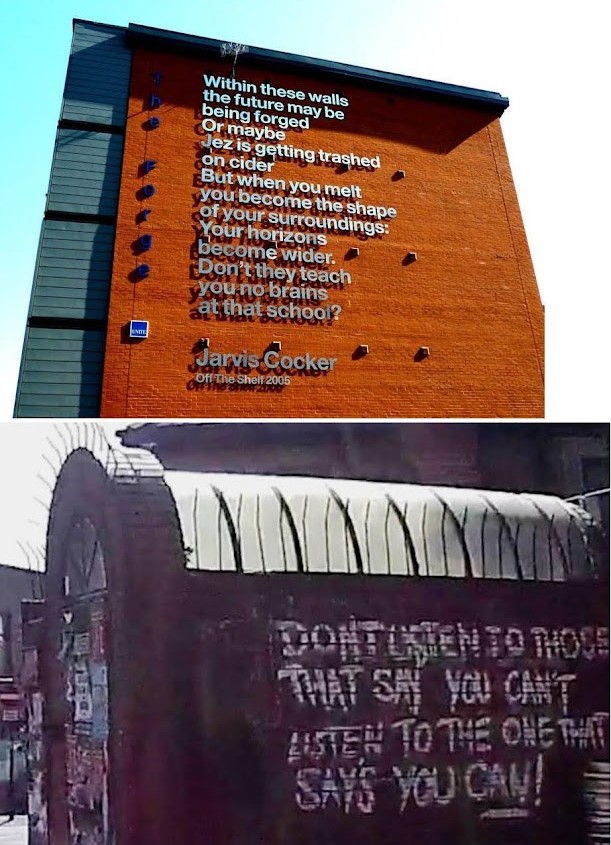
    Found on university walls in Sheffield. Are they both graffiti?

    The writer thinks not.  Whilst the generally accepted definition of “writing or drawings scribbled, scratched, or sprayed illicitly on a wall or other surface in a public place” is accepted, I find that the word ‘illicitly’ is doing a lot of work here.  The fact that something may be defaced without the owner’s permission is fundamentally wrong and should not be celebrated, but perhaps time does soften the culpability.  Stonyhurst College famously has a desk which was defaced by Arthur Conan Doyle as a young schoolboy and this fact is now celebrated.  But I bet young Doyle still received ‘six of the best’ when he was found out.
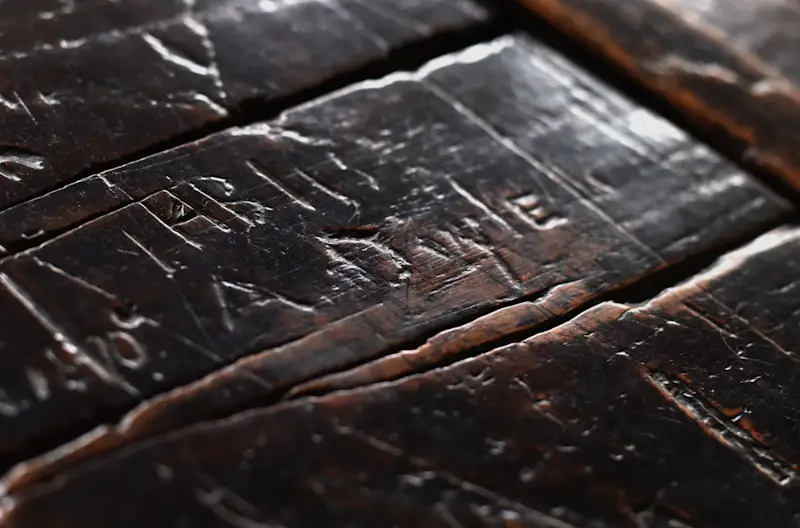
    Found on a desk in Stonyhurst college
  • Family Photography; Past, Present and Future – Steve Gill

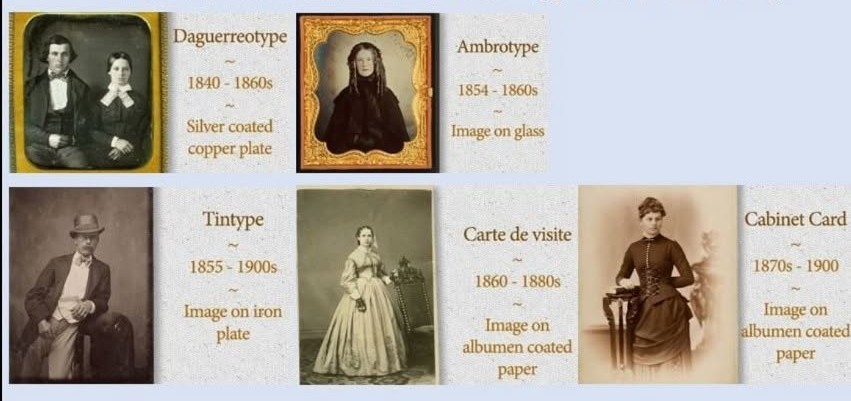
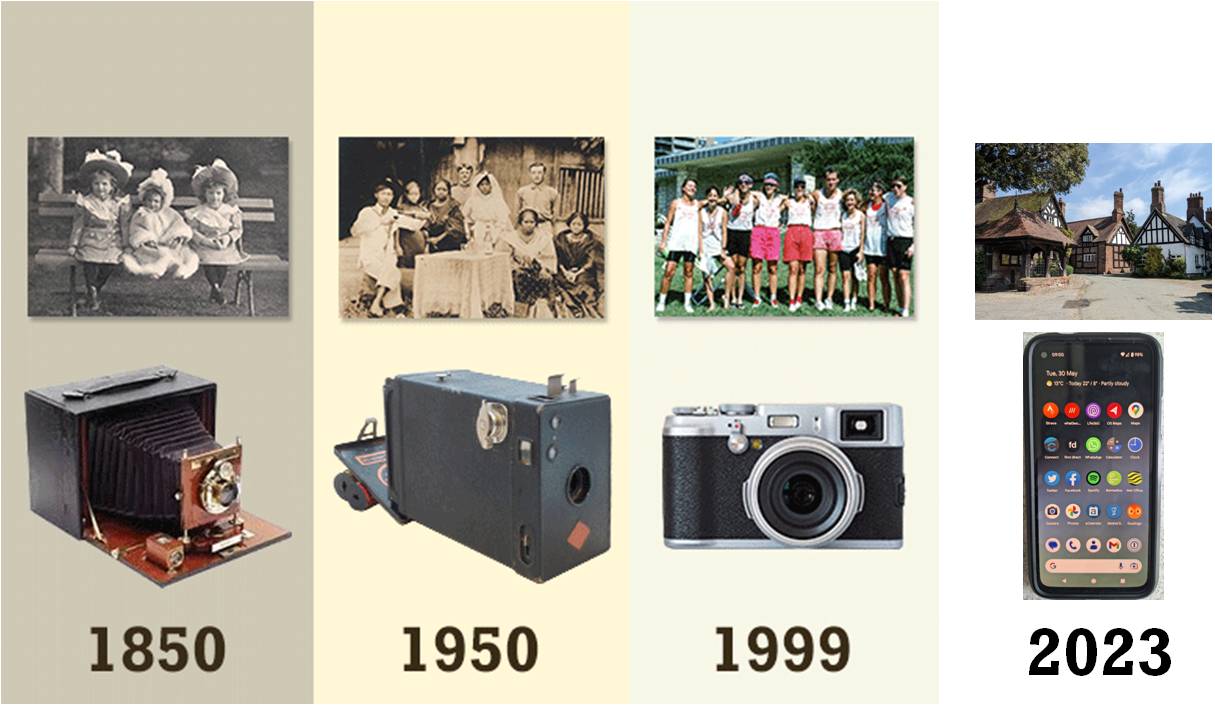
    On Monday 17th October, the Brindle Historical Society invited Steve Gill, a professional photographer for over fifty years (although he certainly didn’t look old enough!) to talk about his interest for the past ten years which was uncovering the history found within old photographs.  Steve carefully explained the history of photography starting with daguerreotypes from the1840s and 50s which were printed on copper, through ambrotype where the image was printed on glass and onto ferrotype (printed on rolled iron) which was much less expensive  and still in use in the 1950s.  But aside from the types of processes in early photographs, the main thrust of his talk was to explain to the audience how to interpret what you can see in old photographs. 

    We were shown numerous examples of images and Steve described how he had gleaned a fuller history from each print by using a variety of simple techniques.  The first thing he does when he is given a photograph is to look at the rear where the photographer’s name is often printed which helps in aging a print.  With the internet, it is now relatively easy to discover when a particular studio first opened. 

    To really understand a photograph, Steve recommended studying it in detail for at least half an hour, and to write down all that can be seen.  To illustrate this, he asked us to study a print of a young man carrying a bunch of flowers along a street and shout out what we could learn from it.  From what we could see, he constructed a logical and very plausible account of what the image portrayed.  In addition to the obvious things that we shouted out, he also added his own knowledge of who the character in the image was (his great-grandfather) and he constructed a very plausible story to accompany the image which added richness to the print.  Steve had deduced that the image was of his great-grandfather walking joyfully along a street in high summer talking a bunch of flowers to his wife who had just given birth to Steve’s grandfather.  Although it may not have been the exact truth, but given what Steve knew and we all could see, the story fitted very well and made the image so much more interesting.  These are techniques which we all can use when looking at old photographs and will make any image come to life.

  • Waring and Gillow – Christopher Robson

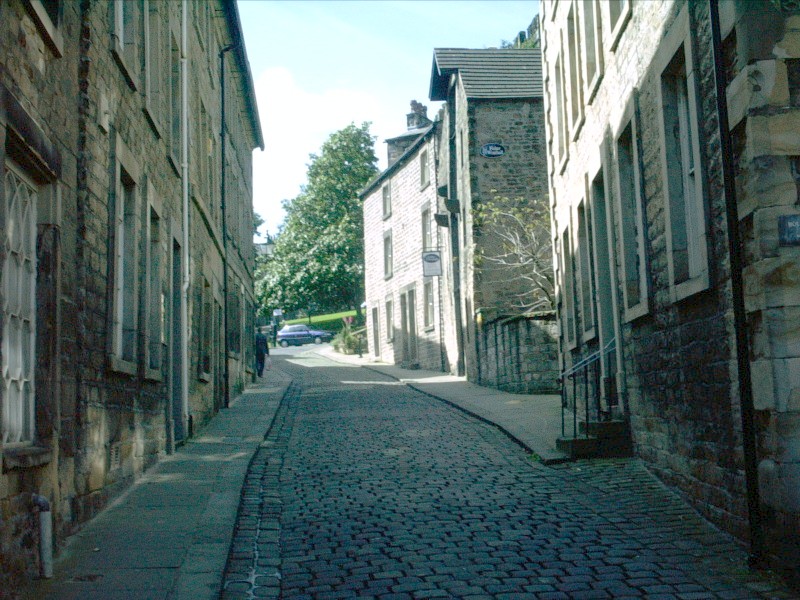
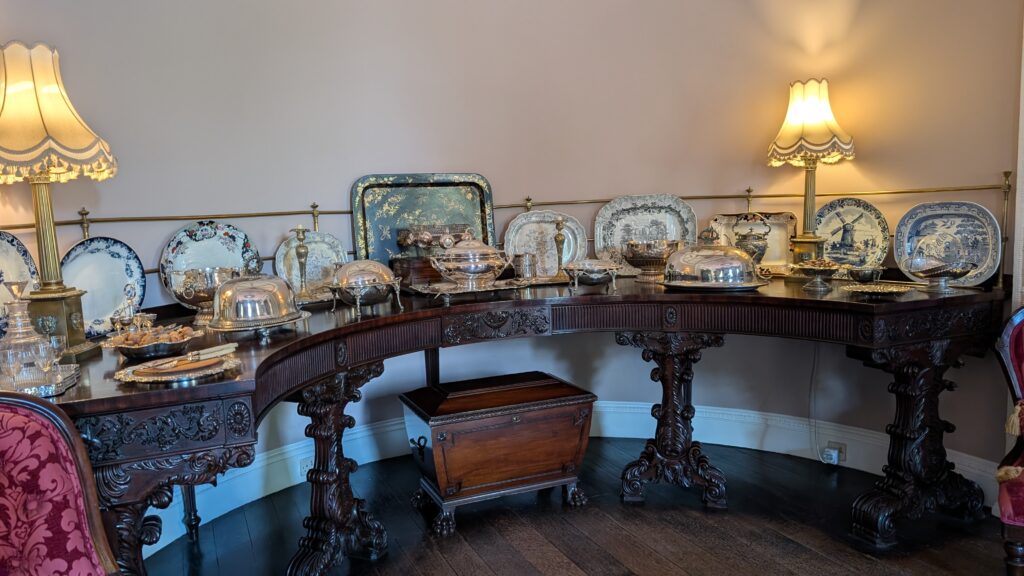
    On Monday 20th June, the Brindle Historical Society hosted speaker Christopher Robson who talked in considerable detail about Waring and Gillow and the tradition of English furniture making.  The audience were told of Robert Gillow, a cabinet maker from Singleton in the Wyre valley, who in 1731 began making furniture in a premises on Castle Hill, Lancaster making use of fine mahogany and walnut  which had begun to be imported from the West Indies. 

    Castle Hill, Lancaster

    Robert had several children, including a son, Richard, who, although trained as an architect, became a partner in the family firm and the Gillow company continued to grow in status.  James Gillow, a cousin who lived in London, designed furniture at this time but had no qualms about copying popular designs from such firms as Chippendale, Hepplewhite or Sheraton.  Gillow took these designs, and their fine craftsmen produced high quality furniture which was exported around the world, mainly to countries in the British Empire.

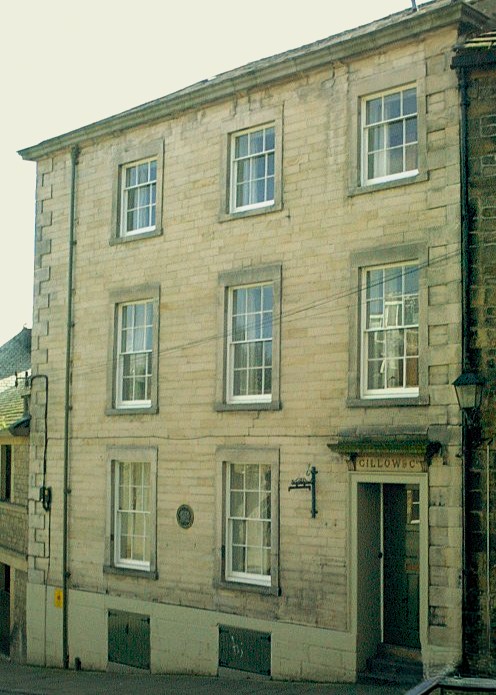
    Site of Gillows workshop

    Towards the end of the 19th Century, the firm began to experience financial difficulties, experiencing severe competition from chair manufacturers in High Wycombe and also from the new American mass-produced furniture which began to be imported.  Gillow moved out of their Castle Street premises in 1882 and in the following years a series of poor decisions were made and several business opportunities missed. In 1893 Samuel Waring was tasked with opening a branch of his family furniture business in London and four years later took over Gillow who still employed fine craftsmen.  Thus Waring and Gillow were formed and the newly named firm produced good quality yet practical furniture aimed at the middle classes.  Under Waring’s management, Waring and Gillow helped manufacture aircraft in the Great War, but following his death in 1940, the company gradually lost its focus and, facing increasing competition from the likes of Terence Conran, finally closed the Lancaster workshop in 1961.

    Bespoke Waring and Gillows servery at Lytham Hall
  • John Balshaw’s Jigge – Dr Jenni Hyde

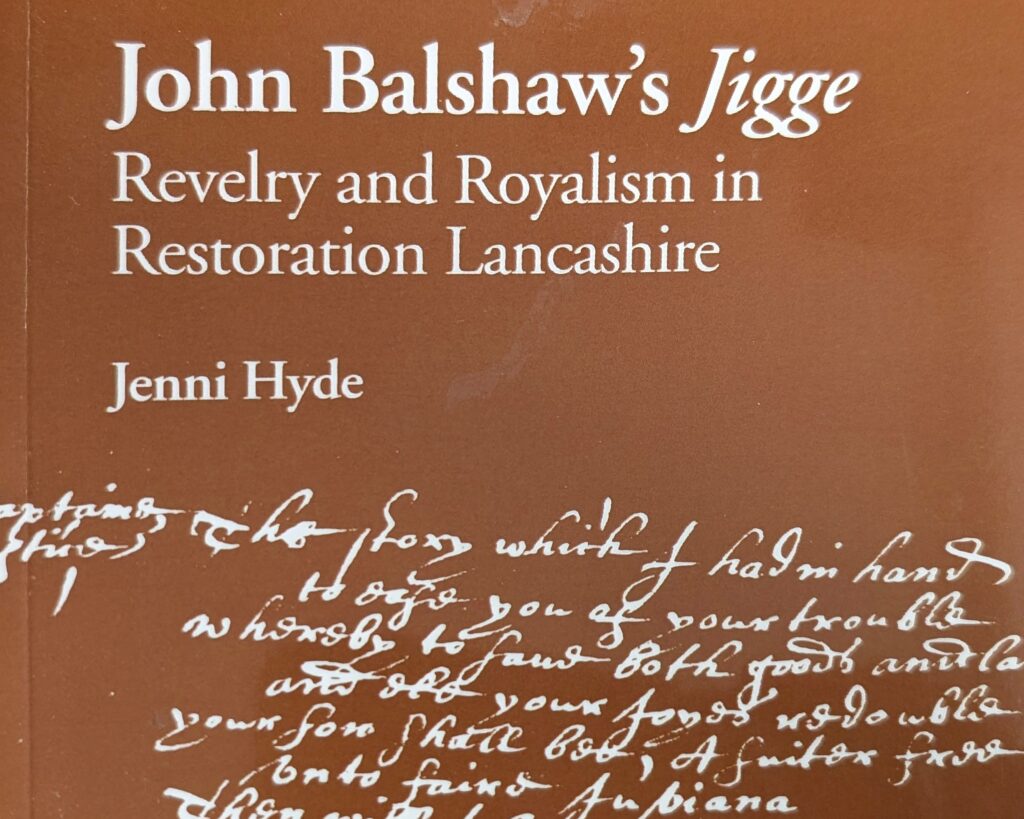
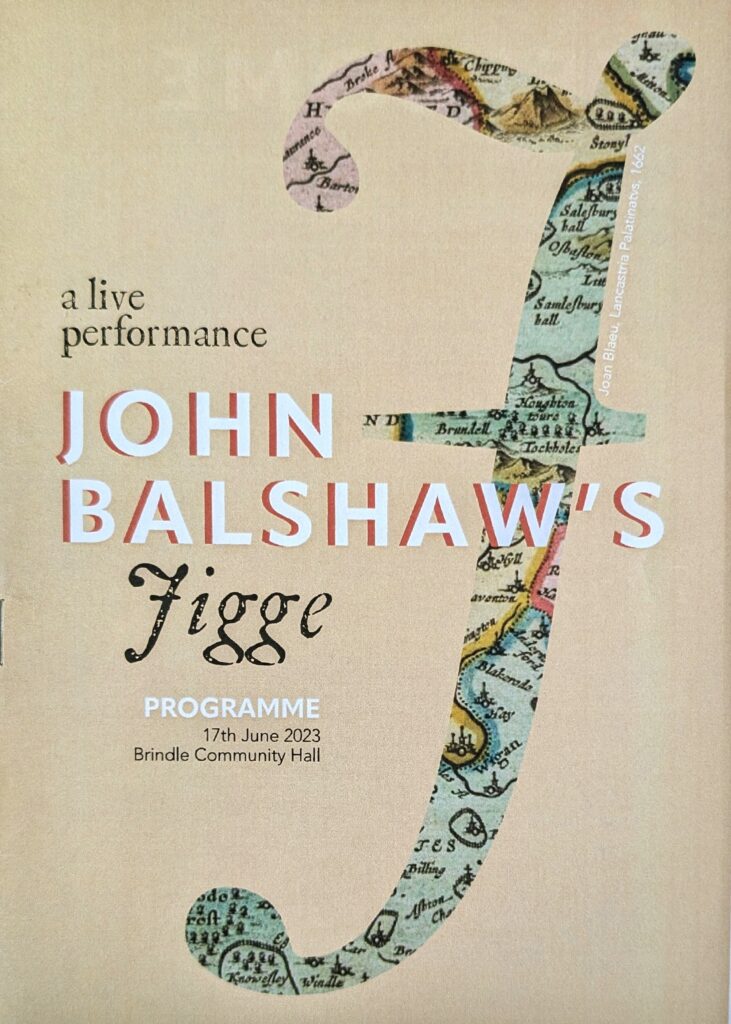
    Members of the society and several guests were treated to a wonderful talk, or rather a performance, on the subject of John Balshaw’s Jigge on 16th May.  Dr Jenni Hyde, who is an associate lecturer in the Department of History at Lancaster University, came across this little-known manuscript in the British Library and was fascinated to find that it was written in Brindle at the time of the Restoration.  It is a late example of a jigge, a form of entertainment combining song and dance which was popular in the late Elizabethan period.

    The jigge itself, would probably have lasted an hour to 90 minutes when performed and features six characters in a ‘thwarted lovers’ plot, although in this case, the lovers are parliamentarians and royalists.  Despite its importance in shedding light onto theatrical pursuits in that period, Jenni discovered that the jigge had somehow escaped any scholarly attention and a transcript had never been published, despite it providing a valuable insight into the experience of the Civil War, the interregnum and the restoration of the monarchy in rural Lancashire.  

    Jenni provided an overview of the characters and the plot, and explained that the jigge would have been sung throughout, a bit like an opera.  To give us a flavour of the language and the type of music used, Jenni sang elements of it, to the delight of the audience, using the original ballad tunes where these could be identified.  She had also spent many hours examining the rhythmic structure of the verses along with any refrains used in order to see if any popular ballads at that time could be made to fit.

    We were told that the jigge was important for three reasons.  It is:

    • the latest example of a full script
    • the only example known to originate from the Northwest of England and
    • the only example with a clearly topical and overtly political agenda.

    The whole talk was fascinating and shone light onto the conflicting allegiances of the people of Brindle in that period.  It is not clear whether the jigge was ever performed here, but Jenni left us with the intriguing possibility that she might be able to persuade the Lancaster University Theatre Group to set themselves a challenge of performing it here, where it was written, in Brindle!  

  • Those were the days – Ray Couldwell

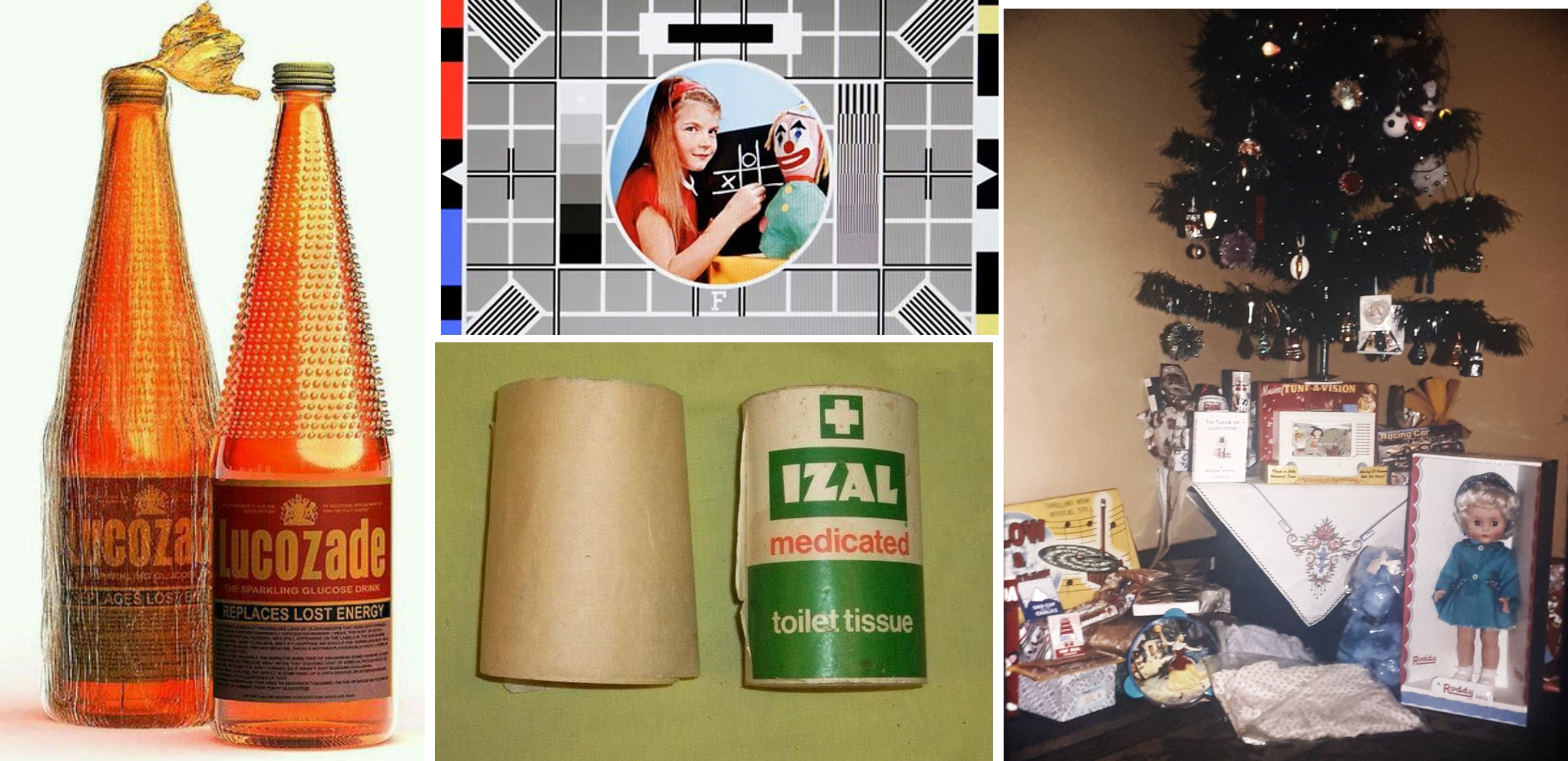
    The meeting of the Brindle Historical Society on Easter Monday was intentionally a light-hearted talk, drawing heavily on nostalgia from the 1950s and 1960s.  Ray Couldwell spoke for almost an hour to an audience of nearly 40 people, including many visitors to the society.  Ray’s style was very participatory, and he encouraged the audience to offer their own memories from their youth.   A great many topics were discussed including Christmas decorations, coal fires, shopping at the Co-op, Lucozade, the TV test card, outside toilets and Izal toilet paper.  The latter prompted many comments, including one lady who remembered the product less for its intended purpose but rather as an alternative to tracing paper! 

    Ray mentioned at the start that although he now lives in Accrington, he was born near Sheffield and much of the discussion contrasted the different terms used for items from each side of the Pennines.  He even brought his wife along to make notes of anything interesting that came out of the discussions.  Each time he gives the presentation he learns something new, and this week, his education was enhanced (as was mine) through learning about UCP cafés.  In the post-war period these establishments were almost as popular as McDonalds are today and the cafés were set up alongside the tripe shops operated by United Cattle Products (UCP).  They even sold the tripe as a ‘takeaway’ (as long as you took your own basin to carry it away!)    Times have indeed changed.

  • Anne Lister of Shibden Hall – Pat Osborne

    On Monday 21st March, the Brindle Historical Society members finally got to hear a talk that they’d been promised two years ago just as the Covid-19 precautions were beginning to take effect.  Thankfully, our speaker, Pat Osborne, was able to reschedule and we finally heard all about the antics of Anne Lister of Shibden Hall.  The talk provided more historical background to the characters many of us are now familiar with from watching the BBC TV drama ‘Gentleman Jack’, and Pat was able to ‘set the scene’ admirably for us.
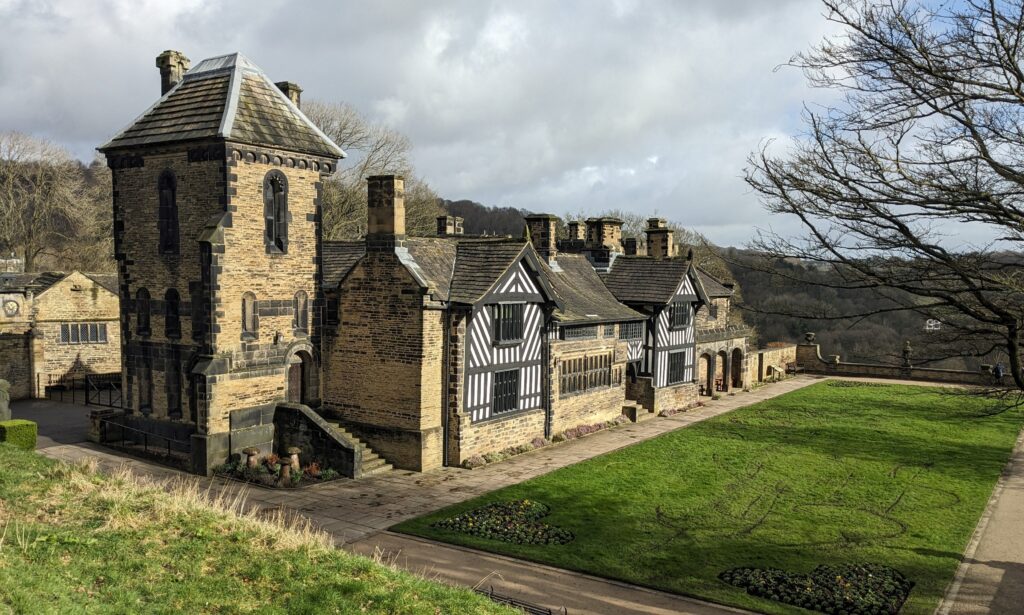
    We learned that Shibden Hall was originally built in 1420 and passed through many generations and changes of ownership during its early life, only coming into the hands of Anne Lister in 1825 when she was only 34, although by then she had lived there with her uncle and aunt for a decade.

    Shibden Hall today


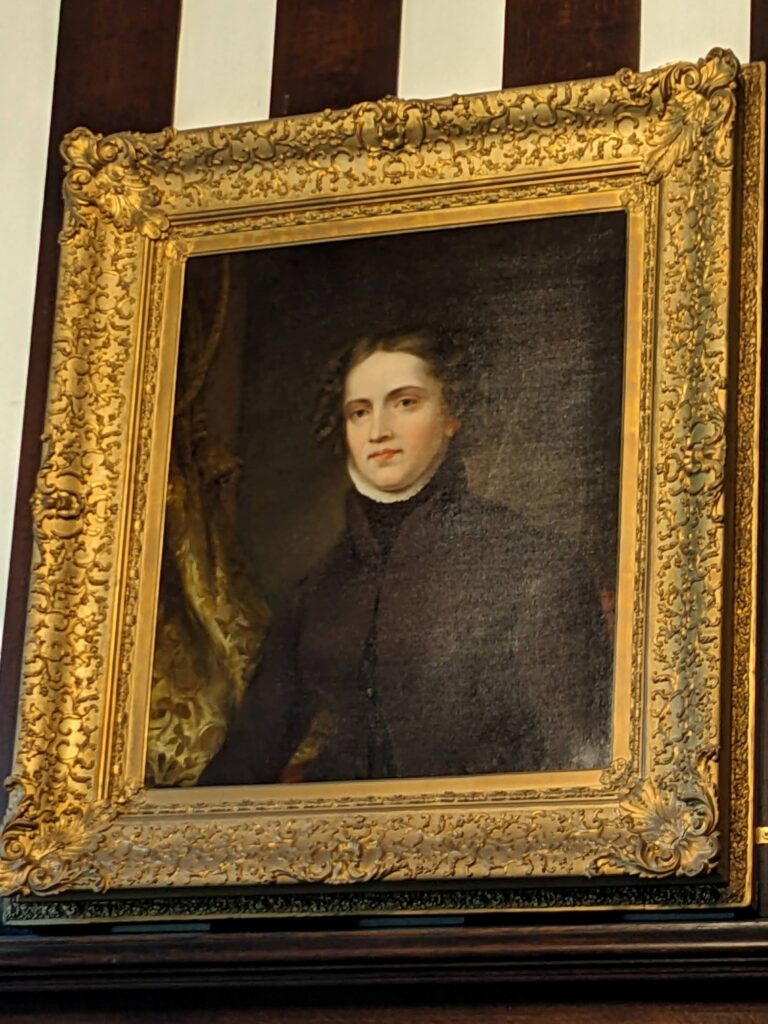
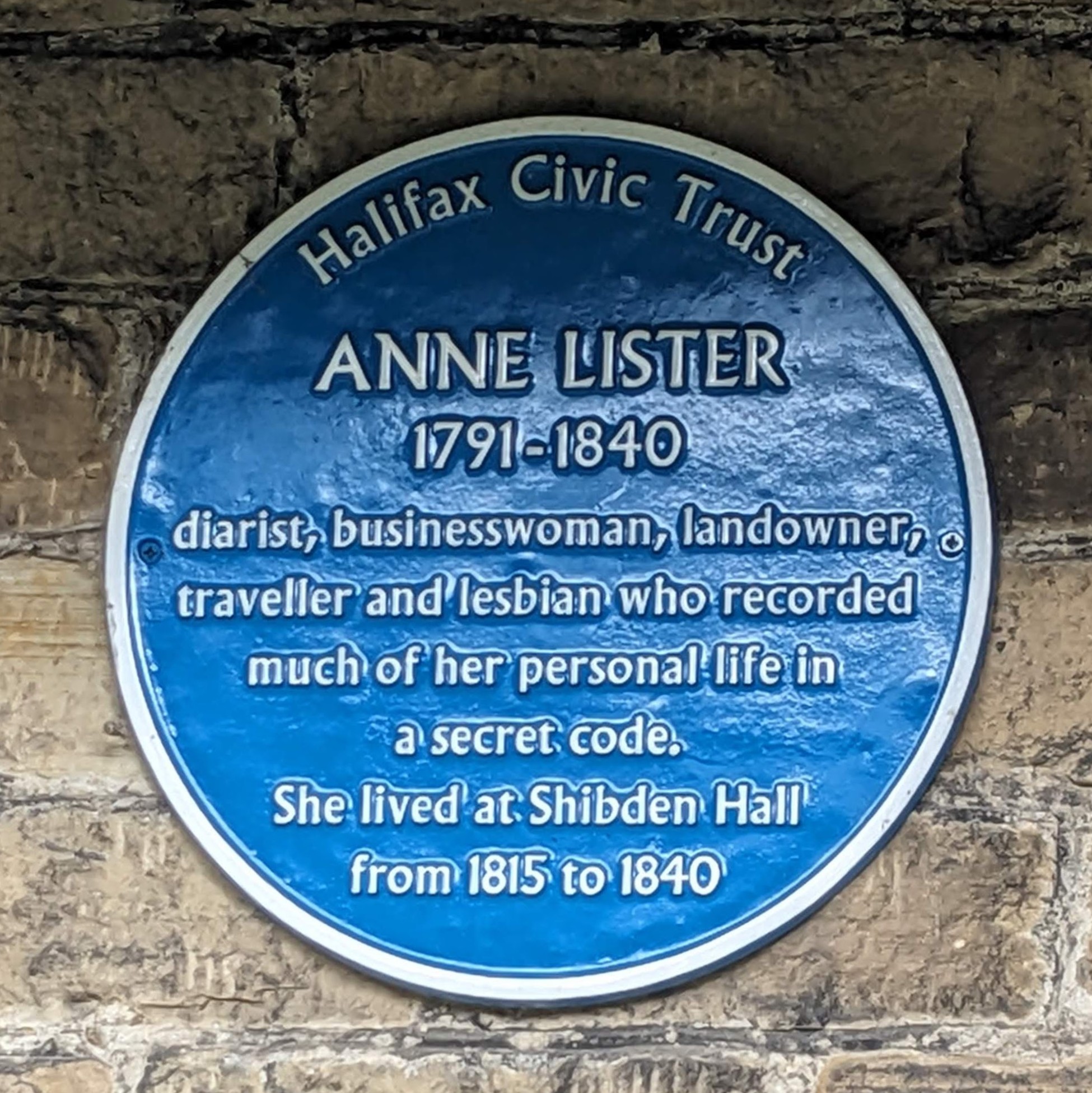
    Anne was a very astute and energetic owner and took a keen interest in the estate, supervising building work, farming and even established a coal mine in the grounds.  She also supported local schools and took a keen interest in gadgets and new inventions but her biggest claim to fame nowadays is that she kept very detailed diaries of her private life.  These diaries were written in a secret code, and once the code was cracked, the diaries were found to be so shocking to Victorian sensibilities that they were never published until 1933.  The secrets that the diaries concealed were that Anne was a lesbian who took a series of lovers over her life, cruelly leaving them like cast off clothing at her whim.  The diaries have now become a social history showing, as they do, not just the salacious life of Anne, but also a true insight into life in the late Georgian era.

    Portrait of Anne Lister

    Anne was a great traveller, and spent time in France, Italy, Belgium and Denmark before even traveling to Russia in 1839.  It was there that she sadly met her death from an infection following an insect bite.  Her body was transported back to UK (taking 7 months!) where her remains were interred in Halifax parish church.
    Shibden Hall and its gardens are now owned by the Borough of Halifax and are open to the public.

    Memorial plaque at Shibden Hall
  • A Picture of Afghanistan – Dr Javad Hashemi-tafreshi

    The January 2022 meeting of the Brindle Historical Society was initially going to be an experiment where we would dabble with new technology.  The society’s meetings over the past year have been both on-line using Zoom and face-to-face, depending on the prevailing level of Covid-19.  The Zoom meetings worked well, although they didn’t suit everyone (speakers included).  For January, we thought of combining the delivery method and hold a meeting where the speaker contributed through Zoom, but the main body of the audience could join together in the hall to watch the presentation as a group.  Any members who didn’t fancy coming out on a winter’s night could also take part from the comfort of their homes.  In the end, with the presence of the Omicron variant of coronavirus making social gatherings risky, we decided once more to resort to a full Zoom presentation.

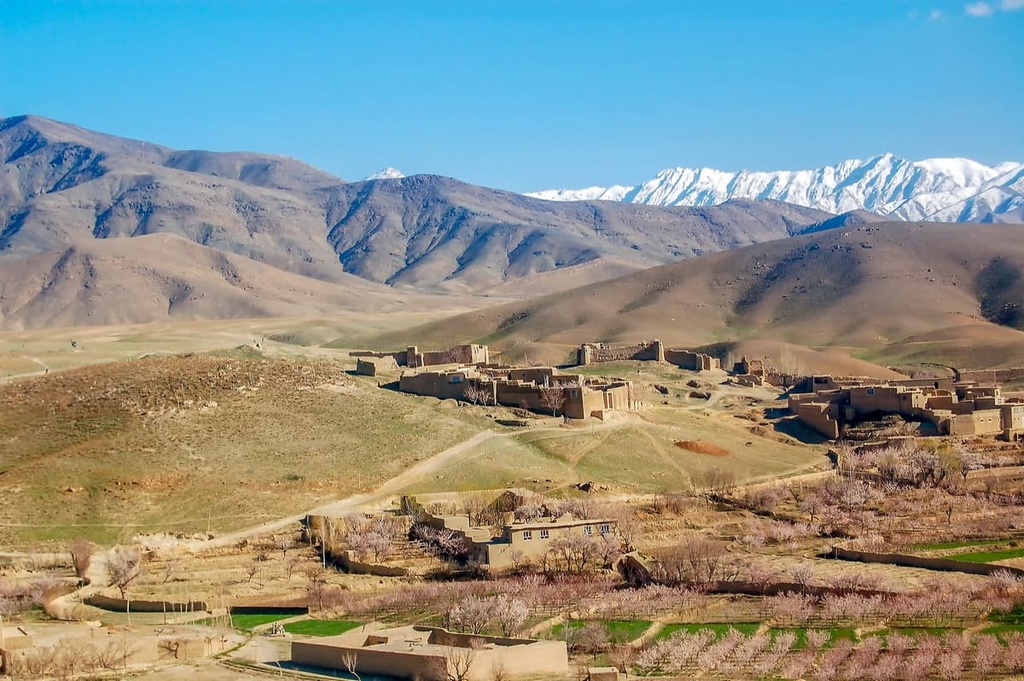
    The subject was ‘A Picture of Afghanistan’, and we were treated to a fascinating visual journey through a spectacular country.  The speaker was Iranian, but had spent considerable time in Afghanistan and was able to conduct us on a virtual coach tour all round the significant sights of this intensely colourful landscape.  Dr Javad Hashemi initially gave us a short potted history of the country, including all the recent troubles it has suffered.

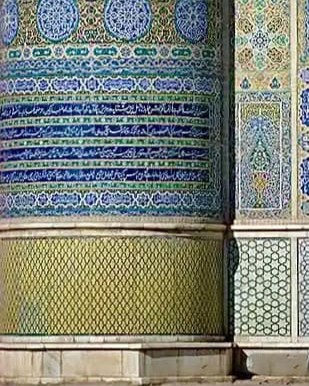
    For me, the underlying image of Afghanistan (taken solely from TV news reports) had always been of a dusty, mountainous region lacking any colour or views worthy of note.  How mistaken I was!  The country of 40 million people can boast magnificent buildings some faced with lapis lazuli tiles whose vivid blue lustre look magnificent in the sunshine.  Of course, some of the damage caused by recent conflicts was still in evidence, but we were shown a very positive image of a country trying to rebuild its proud heritage amid considerable political difficulties.

    The Afghani people are a very inventive race, and we were shown some very unusual solutions to common problems they face.  Without money for specific pumps for drawing water from wells, why not rig up a temporary solution by hitching up a belt driven from the rear wheel of a motorbike?  Or if you can’t afford a chandelier, just hang a few light bulbs from a coat hanger?

    It was clear that the current Taliban regime come from a very different cultural background to what we are used to in the West, and I found myself being quite upset, particularly by the treatment afforded to women, who are now clearly relegated to second class citizens.  When Dr Hashemi was in the country in 1973, he noted the large fields of wheat and barley in the agricultural areas in the North, and on a more recent visit he was surprised to see that these fields were now mainly given over to poppies since the money earned from selling opioids to the West is much greater than grain crops.  I was interested to learn that over 90% of the morphine used by the NHS comes from Afghanistan, but sad to learn that much of the cash generated is used to buy weapons, and the drugs are also sold on the black market to fuel an illegal Western drug culture.

    A question the audience were left to answer was ‘Why is there so much fighting in Afghanistan?’  The answer lies in substantial volumes of raw materials found throughout the country, particularly lithium (used for batteries) and rare metals used in electronic goods such as mobile phones.  The speaker described modern Afghanistan as the Saudi Arabia of rare metals.  Whilst Afghanistan might not feature as a holiday destination, I felt privileged to be shown this amazing country, albeit second hand through a slide show.