On Monday 17th October, the Brindle Historical Society invited Steve Gill, a professional photographer for over fifty years (although he certainly didn’t look old enough!) to talk about his interest for the past ten years which was uncovering the history found within old photographs. Steve carefully explained the history of photography starting with daguerreotypes from the1840s and 50s which were printed on copper, through ambrotype where the image was printed on glass and onto ferrotype (printed on rolled iron) which was much less expensive and still in use in the 1950s. But aside from the types of processes in early photographs, the main thrust of his talk was to explain to the audience how to interpret what you can see in old photographs.
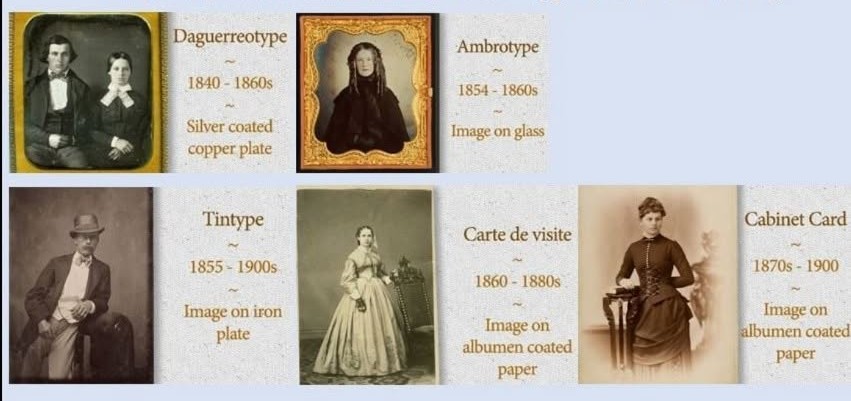
We were shown numerous examples of images and Steve described how he had gleaned a fuller history from each print by using a variety of simple techniques. The first thing he does when he is given a photograph is to look at the rear where the photographer’s name is often printed which helps in aging a print. With the internet, it is now relatively easy to discover when a particular studio first opened.
To really understand a photograph, Steve recommended studying it in detail for at least half an hour, and to write down all that can be seen. To illustrate this, he asked us to study a print of a young man carrying a bunch of flowers along a street and shout out what we could learn from it. From what we could see, he constructed a logical and very plausible account of what the image portrayed. In addition to the obvious things that we shouted out, he also added his own knowledge of who the character in the image was (his great-grandfather) and he constructed a very plausible story to accompany the image which added richness to the print. Steve had deduced that the image was of his great-grandfather walking joyfully along a street in high summer talking a bunch of flowers to his wife who had just given birth to Steve’s grandfather. Although it may not have been the exact truth, but given what Steve knew and we all could see, the story fitted very well and made the image so much more interesting. These are techniques which we all can use when looking at old photographs and will make any image come to life.
Leave a Reply