Graffiti is everywhere; on city walls, underpasses, motorway bridges, even churches. Yes, at the talk on Historic Graffiti held at the Brindle Historical Society on Monday 21st November, we heard how graffiti is ubiquitous and can be found in the most unusual of locations.
The speaker, Colin Penny, asked the audience for their definition of graffiti and the results were predictable: defacing of property, unwanted scribbling and colourful spray-painted logos. Colin agreed with these definitions, but then asked us to consider advertising billboards, Banksy ‘works of art’ or an old school desk bearing the marks made by a now-famous person? The view in the room changed as these concepts were considered, and a new understanding of how graffiti should be defined began to emerge.
Graffiti was not considered a crime until 1850, and indeed was often found around the altar in old churches. Some churches show messages inscribed by priests, often praying for a loved one’s safe return, or relief from plague. Early forms of graffiti can be found in ancient burial grounds in Orkney, in the cells Lancaster Castle or the walls of St Giles’ Cathedral in Edinburgh. Such ancient scribblings are now considered historical artefacts and are protected, but when did these changes in opinion occur? Does this suggest that ‘modern’ graffiti painted on railway trucks or on city centre underpasses will soon become museum pieces? You might consider that this change has already begun with the fame of perhaps the most famous graffiti artist, Banksy, being hailed by some as being a great modern artist.
So should we be looking at graffiti with a new eye?
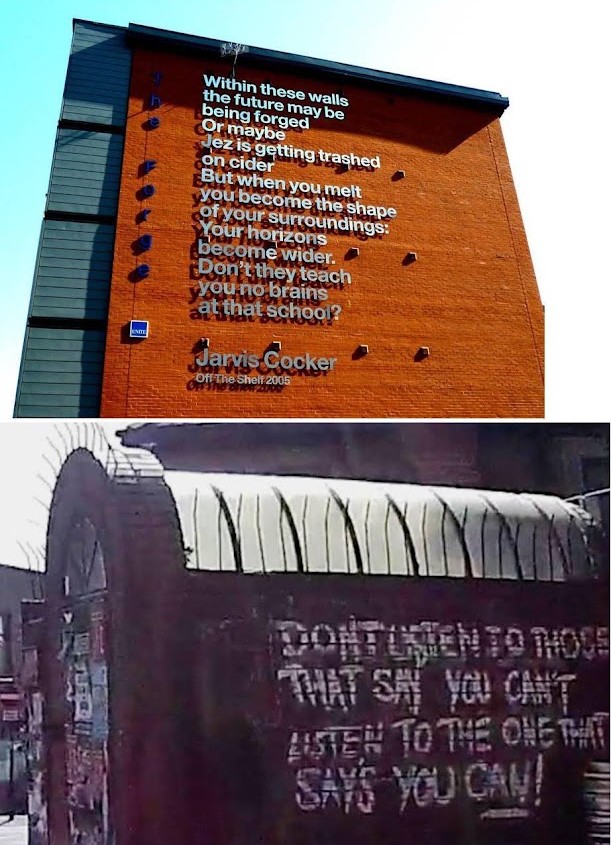
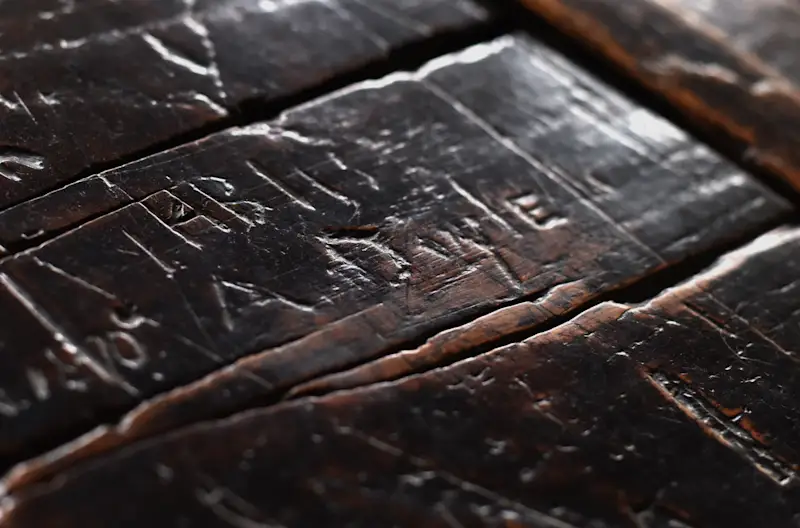
The writer thinks not. Whilst the generally accepted definition of “writing or drawings scribbled, scratched, or sprayed illicitly on a wall or other surface in a public place” is accepted, I find that the word ‘illicitly’ is doing a lot of work here. The fact that something may be defaced without the owner’s permission is fundamentally wrong and should not be celebrated, but perhaps time does soften the culpability. Stonyhurst College famously has a desk which was defaced by Arthur Conan Doyle as a young schoolboy and this fact is now celebrated. But I bet young Doyle still received ‘six of the best’ when he was found out.
Leave a Reply