The January 2022 meeting of the Brindle Historical Society was initially going to be an experiment where we would dabble with new technology. The society’s meetings over the past year have been both on-line using Zoom and face-to-face, depending on the prevailing level of Covid-19. The Zoom meetings worked well, although they didn’t suit everyone (speakers included). For January, we thought of combining the delivery method and hold a meeting where the speaker contributed through Zoom, but the main body of the audience could join together in the hall to watch the presentation as a group. Any members who didn’t fancy coming out on a winter’s night could also take part from the comfort of their homes. In the end, with the presence of the Omicron variant of coronavirus making social gatherings risky, we decided once more to resort to a full Zoom presentation.
The subject was ‘A Picture of Afghanistan’, and we were treated to a fascinating visual journey through a spectacular country. The speaker was Iranian, but had spent considerable time in Afghanistan and was able to conduct us on a virtual coach tour all round the significant sights of this intensely colourful landscape. Dr Javad Hashemi initially gave us a short potted history of the country, including all the recent troubles it has suffered.
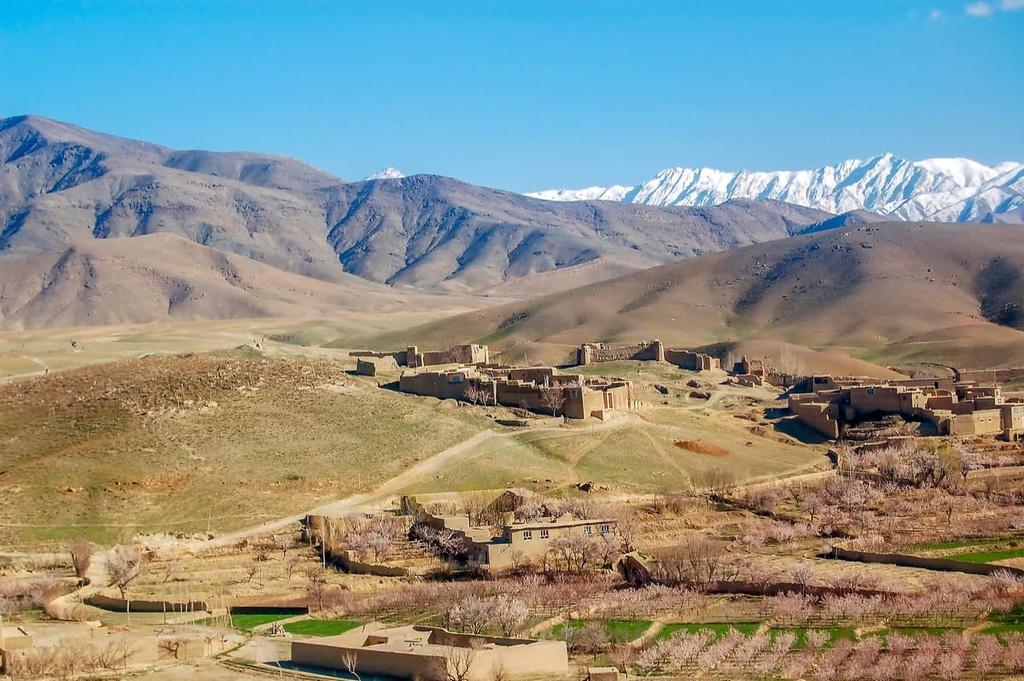
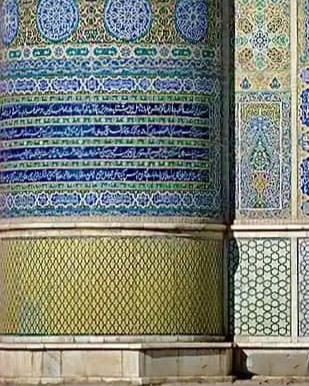
For me, the underlying image of Afghanistan (taken solely from TV news reports) had always been of a dusty, mountainous region lacking any colour or views worthy of note. How mistaken I was! The country of 40 million people can boast magnificent buildings some faced with lapis lazuli tiles whose vivid blue lustre look magnificent in the sunshine. Of course, some of the damage caused by recent conflicts was still in evidence, but we were shown a very positive image of a country trying to rebuild its proud heritage amid considerable political difficulties.
The Afghani people are a very inventive race, and we were shown some very unusual solutions to common problems they face. Without money for specific pumps for drawing water from wells, why not rig up a temporary solution by hitching up a belt driven from the rear wheel of a motorbike? Or if you can’t afford a chandelier, just hang a few light bulbs from a coat hanger?
It was clear that the current Taliban regime come from a very different cultural background to what we are used to in the West, and I found myself being quite upset, particularly by the treatment afforded to women, who are now clearly relegated to second class citizens. When Dr Hashemi was in the country in 1973, he noted the large fields of wheat and barley in the agricultural areas in the North, and on a more recent visit he was surprised to see that these fields were now mainly given over to poppies since the money earned from selling opioids to the West is much greater than grain crops. I was interested to learn that over 90% of the morphine used by the NHS comes from Afghanistan, but sad to learn that much of the cash generated is used to buy weapons, and the drugs are also sold on the black market to fuel an illegal Western drug culture.
A question the audience were left to answer was ‘Why is there so much fighting in Afghanistan?’ The answer lies in substantial volumes of raw materials found throughout the country, particularly lithium (used for batteries) and rare metals used in electronic goods such as mobile phones. The speaker described modern Afghanistan as the Saudi Arabia of rare metals. Whilst Afghanistan might not feature as a holiday destination, I felt privileged to be shown this amazing country, albeit second hand through a slide show.
Leave a Reply