In the last meeting before the summer break, Historical Society members were treated to a fascinating and fast-moving explanation of why certain things are the way they are. From the size of the Space Shuttle’s rocket boosters to the diameter of compact discs, Chris Freeman’s 60-minute presentation had the audience enthralled with weird-but-true explanations of how familiar objects came to be the size and shape they are. Bizarre as it may seem, the design of the Space Shuttle was, to some extent, influenced by the Romans, while Beethoven had an unexpected hand in determining the size of the CD.
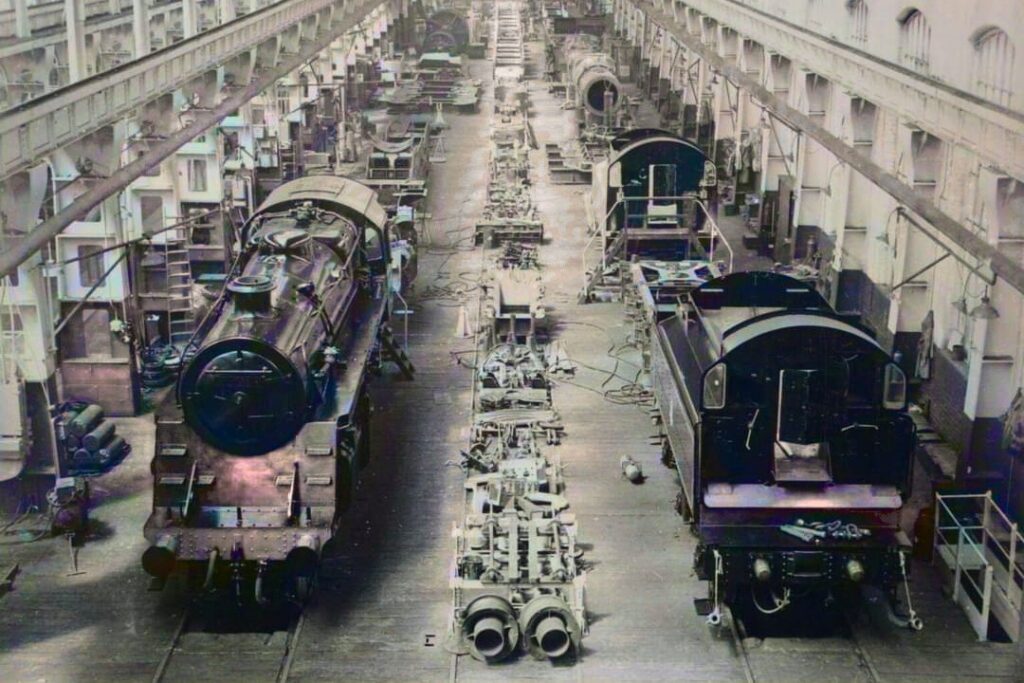
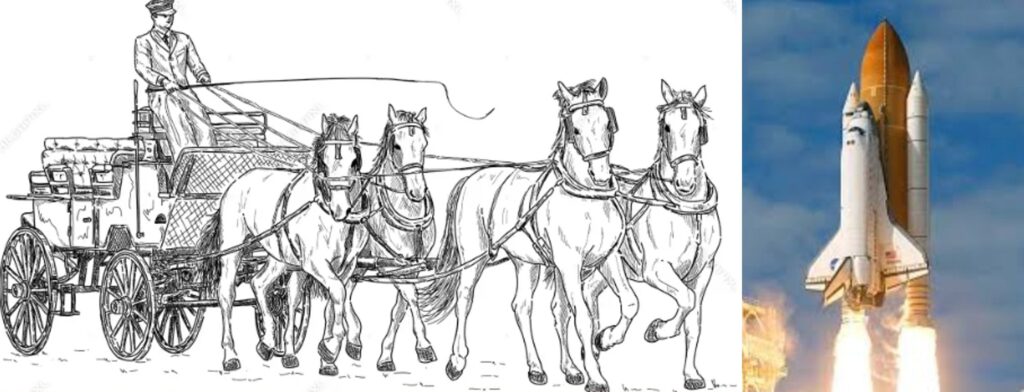
The boffins at NASA wanted the Shuttle’s rocket boosters to have a larger diameter than they eventually did. However, because they were manufactured a long way from where the Shuttle was assembled, they had to be transported by rail, and that limited their width. We then learned that railway tracks are the gauge they are because the people who built the first railway wagons had previously made horse-drawn carriages and saw little reason to alter their existing designs. So why were horse-drawn carriages (and, before them, Roman chariots) built to that specific width? Quite simply, because that was the width of two horses standing side by side.
In the case of CDs, they were originally intended to have a diameter of 10cm until the president of Sony, who was a keen pianist, discovered that a 10cm disc could not accommodate the entirety of Beethoven’s Ninth Symphony, which was typically around 70 minutes long. He therefore insisted that the diameter be increased to 12cm, giving enough room for Beethoven’s grand finale.

Chris also explained, amongst other things, why shipping channel leading markers are always triangular, why pyramids are the shape they are, and why modern aircraft have vertical extensions at the tips of their wings. It is clear that whilst design engineers have always had to obey the laws of physics, more recently they have increasingly begun to borrow ideas from nature – a field known as biomimicry – having realised that millions of years of evolution make for a remarkably effective research and development department.