Paul Atherton, a former HR Director from British Steel, had always wanted to write a book. Once he left work, he saw his opportunity, but needed a subject, and serendipitously, Brindle Historical Society provided one for him. After attending a talk on the Cuerdale Hoard at the society, Paul’s interest was sparked and he began researching the events which led up to this huge Viking treasure being left on the banks of the River Ribble.
Paul described to us many fascinating tales about the Vikings, using a selection of old maps to describe how the Norwegians and Danes came to be in this part of the world. The Viking era started in 793 AD with a raid on the monastery at Lindisfarne and only ended 1066 when the battle at Stamford Bridge finally ended the domination of Scandinavian kings. We were told how the Norwegians typically sailed directly across the North Sea to land on the North East coast, but the Danes more usually followed the European coast, crossing the channel to raid Essex and Kent. In 866 AD, in attempt to save their own territories the East Anglians actually paid some Danish invaders and gave them horses to persuade them to move North where they subsequently settled in Eoferwic, later Jorvik, but known to us now as York.
Norwegian raiders also travelled down the West Coast of Scotland, settling in what we now know as Ireland, making landfall at Rathlin Island. These raiders undoubtedly fell into relationships and subsequent marriages with the local residents and the Hiberno-Norse were the product of these relationships. Over time, the Hiberno-Norse crossed the Irish Sea and settled on Wirral and along the Ribble Valley.
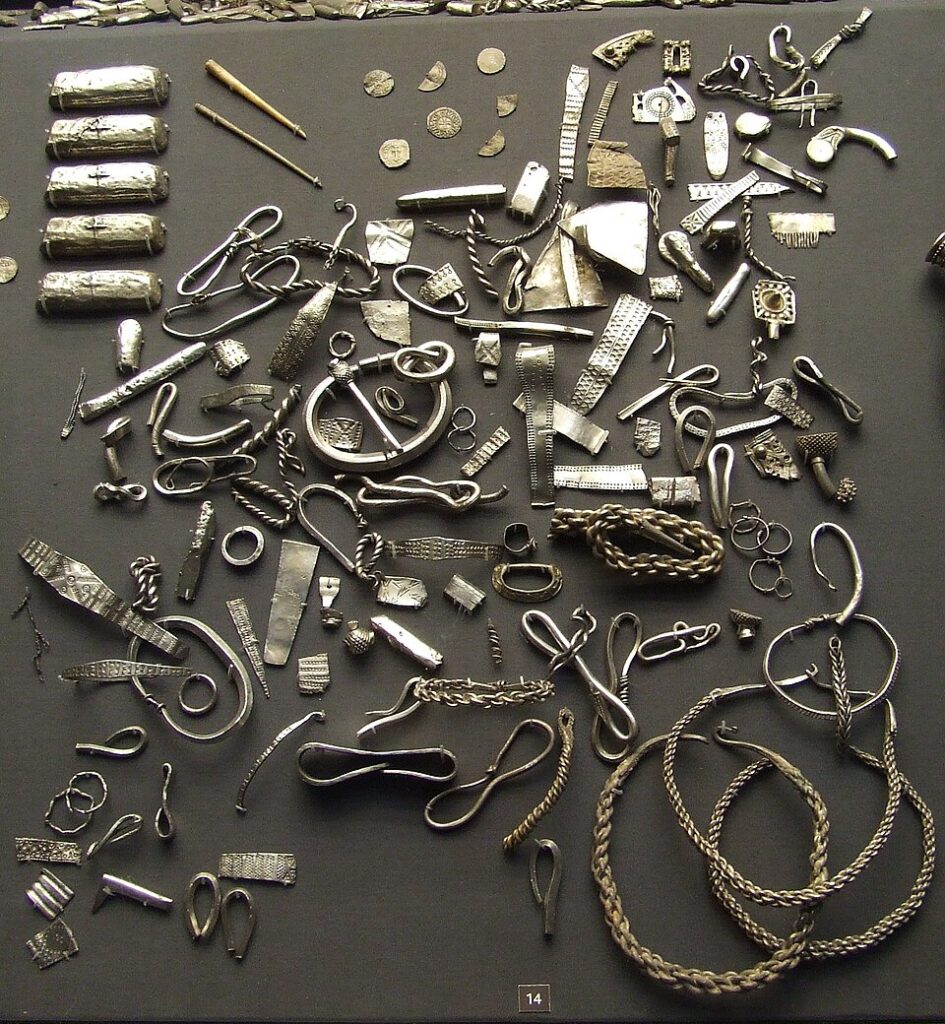
The Cuerdale hoard is thought to be a war chest hidden around 903-905 AD at the top of the tidal reach of the Ribble not far from where the Tickle Trout hotel is now located. It consisted of coin, jewellery, hack silver and ingots, all held in leather bags within a lead-lined wooden chest. It was discovered when workmen were repairing the banks of the Ribble on 15th May 1840. It weighed around 40kg and is the largest find (by weight) ever found in the UK. Many of the coins were Anglo Saxon, but some were Arab dirhams thought to have originated in Baghdad, which indicates the length of the trading routes established at that time.
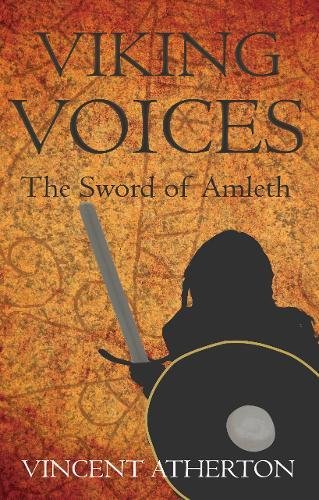
The war chest was thought to have been laid down in preparation for an anticipated war with the Mercians (from land South of the Mersey) who were making moves to take land between the Mersey and the Ribble. This battle actually took place in 910 AD, which made Paul wonder why the war chest was never utilised. If you want to know why this might be, Paul encouraged the many attendees at the talk to buy his historical novel written under his pseudonym, Vincent), Viking Voices which tells, in fictional form, what might have happened at that time, using actual events and people.
Leave a Reply