A series of remarkable coincidences led Martin Jones, our speaker in March, to research and create this presentation. The story centred on John Westhead, a Victorian farrier, who lived in and around Ormskirk in West Lancashire. Before Martin told us the tragic story, he first explained how it came to be written in the first place.
Through his contacts when working at the TSB in Ormskirk, Martin got to know a quiet, reserved bachelor, John Westhead who lived locally. One day, Martin received a telephone call from John who asked to see him about a personal matter. It transpired that John had to undergo a serious heart operation and he was concerned about his financial affairs. John lived with his brother who was incapable of managing his own affairs and he wanted to ensure his brother was cared for and the bills were paid should the worst happen. Martin was therefore asked to act as his attorney and also as executor to his will.
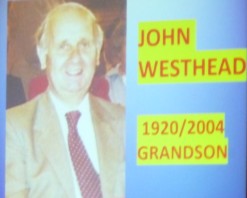
Fast forward to 2004, and John died aged 84 and Martin had the task of putting John’s affairs in order, since by then he had no surviving relatives. Amongst the many meticulously kept items in the house, Martin discovered a large folder containing numerous letters and documents relating to John’s grandfather, a man also called John Westhead who was born in 1872. These documents were kept by his wife and passed down the family line apparently untouched for almost a century.
Unsure what to do with these historic documents, Martin kept them until a chance meeting in 2014 with a WW1 historian who mentioned he was looking for information on a John Westhead who was a blacksmith from Newburgh who was killed in the great war. This led to Martin researching the fascinating story of John Westhead.
In 1913, the British Army owned about 29,000 horses, but realised that should war with Germany happen, they would need many more than this and so an appeal went out around the world for horses to be obtained. More than 330,000 horses were acquired, and many came through the port at Liverpool to Lathom Park, near Ormskirk where they were trained and shod.
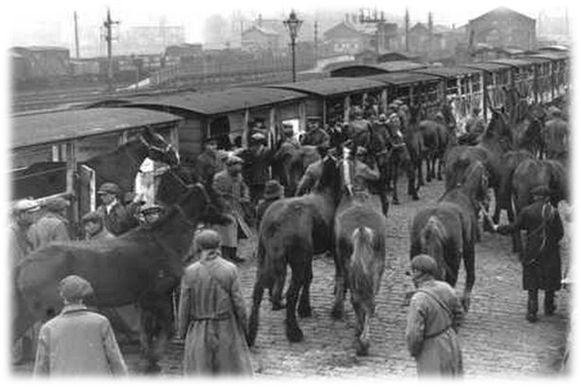
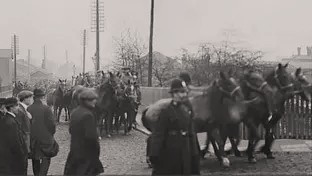
John Westhead was appointed as a civilian blacksmith/farrier to help with this task but by August 1915 he was working in Woolwich and had enrolled in the army as a farrier at the age of 42. The detailed information about the next 14 months was recorded in a series of letters sent to and from John who was soon near the front line in the Somme. The letters were shown to an expert on the BBC Antiques Roadshow who declared that they were ‘like gold-dust.
The letters were beautifully written and several were brought to life by volunteers in the Historical Society who were asked to read them out loud to the audience. John was killed by flying shrapnel in October 1916 and several letters written to his widow soon afterwards were very moving. John was obviously extremely well liked by everyone.
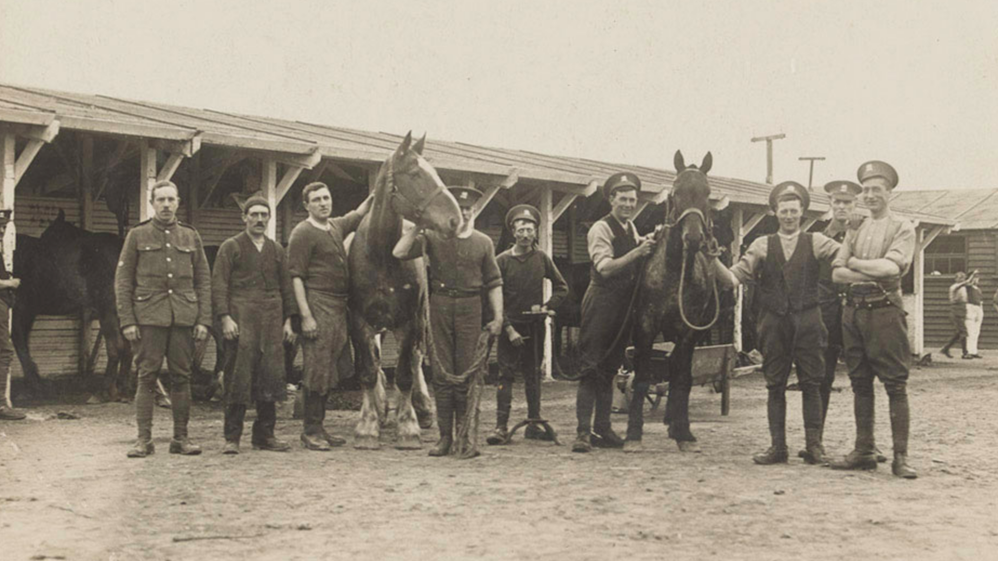
The fascinating story told by Martin Jones really brought to life a particular man and his life at that tragic time and told of events in the war which were often not discussed. In total, over one million horses were trained and sent to the front line and 484,000 were killed.
Leave a Reply