Once more, the Brindle Historical Society were delighted to be able to hear a talk from one of our own members, this time from Bernard Fleming who, for almost 50 years has lived at Top o’ th’ Lane in Brindle, very close to the site of the Brindle Workhouse. When Bernard moved to the area friends told stories of the workhouse and he heard talk of a chapel and of a secret mass house. He felt that this oral history may soon be lost, and so he began researching in old documents, maps, census reports, newspapers, parish records and minutes from the Poor Law Union.

From this research, Bernard was able to open his talk with a little drama where he took on the role of Thomas Wilde, a governor of the workhouse. Acting as Thomas, he role-played interviewing applicants to enter the workhouse, explaining that entering would be far from an easy option. For being housed and fed (at the parish expense), inmates will have to work very hard from 6am to 6pm (perhaps breaking stone for road construction, or chopping firewood), live in separate male and female accommodation with no contact between the sexes. Evening attendance at prayers was compulsory and bed time was strictly 8pm. Largely, although the conditions were harsh, most people voluntarily applied to enter the workhouse since the alternative was to starve.
Early records indicate that the catholic Gerrard family owned a small chapel where mass was secretly held but after 1715, this was confiscated and given to the parish. By 1734, it was being used as a workhouse and lunatic asylum. In 1760, a survey of workhouses indicated that 60 people lived in the Brindle workhouse, far more than the size of the village would suggest. (A much larger building must have been built to accommodate such numbers). It appears that the Brindle workhouse had begun to accept paupers and lunatics from other establishments, probably the hard cases that they couldn’t cope with.
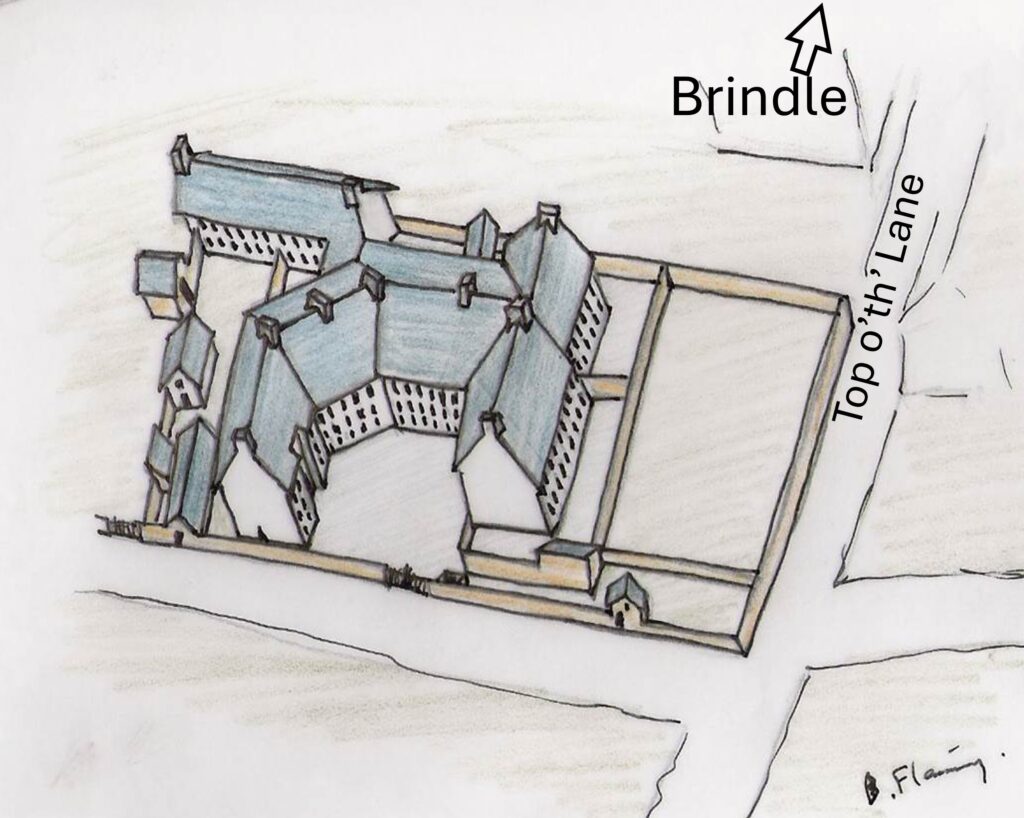
In 1826 a local JP visited the site and declared that “…the house is too small, the food insufficient and of poor quality and the people were wretchedly clothed”. Despite these complaints, and the workhouse being transferred to the Poor Law Union, the same people continued to run the place with little improvement to the conditions.
Over the years, the numbers in attendance fluctuated widely, probably due to changes in local economic conditions. From over 200 people in the early 19th century, the 1851 census suggested that 51 people were in attendance, more men than women with only five actually from Brindle, and over half from outside the region. In 1861, the census records 75 inmates with half aged over 60. One third were cotton weavers and eight were handloom weavers.
Around that time, the conditions in the Brindle workhouse were reported in the national press with accusations of poor treatment and even manslaughter. Despite this, conditions barely improved and in 1871 there were 99 inmates, including 20 cotton workers and 19 labourers. In December of that year, they were all transferred to new accommodation at Eaves Lane in Chorley (which later became a hospital)
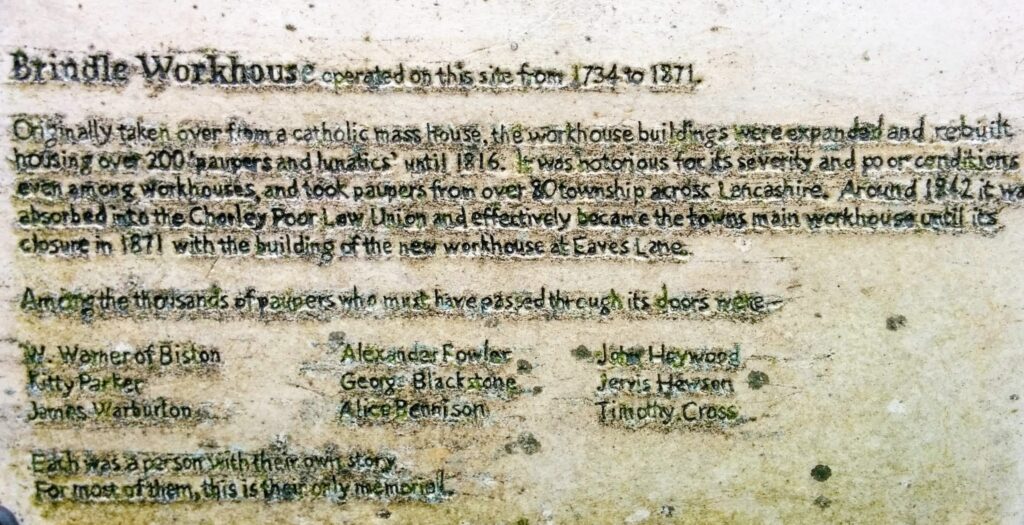
There is very little left to see of the Brindle Workhouse, just a plaque on the wall commemorating a few of the many people who passed through its doors.
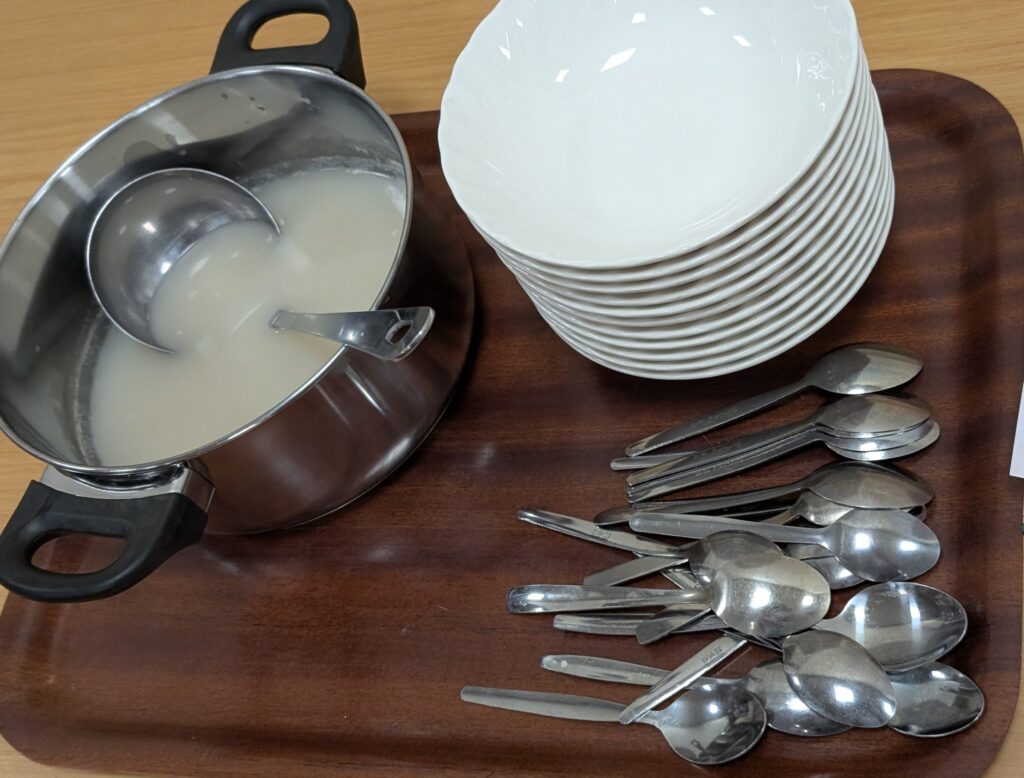
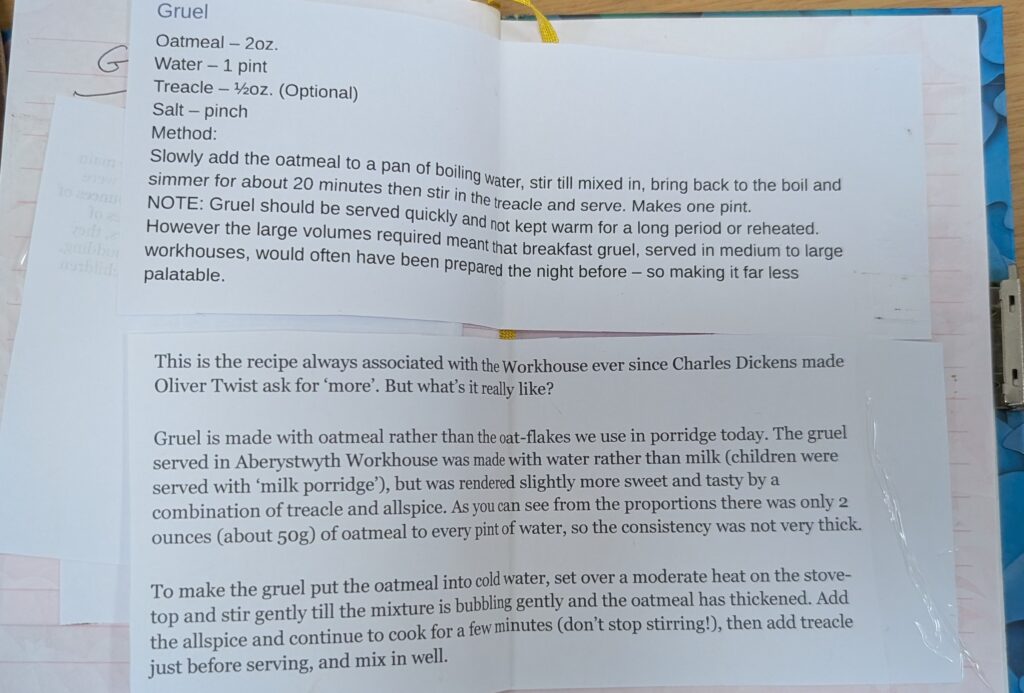
Finally, Bernard offered a treat to the attendees, as a bowl of gruel was available to any who wanted to try it. There were very few takers, and certainly no-one asked for more.
Leave a Reply