Although tonight’s speaker, Lindsey Barrow only worked at the Royal Ordnance Factory (ROF) Chorley for a short time, her reason for wanting to research the history of the factory was interesting. As a member of Buckshaw Village WI she was surprised at the number of people unaware of the fascinating history of the former ammunitions factory on which the village was built, and so she began studying old archives and photographs.
In the mid-1930s, although the UK government were very aware of the threat building in Germany they were unprepared for another war. Consequently, Douglas Hacking was commissioned to identify sites to build 20 factories to increase ammunition production in preparation for war. Hacking was the MP for Chorley at the time and clearly saw substantial job opportunities for his constituents if a local site was chosen. In late 1936, a contractor from Blackpool began the massive task of building the ammunition filling factory at Chorley in what was one of the world’s largest civil engineering projects. In the end, 16 factories were built, with Chorley being the largest.
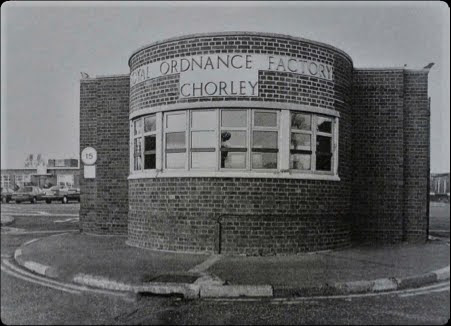
Around 15,000 construction workers built the facility which was producing weapons by 1938 and at peak production 30,000 people, mainly women, were employed on three shifts. The site had its own boiler house which provided steam for heating and to generate electricity. It also had its own water supply, railway network, vehicles, canteens, a surgery, laundry, and a sports & social club.
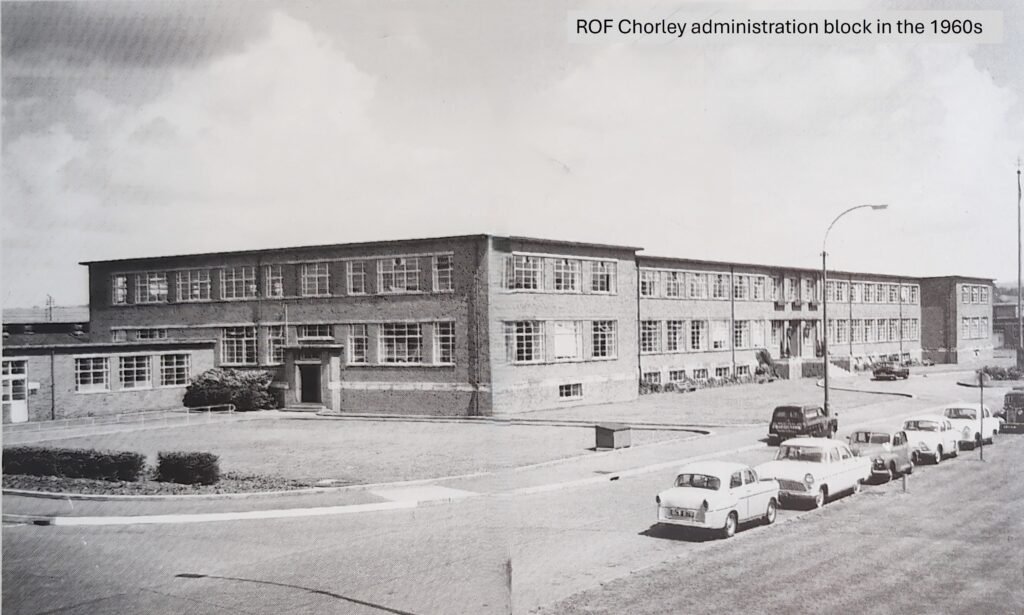
Common across all ordnance factories was an apparently complicated but very logical building numbering convention. All sites were divided into groups numbered according to the work undertaken in each. Group 1 was for production of small caps and detonators which were tiny, highly sensitive devices which provided the initiation of the explosive. The buildings housing these processes were small but numerous to reduce the effect of damage should an accident occur. In contrast, Group 8 was used for filling the large high explosive shells which were much less sensitive and consequently based in larger buildings. Any non-explosive areas of the site were designated group 10 which housed the administration, engineering and ancillary areas such as canteens.
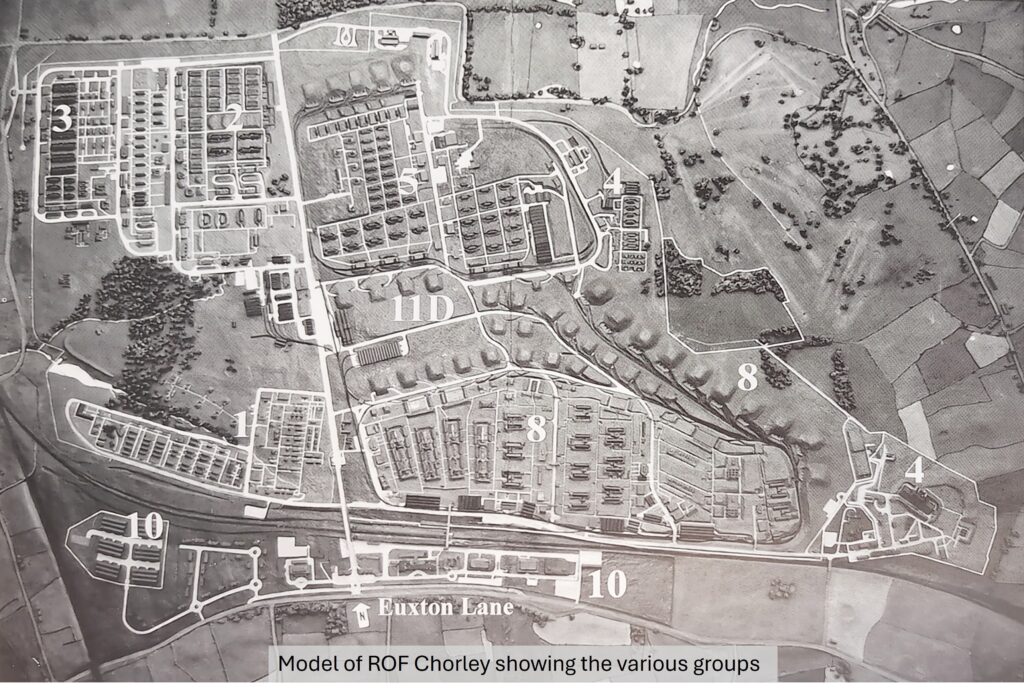
The main road through the site ran North from the main gate on Euxton Lane and was known as Central Road. All other roads running on a North-South orientation were known as Streets whilst roads running East-West were called Avenues. (The recent renaming of the main road through Buckshaw Village as Central Avenue breaks this convention.)
Lindsey explained the difference between ‘clean side’, where explosives were handled, and ‘dirty side’ where they weren’t. She described how ‘shifting houses’ were used by all employees and visitors when passing from one side to the other. In these buildings, everyone had to change their clothing and leave behind all contraband (forbidden items), such as anything that could cause a spark or a flame. On the clean side, everyone had to wear special non-conductive footwear.
The Royal Ordnance Factories were privatised in 1985 before being acquired by British Aerospace (now BAE Systems) in 1991. Over the next few years, production at Chorley was transferred to a sister site in Glascoed in South Wales before the site was decommissioned and finally closed in 2007. On the site now, there are dozens of businesses both large and small along with over 2,000 houses.
Leave a Reply