It was great to be back in the Community Hall to hear the first face-to-face talk at the Brindle Historical Society since February last year. Twenty-two people turned up to hear Chris Hudson talk about ‘Medieval Bridges of the Ribble Valley’ in which he defined bridges that were in existence during the medieval period (between the 5th and 15th centuries) and still exist today. His very informative talk described how he spent many hours seeking old maps and documents to find which bridges fell into that category. His research revealed that the word medieval ought really to be spelled as “mediæval” since it was derivation from the Latin ‘medium ævum’ which literally translates as ‘middle ages’, but he bowed to popular convention for any spellings later in the talk.
River crossings were an important part of any transport system, and the Romans used or created crossings at key points over rivers in the Ribble Valley, the locations of which have remained virtually unchanged. As usage increased, what may initially have been stepping stones were replaced by wooden bridges and eventually masonry bridges as the skills to produce large stone arches were learned.
Any bridges constructed during the middle ages which are still standing today were in scope for his talk, and the audience learned about the construction methods which were considerably over-engineered. These masonry bridges were designed for foot traffic and carts and yet they were so strong that they are still used to carry the weight of today’s HGVs in perfect safety. Bridges constructed today are often designed to have a life-span of only 40 to 50 years!
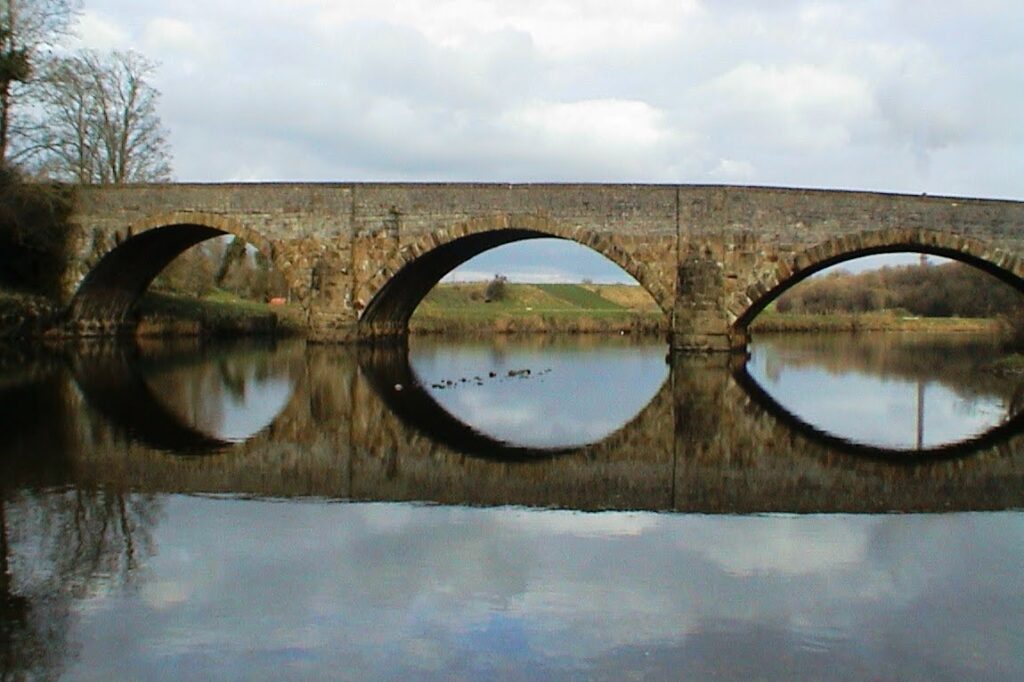
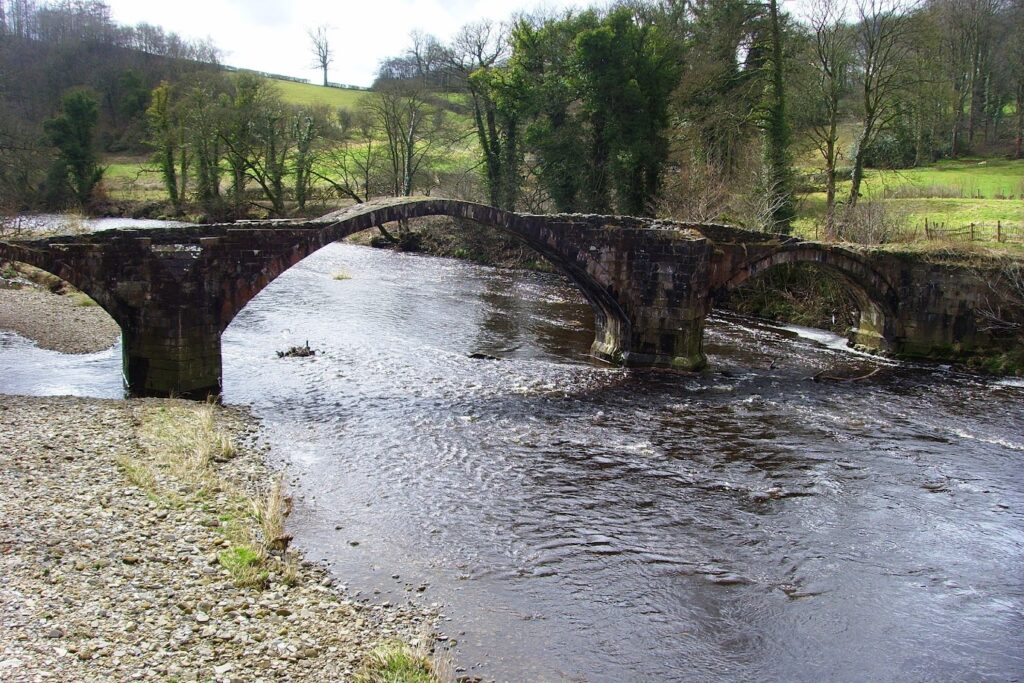
In the Ribble Valley, there are just three bridges still standing which were built prior to 1600, these being the Edisford and Brungerley bridges over the Ribble near Clitheroe and the Cromwell bridge which spans the Hodder at Great Mitton. Whilst the latter is still intact, it has been replaced by the Lower Hodder bridge a few metres up stream.
There was a large bridge at Whalley, first mentioned in 1317, but this was rebuilt in 1634 and still carries vehicular traffic today, albeit over a much higher river level.
Chris also talked about the Highways Act of 1555 which stated that although the roads should be maintained by the local parishes, the bridges, because of their greater importance, were the responsibility of the county.
Leave a Reply