At the Brindle Historical Society’s first meeting following the summer break, members were treated to an absorbing account of the men who built two of the reservoirs in the Burnley area.
At the start of the meeting, Catherine Rousseau asked us to consider our preconceptions of navvies: who were they, how were they viewed and where did they come from? She suggested that people often make sweeping generalisations about navvies – that they were single Irish men who lived hard, short lives, drank heavily and moved from place to place. In other words, not perhaps the sort of chaps you would immediately invite round for tea.
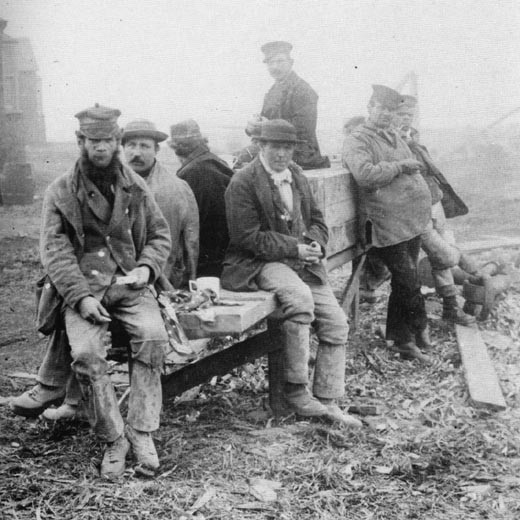
In the first part of her presentation, Catherine cast doubt on these broad assumptions, drawing on the information recorded by Elizabeth Garnett, who became a British missionary to navvies and a leading figure in the Navvy Mission Society. Garnett’s accounts provide a rather more complicated picture of the men.
It was true that navvies often travelled together, and men would sometimes ‘join the ranks’ and form, in effect, a mobile workforce. Some were heavy drinkers and some died young in accidents, but this certainly did not apply to all of them.
The nature of their work, particularly the construction of canals and railways, meant that the workforce frequently moved on. Even when building reservoirs, if work stopped or was delayed, men might move elsewhere to find alternative employment. Living in temporary encampments close to the workplace could mean cramped and sometimes insanitary conditions, with illness a constant threat. Contemporary accounts describe overcrowded huts and serious problems with disease.
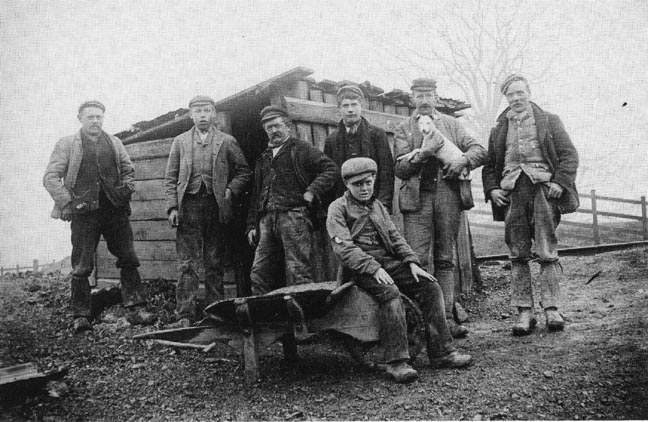
Drunkenness was frequently reported in the press, although such reports naturally tell us more about the incidents considered newsworthy than about the behaviour of the entire workforce. Violence and premature death were also features of some navvies’ lives, but not all deaths were work-related.
And, contrary to the popular image, not all navvies were Irish, although there was certainly a significant Irish presence with contemporary reports even recording disputes between Orangemen and Catholics.
Discovering exactly how such men lived in this period is difficult because they did not consistently describe themselves as ‘navvies’ in official records. Depending on the work they were doing at the time, they might simply appear as labourers, excavators or even farm workers.
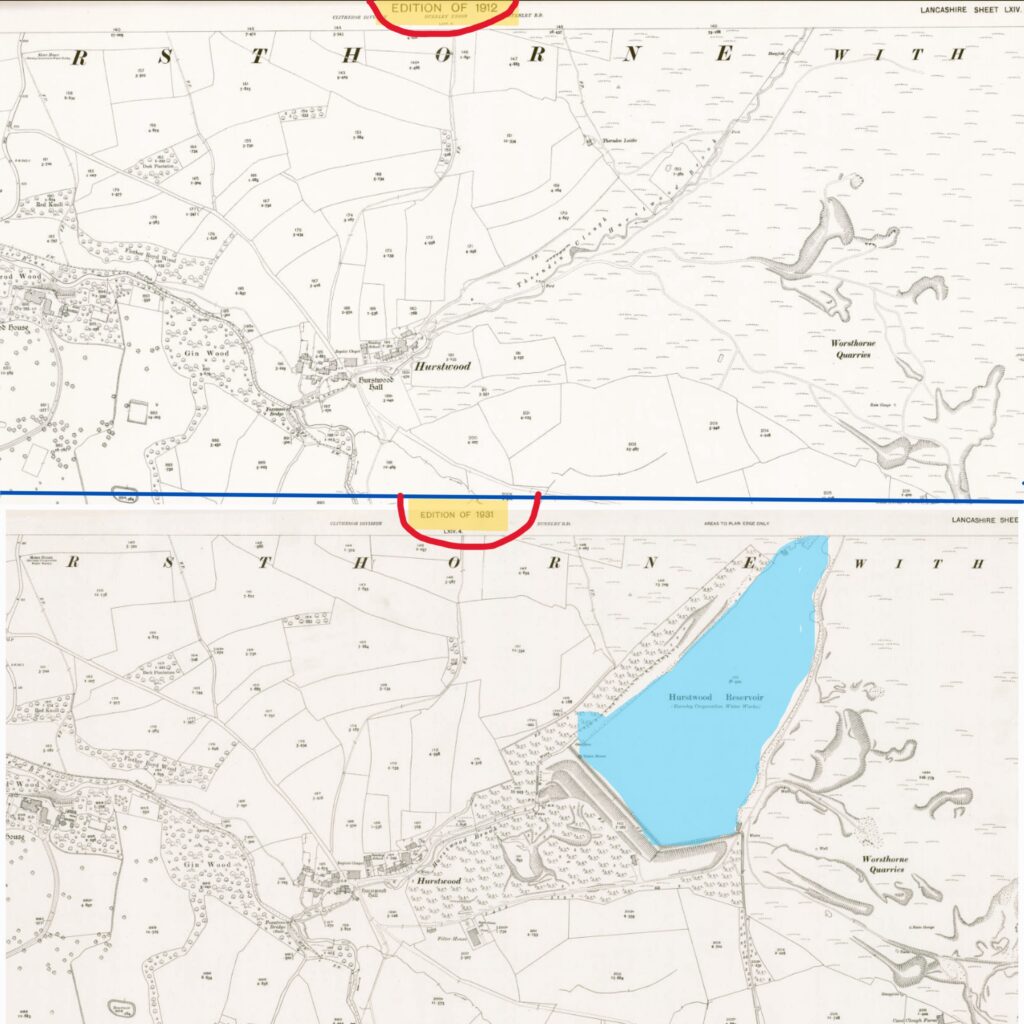
In the second part of the presentation, Catherine focused on two specific reservoirs – Churn Clough near Sabden and Hurstwood close to Burnley.
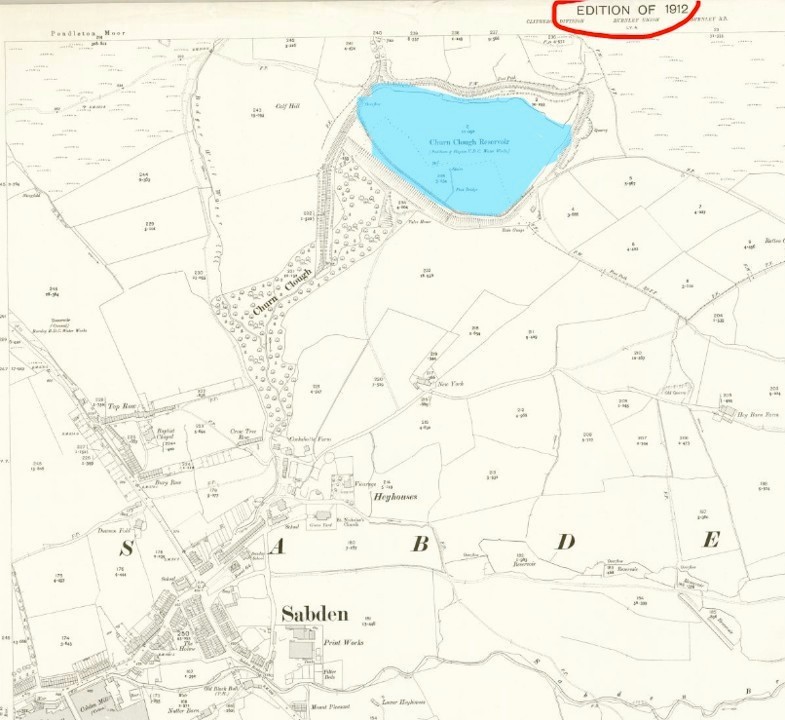
Churn Clough Reservoir was constructed in the late 19th century and was built to provide an additional water supply for the local population, whose existing sources were increasingly vulnerable to contamination.
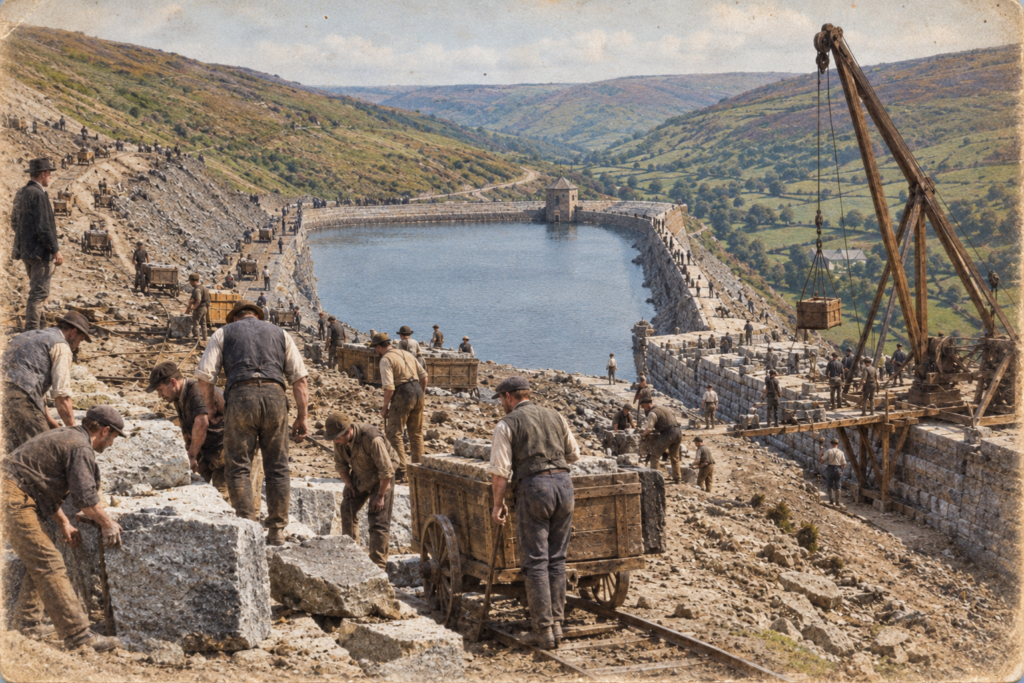
Little archaeological evidence has been found to show where the navvies actually lived, so the precise location of their encampments – or ‘huts’, as they were described in contemporary newspapers – remains uncertain. They were probably somewhere on the higher ground above the reservoir.
Excavations in one location uncovered pieces of Accrington brick embedded in a track, dating the feature broadly to the period between 1887 and 1914. Some shallow post holes provided evidence that a wooden structure may once have stood there, while other finds included clay pipes, a button and the heel of a boot. It is a modest collection, but together they provide tantalising glimpses of people who otherwise left remarkably little behind.
Hurstwood Reservoir was begun in the early 20th century and was eventually completed in the 1920s after engineering difficulties and the disruption caused by the First World War. At the same time, mechanical excavators – rather wonderfully known as ‘steam navvies’ – were introduced which threatened to replace some of the manual labour on which the men depended.
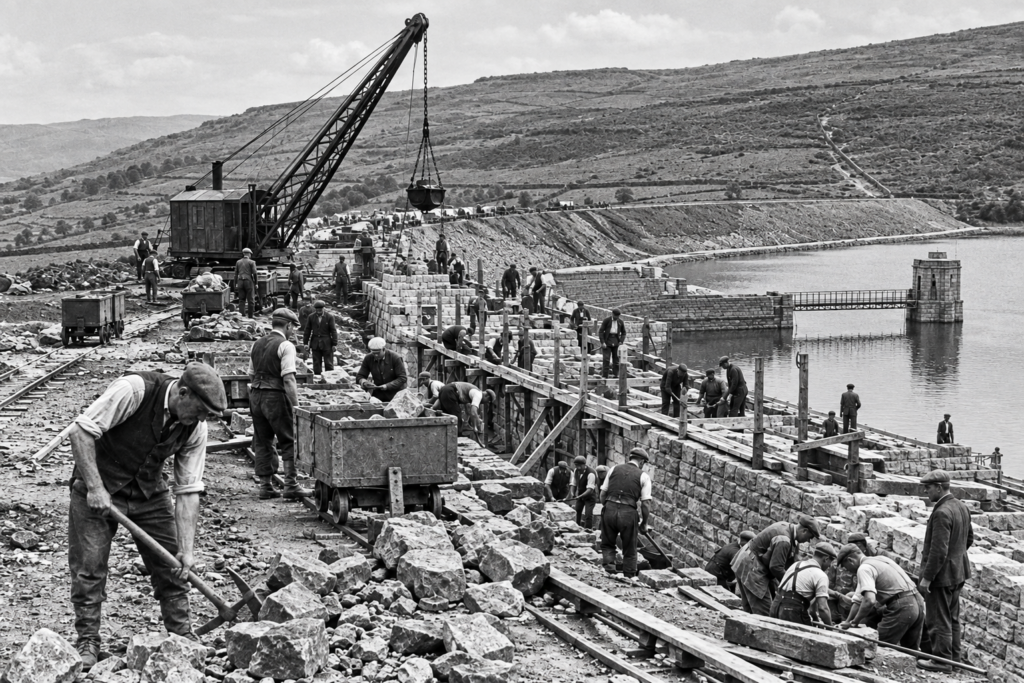
There is, once again, surprisingly little archaeological evidence of the workers themselves. Some of the huts were subsequently sold for use as allotment buildings, while some of the workers settled locally. Others moved on to the next project, finding employment on roads, tramways and other infrastructure.
So, who were the navvies? In the end, there is no simple answer to the question. The stereotypical navvy – an itinerant, hard-drinking Irishman with a shovel over his shoulder – tells only part of the story. They were probably ordinary working men trying to earn a living in difficult circumstances. They travelled where the work was available, endured unpleasant living conditions and performed physically demanding work that transformed the landscape of Britain.
They may have left remarkably little personal evidence behind, but the reservoirs, railways, canals, roads and other structures they helped to create are rather more difficult to overlook. And, as Catherine’s talk demonstrated, sometimes the challenge for the historian is not discovering what people built but finding out where the people who built it actually went.
Leave a Reply